Mental Health Assessment Initiative
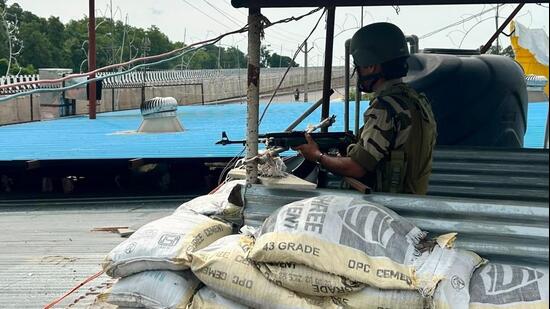
Central Industrial Security Force (CISF) personnel deployed in some of the force’s toughest and stressful assignments, including those on duty at the Parliament House Complex and commandos engaged in high-level VIP security, will undergo specialised psychometric assessments to identify personnel facing psychological stress and strengthen mental health support, people aware of the matter said.
The initiative focuses on identifying personnel in high-pressure, sensitive roles where the job exposes them to prolonged stress and intense responsibilities.
The force is also training in-house staff to recognise behavioural changes and signs of stress among colleagues to facilitate timely intervention.
In the Special Protection Group (SPG), India’s elite security unit responsible for the Prime Minister’s protection, personnel joining the group already have to clear an in-house psychological test. SPG personnel regularly take the Vienna Test System, which is believed to be one of the toughest online psychological tests in the world.
Also Read: CISF jawan kills four colleagues with AK-47 in suspected fratricide in J&K’s Kathua, arrested
The CISF’s security unit, called the Special Security Group (SSG), guards some officials facing the highest level of threat, including Assam chief minister Himanta Biswa Sarma, Manipur’s former CM Biren Singh, NSA Ajit Doval, and RSS Chief Mohan Bhagwat.
{{/usCountry}}The CISF’s security unit, called the Special Security Group (SSG), guards some officials facing the highest level of threat, including Assam chief minister Himanta Biswa Sarma, Manipur’s former CM Biren Singh, NSA Ajit Doval, and RSS Chief Mohan Bhagwat.
{{/usCountry}}The move assumes significance in the wake of Tuesday’s fratricide incident in Kathua, in which four CISF personnel were killed. Stress and mental health concerns remain important issues for security personnel working in high-pressure environments and performing sensitive duties, underscoring the need for early identification and professional intervention. Although the CISF head constable who shot his company commander and three others with an AK-47 was arrested, CISF officials are probing the work environment at the hydroelectric project in Kathua where the shooting occurred.
Coincidentally, four days before Tuesday’s fratricide incident, the CISF had signed a three-year memorandum of understanding (MoU) with the Institute of Human Behaviour and Allied Sciences (IHBAS) on September 25 to establish a comprehensive mental wellness framework for its personnel. The partnership will also focus on training officers to identify early behavioural changes, signs of acute stress and psychiatric emergencies to facilitate timely intervention.
In the last three years, the country’s central armed police forces (CAPFs) have reported at least 438 cases of suicide and seven cases of fratricide.
In 2025, there were 133 suicides, with the CRPF reporting the highest number at 56, followed by the BSF at 25 and the CISF at 20. The number of personnel resigning from the CAPFs has also remained high in recent years. While 3,077 personnel resigned in 2025, the figure was 3,295 in 2024. Between 2015 and 2025, at least 21,327 personnel resigned from the forces.
The new mental health initiatives aim to ensure that personnel struggling with stress or other psychological concerns receive timely counselling and support, instead of losing interest in the job, leaving the force or taking extreme steps.
CISF director general Praveer Ranjan said at the MoU signing ceremony last Saturday, “CISF personnel work in exceptionally demanding and high-responsibility environments. This partnership with IHBAS will significantly strengthen our efforts toward early identification, professional counselling, and timely clinical treatment of mental health concerns. Our absolute focus is to create an organisational culture where seeking professional support is actively encouraged and entirely free from stigma.”