E-Paper



Coal to occupy significant place in India’s diversified energy basket: Eco Survey
The survey said the integration of renewables, alongside exploring nuclear energy and biofuels, presents a path towards achieving these objectives

 Prefer HTon Google


New Delhi: India will target a diversified set of sources for energy security with a significant place for thermal power, including coal to provide the so-called base load while pursuing low-emission pathways in line with national commitments, according to the 2023-24 Economic Survey Union finance minister Nirmala Sitharaman tabled in Parliament on July 22.
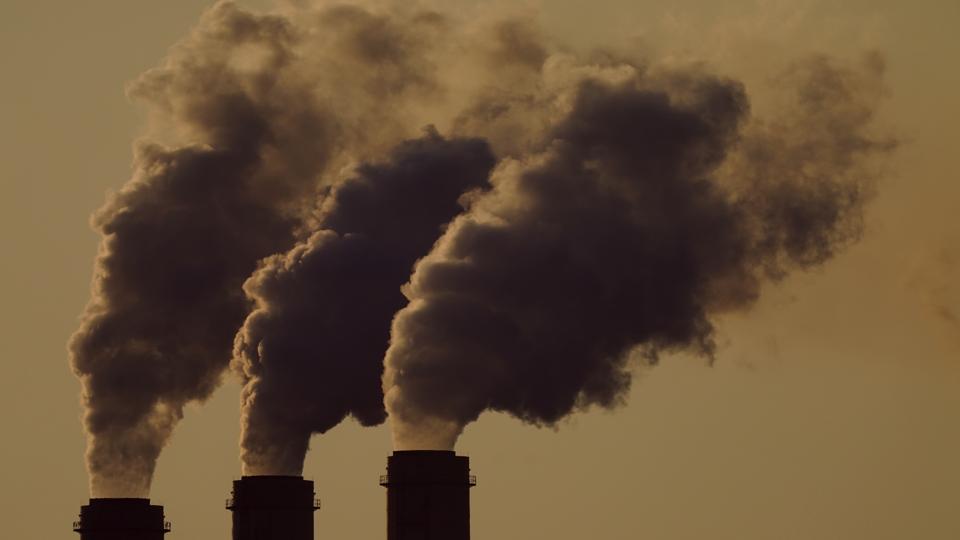
The survey said the integration of renewables, alongside exploring nuclear energy and biofuels, presents a path towards achieving these objectives. “This will also include a significant role for thermal power, especially coal-based power plants, in providing base-load to support large-scale deployment of renewables,” said the survey, which is an overall review of the economy.
The survey underlined that the focus should also be on actively adopting clean coal technologies. It added the initiatives for cleaner coal, such as the Coal Gasification Mission, extraction of Coal Bed Methane gases, exploring Coal to Hydrogen, Carbon Capture and Storage, and Coal beneficiation through washeries, etc, ultra super-critical technologies for coal power plants need to be promoted.
“India’s successful renewable energy growth story is well established. Solar power installed capacity has increased drastically by over 25 times between 2014 to 2023. There are also major risks with large-scale phasing in of renewables, such as intermittency, grid integration, backup power generation, storage, etc.”
The survey flagged high import dependency for solar PV panels and said this could be geopolitically tricky for India.
“It should not be that India’s high dependency on imports mainly for petroleum for its energy needs, shifts to high import dependency for solar PV panels and critical minerals, whose supply chain and geopolitics may be even trickier.”
It said hence India will target diversified energy sources, including renewables (solar, wind, large and small hydro), green hydrogen, nuclear, and biofuels. The survey added that the country wants balance in climate action, not panic. “Availability, affordability, and accessibility of financial resources will drive the green transition.”
“I think the issues have been very clearly framed by the finance ministry. It lays out where we go next. It talks about how financing will be key, how critical minerals will become an issue, how planning for the power sector especially intermittency and storage issues will be important,” said Sunita Narain, director general, Centre for Science and Environment.
India to push for delivery of finance for transition
The survey added that India has relied upon its own financial resources so far for adaptation and mitigation, and that it is vital that resources from developed countries flow to the developing countries in line with the objectives of the United Nations Framework Convention on Climate Change (UNFCCC) and its Paris Agreement. “The negotiations on the New Collective Quantified Goal must lead to outcomes required to meet the temperature goal of the Paris Agreement,” it said.
The survey said the global narrative on the issue of climate change, “describing it as a climate emergency, shifts focus from the equally, if not more, critical developmental problems and can cause panic.” The world needs a more balanced approach to focus on nearer-term policy goals of improving human welfare rather than being excessively preoccupied with one large, longer-term goal of global climate management, it has said.
Preliminary estimates of the overall resource requirement, as stated in India’s NDC (nationally determined contributions), is $ 2.5 trillion for 2015-2030. The Long-Term Low Emission Development Strategy (LT-LEDS) submitted by India in 2022 highlighted that financial resources of the order of tens of trillions of dollars would be required by 2050 for India’s transition towards a low-carbon development pathway. India’s first Adaptation Communication (AC) submitted to UNFCCC mentioned the cumulative need for expenditure for adaptation to be ₹56.68 trillion by 2030.
HT reported that the primary agenda of the annual UN climate meeting to be held in Baku, Azerbaijan, would be to negotiate a new goal for climate finance, which currently has a floor of a minimum of $100 billion every year after 2025.
According to the High-Level Expert Group on Climate Finance, at least $2.4 trillion is needed annually to invest in renewable energy, adaptation, and other climate-related issues in developing countries, excluding China.
India, in its submission to the UNFCCC in February, said that developing countries need at least $1 trillion to transition.