
 E-Paper



Colombo Security Conclave adopts road map for cooperation in maritime security, counterterrorism
The member states agreed on a road map for cooperation and collaboration that will “facilitate robust mechanisms for coordinated responses, capacity building and strengthening information flow” , according to a joint statement issued after the meeting.

 Prefer HTon Google


The Colombo Security Conclave, a grouping of India, Sri Lanka, the Maldives and Mauritius, on Thursday adopted a road map for cooperation and collaboration in areas such as maritime security, counterterrorism and drug trafficking.
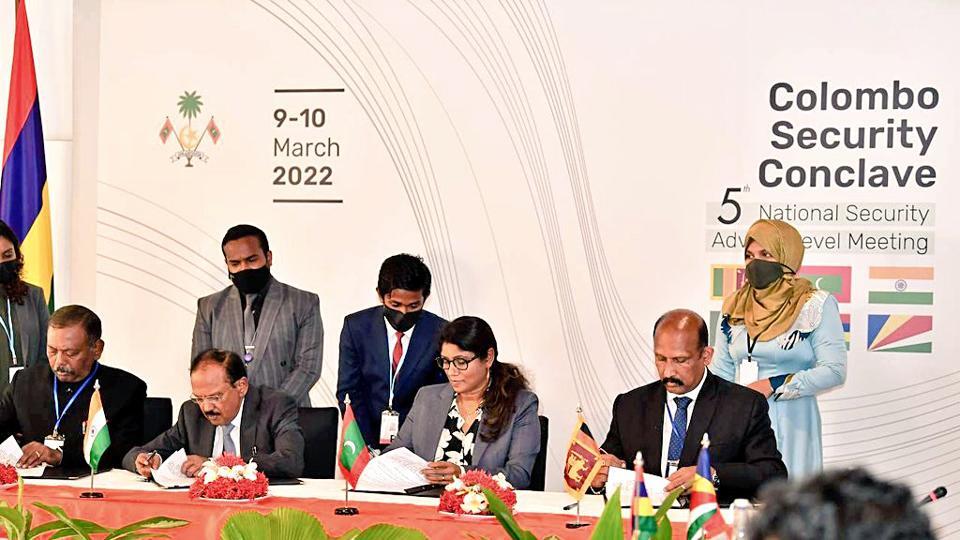
The fifth meeting of national security advisers of the Colombo Security Conclave, which was held in the Maldives on March 9 and 10, also identified five broad areas of cooperation to strengthen regional security.
The member states agreed on a road map for cooperation and collaboration that will “facilitate robust mechanisms for coordinated responses, capacity building and strengthening information flow” , according to a joint statement issued after the meeting.
The five pillars of cooperation are maritime safety and security, countering terrorism and radicalisation, combating trafficking and transnational organised crime, cyber security, protection of critical infrastructure and technology, and humanitarian assistance and disaster relief.
“As maritime neighbours facing similar threats, the conclave reaffirmed their commitment to engage in consistent joint efforts to achieving regional peace and security,” the joint statement said.
India, the Maldives and Sri Lanka are the founding members of the Colombo Security Conclave. Mauritius was included as a new member of the conclave during the meeting , which was also attended by Bangladesh and Seychelles as observers.
Defence minister Mariya Didi led the delegation from the Maldives, while national security adviser Ajit Doval led the Indian delegation, defence secretary Kamal Gunaratne led the Sri Lankan delegation, and national security adviser Kumaresan Ilango led the delegation from Mauritius.
The Bangladesh delegation was led Tarique Ahmed Siddique, defence and security adviser to the prime minister, while the team from Seychelles was by led by Simon Archange Dine, chief of staff of the defence forces.
Addressing the opening session of the meeting on Wednesday, Doval had said the conclave should institutionalise its cooperation with a road map and form joint working groups to tackle drug trafficking and cybersecurity challenges. He said members of the grouping remain vulnerable to trafficking, organised crime and maritime terrorism, “particularly in the light of the developments in Afghanistan”.



