Massive seizures of drugs, primarily heroin shipped from Pakistan, by the Sri Lanka, Maldives and Indian Coast Guard in the past six months have revived serious concerns within the Narendra Modi government that Islamabad is resorting to narcotics smuggling to fund terror in India.
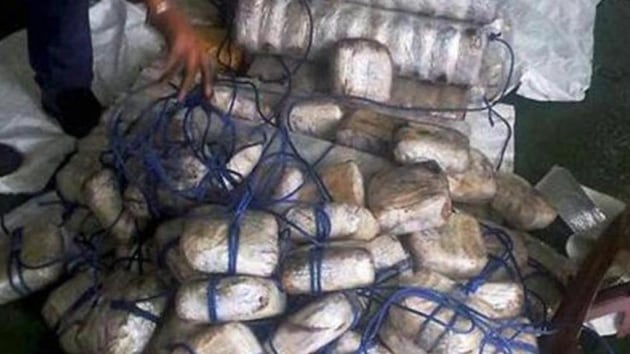
According to Indian security agencies, Pakistan is using countries in the neighbourhood, particularly Sri Lanka and the Maldives to pump drugs into India.
On July 10, the Sri Lankan Coast Guard (on Indian inputs ) seized 50 kilograms of heroin from a Pakistani boat in the island nation’s Exclusive Economic Zone.
On May 21, the Indian Coast Guard seized 218 kilograms of heroin from a Karachi-registered Pakistani fishing boat, “Al Madina,” off Jakhau in Kutch district of Gujarat. Six crew members who were carrying the drug in 194 packets were arrested.
Around the same time, the Maldivian police seized an Iranian boat with a Pakistani national on board on May 26 with a large quantity of drugs.
In the Gujarat seizure, even though the boat was set ablaze by the couriers, interrogation reports revealed that the contraband was handed over by a Pakistani national, Hamid Malik, to boat captain Mohammed Aslam to be delivered to a Mumbai resident, Badruddin Sheikh, near Gujarat’s Porbander.
Further investigations revealed that drugs consignment was meant for a Delhi resident, Mohammed Bhai. It was on the basis of Sheikh’s interrogation that Niyamat Khan Ahmedzai of Logar province in Afghanistan was arrested from Delhi on April 13.
{{/usCountry}}Further investigations revealed that drugs consignment was meant for a Delhi resident, Mohammed Bhai. It was on the basis of Sheikh’s interrogation that Niyamat Khan Ahmedzai of Logar province in Afghanistan was arrested from Delhi on April 13.
{{/usCountry}}The role of narcotics in funding terror against India was revealed by Lashkar-e-Taiba (LeT) terrorist David Coleman Headley during interrogation in 2010.
Headley, one of the main accused in the 26/11 Mumbai attacks, revealed the role played by the Pakistani spy agency Inter-Services Intelligence (ISI) in linking drug lords and terrorists for transportation of weapons, along with drugs, to India.
According to Indian counterterror experts, Pakistan is using Sikh terrorists, including Khalistan Commando Force chief Paramjit Panjwar, based in Lahore, to smuggle drugs into India via carpet exports to west and south-east Asia for fuelling militancy in Punjab.
Panjwar, known as Gulzar Singh in Pakistan since 1994, lives in Johar Town in Lahore . His wife, Paljit Kaur, and two sons live in Frankfurt, Germany.
However, it is the Sri Lankan drug route used by Pakistan which has been red-flagged by the agencies as it is being used for terror recruitment in South India particularly Kerala and Tami Nadu.
The seizures are huge and worth millions of dollars in the international market. On April 22, the Sri Lankan Navy seized 275 kilograms of narcotics from a fishing trawler and before that, on March 24, it seized 108 kilograms of heroin from an Iranian vessel off the coast of southern Sri Lanka.