E-Paper



Coronavirus Update: Private labs roped in, mass testing still far away in India
Currently, 116 government laboratories have been approved to test for Covid-19. The private laboratories will add to the country’s testing capacity.

 Prefer HTon Google


Six private laboratories are set to start testing for the coronavirus disease (Covid-19) after receiving approvals from the Indian Council of Medical Research (ICMR) on Sunday, although the government has no immediate plans to allow walk-in testing of asymptomatic individuals without a history of foreign travel or contact with an infected person.
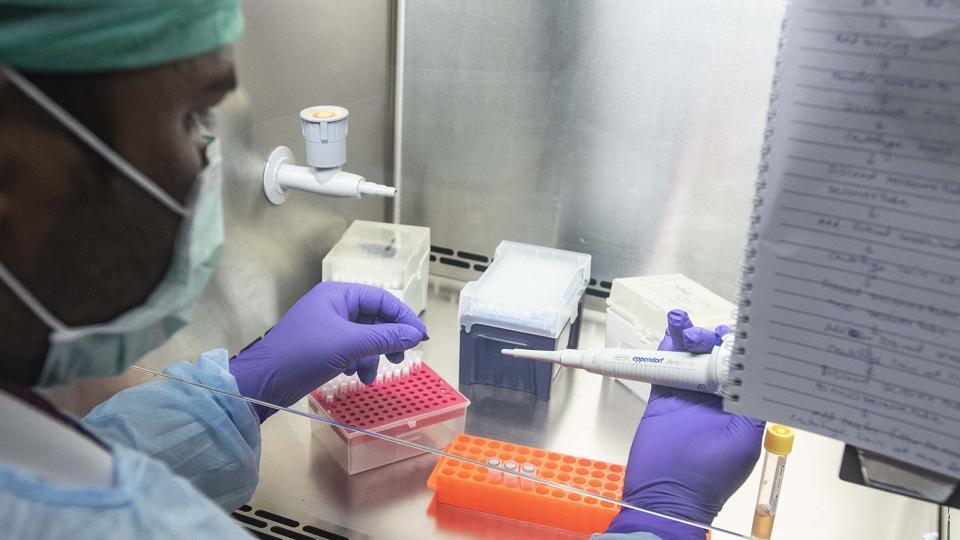
The government issued guidelines for private labs to test for Covid-19 caused by the Sars-Cov-2 virus, on Saturday, and 60 private laboratories applied for mandatory registration on Sunday, according to ICMR.
India’s apex body for biomedical research has already shared the so-called positive controls for the test , which will help the laboratories test for the virus. The six private laboratories approved so far to conduct the test are: Thyrocare, Suburban Diagnostics, Metropolis Healthcare Ltd, and Sir HN Reliance Foundation Hospital and Research Centre, all headquartered in Mumbai; Unipath Specialty Laboratory, Ahmedabad; and Neuberg Anand Reference Laboratory, Bengaluru.
To be sure, many of these are laboratory chains with branches across Indian cities, including Delhi.
“Our people are looking at the requests made by private labs; about 60 labs have approached ICMR for registration, and six labs have been approved so far. It is a dynamic numbers as approvals are being given in batches based on their fulfilling the necessary requirements,” said Dr Balram Bhargava, director general, ICMR.
The private laboratories will add to the country’s testing capacity. Currently, 116 government laboratories have been approved to test for Covid-19. Together, they have the capacity to test for around 10,000 samples a day (which can be doubled without too much difficulty, some experts said).
However, the government has no plans of changing the testing criteria at the moment. “Indiscriminate testing is not the solution; the solution lies in isolation to break the transmission cycle, which is why lockdown is a pertinent step,” said Bhargava.
Since mid January, India has tested about 17,000 samples, which , as an average of the total population, is far lower than many other countries battling the outbreak.
“It is not to say that we won’t be expanding our testing criteria. It’s an evolving situation and we have an expert committee constantly reviewing the situation. If they feel the need in future, the criteria could be changed,” Bhargava added.
The primary criteria for the labs that will be approved are for them to have National Accreditation Board for Testing and Calibration accreditation, a minimum of level -2 in terms of biosafety, and a requirement that they will share real-time testing data with the government . The private labs will have to acquire their own kits (approval is contingent to them having the kits) and test patients on the basis of a prescription signed by a qualified physician who has followed testing criteria laid down by ICMR.
The base price should not exceed Rs 4,500, including 1,500 for preliminary testing and 3,000 for confirmatory testing, although the government has requested the private firms to offer to test for free.