Chief Justice of India (CJI) Sanjiv Khanna has described corruption as a “hydra-headed monster” that undermines public trust and hinders the ideals of democracy, emphasising that the success of India’s anti-corruption ombudsman, the Lokpal, hinges on public trust and citizen engagement.
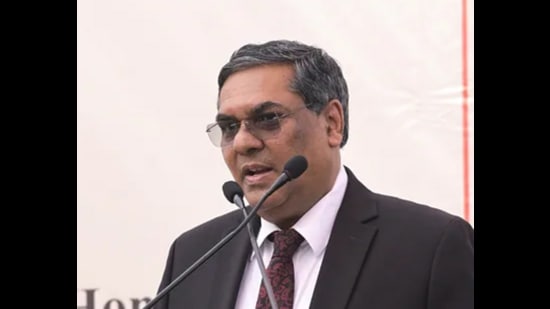
“When moral turpitudes like corruption and bribery creep into governance, public trust begins to erode,” said the CJI on Thursday, warning that such erosion of trust breeds political and economic instability, sows societal divisions, and can even result in violence.
The CJI was delivering an address in New Delhi on the occasion of Lokpal Day, attended by Lokpal chairman Justice AM Khanwilkar, members of the Lokpal, and attorney general R Venkataramani. He stressed the pivotal role of democratic institutions in safeguarding against corruption: “It is their raison d’être to build and reinforce systems of accountability and fairness that inspire public confidence. This is the very social contract between the government and citizens – the ability of the little man or woman to hold the big and powerful accountable.”
Describing the Lokpal as an “embodiment of hope for billions of Indians,” Justice Khanna underscored its constitutional significance as a tool to combat corruption. “The Lokpal underpins a principle central to our democracy: that power must be wielded responsibly and that governance must always be anchored to ethics, accountability, and transparency,” he said.
{{/usCountry}}Describing the Lokpal as an “embodiment of hope for billions of Indians,” Justice Khanna underscored its constitutional significance as a tool to combat corruption. “The Lokpal underpins a principle central to our democracy: that power must be wielded responsibly and that governance must always be anchored to ethics, accountability, and transparency,” he said.
{{/usCountry}}The CJI highlighted the doctrine of public trust as central to the functioning of democracy. He said that public trust is the invisible force that sustains democratic governance. “Without this trust, no system—however intricate or well-designed—can function effectively. Public trust, therefore, is sine qua non to any constitutional democracy,” he said.
Justice Khanna elaborated on how corruption exacerbates inequality, disproportionately affecting the socio-economically disadvantaged, women, and marginalised communities. “Empirical studies show that the poor pay the highest percentage of their income in bribes. Women bear a disproportionate burden as they rely heavily on public services afflicted by corruption. Similarly, disadvantaged castes are severely impacted, while privileged elites often use their influence to secure favorable policies.”
The CJI cited data to illustrate the pervasive nature of corruption, noting that while high-profile scams cost the nation ₹36,000 crore annually, everyday bribes for accessing government services amounted to ₹21,000 crore in 2005.
While lauding Lokpal’s achievements, the CJI added that its success depends on seamless coordination with other anti-corruption agencies such as the Central Vigilance Commission, and its ability to act independently, objectively, and fairly. He said citizens play an indispensable role in the fight against corruption. “...it is they who file complaints and testify against corrupt officials. Educating and enabling the public about how to engage with the Lokpal system remains central to its success.”
Justice Khanna advocated a balanced approach to anti-corruption measures grounded in democratic principles. “Our fight against corruption must aim to strengthen democracy and public trust not diminish it. Anti-corruption efforts should be seen as a means to promote democracy, not an end in itself. Simply put—we must do anti-corruption democratically.”