E-Paper



Court can’t decide on issue of dissent, Shinde camp in SC
The Shinde camp asserted that the Supreme Court should refrain from examining the issues of disqualification or recognition of the real Shiv Sena at the first instance when the Speaker and ECI are yet to adjudicate.

 Prefer HTon Google


New Delhi: Intraparty dissent against the leadership is not an issue to be decided through a judicial order, the Eknath Shinde camp on Wednesday told the Supreme Court while maintaining that the petitions filed by the Shiv Sena’s Uddhav Thackeray faction are not sustainable in law since they involve a political thicket.
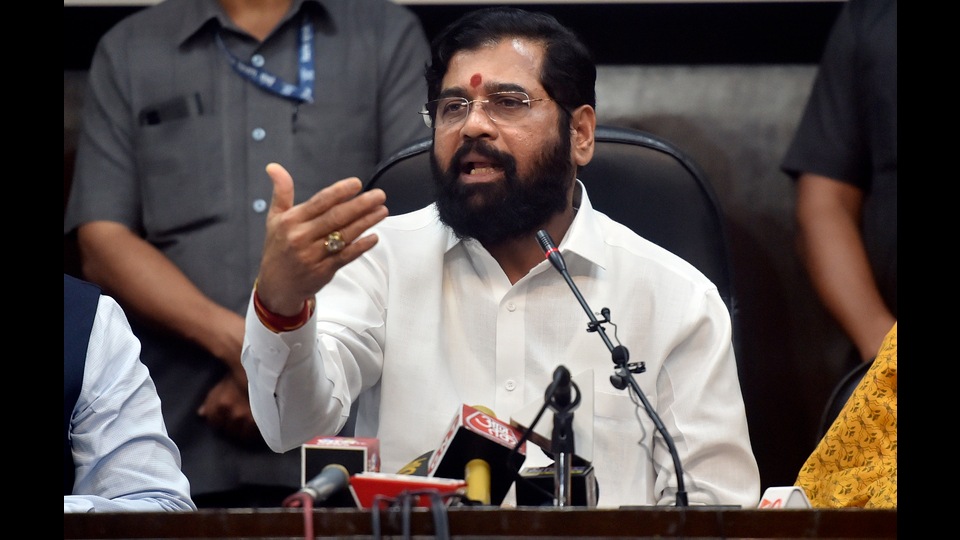
According to the Shinde camp, issues raised by the Uddhav faction regarding the disqualification of MLAs or the recognition of the real Shiv Sena are political issues that must be left by the court to be determined by a duly elected assembly Speaker and the Election Commission of India (ECI).
As a bench led by Chief Justice of India NV Ramana adjourned for Thursday a clutch of petitions filed by both the Shinde and Uddhav factions for finalising the legal issues involved in the matter, the Shinde camp asserted that the Supreme Court should refrain from examining the issues of disqualification or recognition of the real Shiv Sena at the first instance when the Speaker and ECI are yet to adjudicate.
Also read: Sena vs Sena in Supreme Court: Uddhav says original party with him; Shinde denies defection
The Uddhav faction, on the other hand, emphasised that every act of Maharashtra chief minister Eknath Shinde and his MLAs reeks of anti-party activities, and therefore they are disentitled from getting any propitious orders from the Speaker or ECI on account of being defectors.
By merely having a two-thirds majority among the MLAs, the faction backing former CM Uddhav Thackeray argued, Shinde’s group cannot become the real Shiv Sena because they have already given up membership of the party by implicating themselves in anti-party activities.
The bench, which also included justices Krishna Murari and Hima Kohli, was Wednesday hearing a batch of six petitions filed by Shinde and Uddhav factions in relation to disqualification proceedings against the MLAs of both camps, election of Rahul Narwekar as new Speaker of the assembly, recognition of a new party whip for Shiv Sena, and the governor’s directive to Uddhav for proving majority on the floor of the house and subsequently inviting Shinde to form the new government in the state.
Narwekar is currently restrained by the top court from deciding the disqualification petitions pending against the MLAs of Shiv Sena belonging to both the Shinde and Uddhav factions.
The coup, led by the rebel MLAs, had forced Uddhav to resign as CM on June 29, leading to a dramatic takeover of Shinde as Maharashtra CM on the very next day. Later, the Shinde faction also proved majority on the floor of the House with the support of the Bharatiya Janata Party (BJP), whose leader Devendra Fadnavis had taken oath as deputy chief minister on June 30.
Senior advocates Harish Salve, Neeraj K Kaul and Mahesh Jethmalani, appearing for the Shinde faction, highlighted that Shinde or his MLAs have not left the Shiv Sena, and therefore the issue of incurring disqualification because of voluntarily giving up party’s membership does not arise at all.
Also read: 5-day permission for mandals to use loudspeakers during Ganpati festival: Shinde
“We are not saying we have left the party or they have left the party. But that does not mean an intra-part dissent cannot be allowed and someone who does not have the support of his party members will cling on to the chair by swinging the sword of disqualification. Any order by a court will not be anti-defection but anti-democracy in a political party. This will be stifling dissent in a political party,” Salve argued.
Asked by the bench as to why the Shinde camp has gone to ECI for being recognised as the real Shiv Sena if both factions constitute the same party, Salve said that the move is aimed at dispelling confusion among the voters in view of the upcoming municipal polls in Mumbai.
“This is mixing politics with legalities. The CM (Uddhav) resigned and there is a new dispensation now. BMC elections are round the corner and there should not be any confusion among the voters. That is why we are before the Election Commission. I am saying that there are two groups within the political party and the question is now of the leadership. This is not happening for the first time. It happened in Congress in 1969,” he maintained.
Salve added that the first question before the court should be whether there are any justiciable issues for it to decide and whether it would assume the role of a tribunal to adjudge disqualification pleas against MLAs after stripping a duly elected Speaker off his constitutional role.
At this, the bench reminded Salve that it was his client who first approached the court in June. “But that was because the deputy speaker was proceeding even though there was a removal motion against him. And his actions were in the teeth of a Supreme Court judgment,” replied Salve, adding the subsequent petitions by the Uddhav faction were not maintainable in law.
Representing the Uddhav camp, senior advocates Kapil Sibal, Abhishek Manu Singhvi and Devadatt Kamat maintained that the Udhav faction is the real Shiv Sena , and everything that the Shide faction did incurred defection for those MLAs.
“What is being done today is to use the Tenth Schedule (anti-defection law) to encourage defection. If this is permitted, the majority can be used to topple any government. Is that the purpose of the Tenth Schedule? To instigate and legitimize defections?” asked Sibal.
He added that since Shinde and his MLAs are defectors, all the subsequent proceedings, including election of Speaker, appointment of the new CM, calling of the House and the floor test, are illegal. “So, if all these are illegal, the decisions of the Maharashtra government are illegal, void ab initio, affecting the destiny of the people. That is the urgency of the matter,” pressed Sibal.
Singhvi, on his part, added that the end cannot not justify the means. “That is not the objective of the Tenth Schedule. It says that even if a majority defects, it is a constitutional sin. So, they can’t claim legitimacy on majority alone. And all this relates back to the date of defection. It will retrospectively apply from June 21 when they went to Guwahati. And the fruits of a poisonous tree cannot be tasty,” he contended.
By delaying the proceedings before the court, Singhvi said, the “gameplan” of the Shinde faction is to attain legitimacy as the real Shiv Sena from ECI.
Following arguments from both sides that spanned over an hour, the bench asked Salve to redraft his submissions to enable the court zero in on the legal issues involved in the matter.
Also read: Pune: Controversy over name forces Eknath Shinde to cancel garden inauguration
The first two petitions in the Supreme Court were filed by the Shinde camp to stop the deputy speaker (there was no Speaker at the time) from disqualifying them as MLAs. The Uddhav faction also approached the apex court later, challenging the actions of the governor in directing Uddhav to prove the majority on the floor of the House as well as inviting Shinde to form the government in the state. The Uddhav camp further challenged Narwekar’s decision to recognise Shinde as the leader of Shiv Sena and appointment of a new chief whip of the party. Apart from these petitions, the Uddhav camp has also moved a plea to stop ECI from deciding Shinde’s plea on recognising the latter’s group as the real Shiv Sena and allot to them the bow and arrow symbol.
The interim order passed by the Supreme Court on June 27 put in abeyance the disqualification petitions pending against Shinde and 15 other MLAs till July 12. However, after Uddhav resigned on June 29 and the Shinde faction subsequently nominated its chief whip in the assembly, disqualification petitions were also filed against MLAs of the Uddhav faction for not voting in favour of Shinde during the trust vote on July 4. These MLAs from the Uddhav faction also approached the top court, taking the tally of petitions to six.