Tihar jail authorities kept giving Bhim Army chief Chandrashekhar Azad “ordinary medicines” even after being made aware that he was suffering from polycythemia, a rare blood disease in which the body makes too many red blood cells, a Delhi Court has observed.
Chief metropolitan magistrate Arul Verma on Thursday accepted Chandrashekhar Azad’s request that he should get proper treatment and ordered jail officials to ensure that he is treated for polycythemia and therapeutic phlebotomy at national capital Delhi’s All India Institute of Medical Sciences, or AIIMS.
The judge also made it clear that he was upset about the way jail officials had handled Azad’s case.
“At the outset, the court expresses displeasure that despite being aware of the fact that the accused had expressed to the jail authorities that he was a patient of polycythemia, no action was taken,” judge Arul Verma recorded in his order.
“On the contrary,” the judge wrote in his order, ”they (jail authorities) gave him treatment with some ordinary medicines. None of them relate to addressing the issue of polycythemia”.
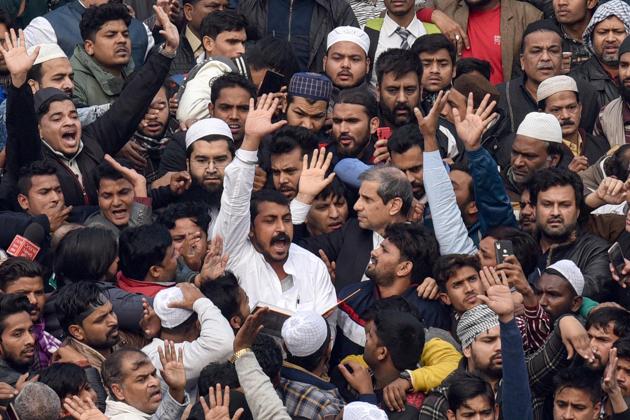
Chandrashekhar Azad was arrested on 21 December after he led a march from Jama Masjid against the new citizenship law. He was charged with rioting, unlawful assembly and inciting the mob to indulge in violence after vandalism in central Delhi’s Daryaganj area. Azad is in judicial custody till January 18.
{{/usCountry}}Chandrashekhar Azad was arrested on 21 December after he led a march from Jama Masjid against the new citizenship law. He was charged with rioting, unlawful assembly and inciting the mob to indulge in violence after vandalism in central Delhi’s Daryaganj area. Azad is in judicial custody till January 18.
{{/usCountry}}Minutes before the judge ordered Azad’s treatment at AIIMS as an outpatient, the investigating officer told the court that doctors needed to carry out further evaluation to ascertain if Azad was suffering from polycythemia. The judge, however, wasn’t convinced and pointed out that when Azad was suffering from the disease, “why does it require further examination”.
Azad, through his counsel Mahmood Pracha, had moved the court seeking medical treatment stating that he was suffering from a blood thickening disease, “polycythemia”, and every week or so, when the blood becomes thick, it is let out from the body in a process known as “phlebotomy”.
The application also added that if the blood is not taken out, it might result in the patient suffering a cardiac arrest.