A single goggle can be worn at least six times as a component of a personal protective equipment (PPE) kit by a healthcare worker, according to the latest guidelines issued by the Union Ministry of Health & Family Welfare (MoH&FW) on the rational use of the special glasses while attending to coronavirus disease (Covid-19) patients or related swab samples.
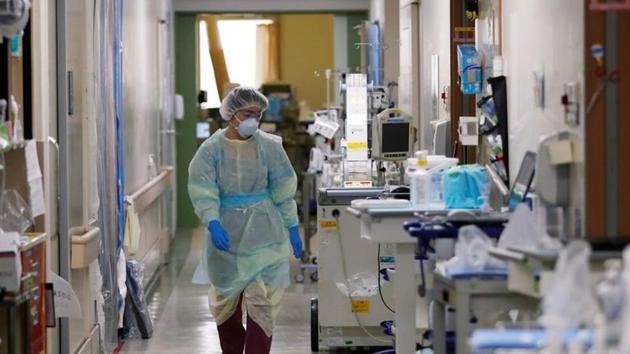
“Goggles may be issued to each healthcare worker, who will decontaminate them after every use. Goggles to be disinfected by users and reused at least five times each, whereby one pair of goggles will suffice for six days. They may use them rationally till their transparency decreases, or they get damaged. The ratio of issue of goggles to coverall is recommended at 1:6,” the advisory said.
Goggles are key to a PPE kit, whose components after their use are discarded as bio-medical waste as per the standard operating procedure (SOP). However, the goggles that conform to the prescribed quality specifications of the Bureau of Indian Standards (BIS) can be reused after proper disinfection, the ministry said.
“The purpose of this document is to enable individuals to reuse goggles used by them and allowing an extended use without running the risk of contracting infection,” the advisory said.
The ministry has been issuing advisories at regular intervals to guide healthcare workers on how to rationally use their protective gear after the country faced an acute shortage of PPE kits during the initial stages of the viral outbreak, leading to widespread panic and a public outcry.
{{/usCountry}}The ministry has been issuing advisories at regular intervals to guide healthcare workers on how to rationally use their protective gear after the country faced an acute shortage of PPE kits during the initial stages of the viral outbreak, leading to widespread panic and a public outcry.
{{/usCountry}}“We don’t face any shortage anymore but a rational use of the protective gear is still advisable. One must not waste the resources just because the requirement is being met. The ministry has been consulting experts and issuing appropriate guidelines on a regular basis, as it is an evolving situation,” said a senior government official, requesting anonymity.
The Centre has provided 1.14 and 9 million N-95 masks and PPE kits, respectively, to the states and other central institutions to date.
“We’ve identified over 100 domestic manufacturers and in about two months have developed a robust industry indigenously, which has a capacity of manufacturing close to 3 lakh masks and PPE kits each daily. It’s a remarkable feat. Besides, the country is not dependent on the import of these items anymore,” the official added.
The Union Ministry of Textiles has identified eight laboratories to run a quality control test of the PPE kits manufactured indigenously.