Even as the outrage over demolition of heritage structures around the 11th century Lingaraj Temple continues, the National Monument Authority under the Union Ministry of Culture has come up with heritage bylaws for the Sri Jagannath Temple in Puri, as well as two temples in Bhubaneswar proposing that a 100 metre area around the shrine be declared as ‘prohibited area’ where no constructions either by government or private agencies, can be undertaken.
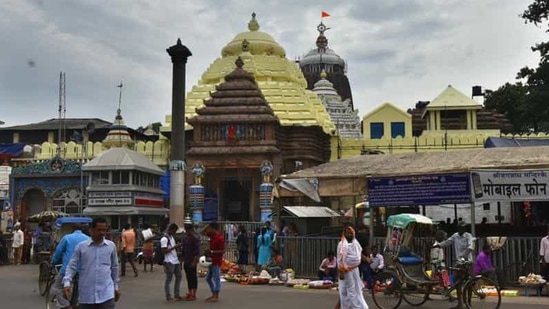
The NMA released the draft bylaws under The Ancient Monuments and Archaeological Sites and Remains (Amendment and Validation) Act (AMASR), 2010, for Jagannath Temple and its subsidiary shrines, defining various zones for their conservation and periphery development. As per the draft bylaws, an area of 100 metre (buffer zone) around Jagannath Temple would be declared as ‘prohibited area’, where no new construction of any kind, either by government or private agencies, would be permitted.
A further 200 metre in all directions would be ‘regulated area’ where construction is not prohibited, but must be approved by the NMA. While the temple site of 9.7 acre is protected area, the prohibited area is 37.061 acre along Meghanad pacheri (boundary wall) and regulated area is 138.385 acre. Currently, all four sides of the temple are mainly used for commercial and residential purposes. The draft bylaws have been prepared by a heritage expert committee including INTACH.
As per the proposed bylaw, height of all buildings in the regulated area of the monument will be restricted to 9 metre while the façade designs should match the monument. Modern materials such as aluminium cladding, glass bricks, and any other synthetic tiles or materials will not be permitted for exterior finishes.
{{/usCountry}}As per the proposed bylaw, height of all buildings in the regulated area of the monument will be restricted to 9 metre while the façade designs should match the monument. Modern materials such as aluminium cladding, glass bricks, and any other synthetic tiles or materials will not be permitted for exterior finishes.
{{/usCountry}}The exterior colour must be of a neutral tone in harmony with the monuments. French doors and large glass façades along the front street or along staircase shafts will not be permitted. LED or digital signs, plastic fibre glass or any other highly reflective synthetic material would not be used for signage in the heritage area. Banners would not be permitted, but for special events/fair etc. it may not be put up for more than 3 days. No advertisements in the form of hoardings, bills within the heritage zone will be permitted.
Signages should be placed in such a way that they do not block the view of any heritage structure or monument and are oriented towards a pedestrian. Hawkers and vendors may not be allowed on the periphery of the monument.
Similar heritage bylaws have been drafted for two temples in Bhubaneswar – the 13th century Vaishnava temple of Ananta Basudev and Shiva temple of Brahmeswar, both in the Ekamra Kshetra heritage site. The NMA released the draft bylaws on January 18 this year and has invited objections and suggestions on them till February 18.
The proposed heritage bylaw for Jagannath Temple has come about a year and half after the state government demolished several historic monuments around the structure in the name of aesthetic development of the area around the temple. Since August 2019, the state government has razed Languli Mutt, Emar Mutt, a 900-year-old monastery, Mangu Mutt and Bada Akhada Mutt, a 600-year-old monastery triggering howls of protest.