
 E-Paper



Darshinis: The cornerstone of Bengaluru’s fast food culture
It was in 1983 when the city witnessed its first fast-food joint, Café Darshini, the name that became synonymous with the concept years on. The idea was to move away from the dine-in system that existed till then, an eating culture where serving and eating food won’t take more than 15 minutes. The idea came to R Prabhakar, a businessman in Bavanagudi, following a trip aboard (WHERE?).

 Prefer HTon Google


Long before American fast-food giants KFC and McDonald’s arrived in the city, Bengaluru had tried and tested the concept of Darshini – quick-serving food joints.
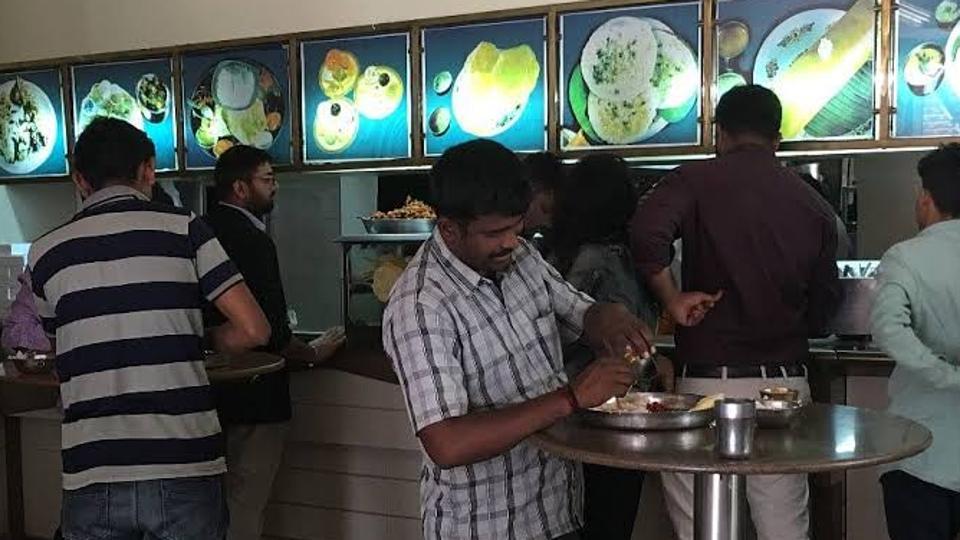
It was in 1983 when the city witnessed its first fast-food joint, Café Darshini, the name that became synonymous with the concept years on. The idea was to move away from the dine-in system that existed till then, an eating culture where serving and eating food won’t take more than 15 minutes. The idea came to R Prabhakar, a businessman in Bavanagudi, following a trip aboard.
Prabhakar, who saw the fast-food chains like McDonald’s in countries he travelled, thought such an idea could be adapted to serve south Indian food and decided to open a new restaurant on his return.
“When I saw the KFC and McDonalds, they were preparing food quickly. I realised south Indian food can be served as fast. So, I adopted this fast food or self-service model at my brother-in-law’s Café Darshini. Initially, everyone said it wouldn’t work because people of Bengaluru were used to spending long hours at restaurants, but our restaurant was full in no time,” said 68-year-old Prabhakar, who retired from the hotel business.
His concept was simple. The food will be billed first, using that token a customer could get the food from the counter. The menu is small, and hot food is served within a minute to the customer. However, the big change that Prabhakar brought was removing chairs from the restaurants and replacing them with tall tables, where people can stand and eat.
Chandrashekhar Hebbar, president, Karnataka Pradesh Hotels and Restaurants Association (KPHRA) said the new system allowed more people to eat at the joints. “The menu used to have uppittu (upma), idli, vada or rice bath, which were already prepared. So, there was no need to cook them from the scratch. Since they were standing, people ate the food quickly and moved on. And the quality of the food was so great in Darshinis that came up over the years that every restaurant was full of customers,” said Hebbar.
According to Hebbar, the Darshini culture that started with one restaurant changing the way it served food, caught on quickly. Currently, there are over 1,000 such Darshinis in Bengaluru, which are thriving. “From the late 1980s till mid-2000s, Darshinis were prominent food chains in Bengaluru. They were cost-effective for the hotelier, at the same time, cheap and convenient for the customer. Since the mid-2000s we have had many more fine dining places in the city, but Darshini restaurants remain popular,” he said.
Since the first Darshini in the city, several more people have adopted this business plan. The city administration even issues licenses for Darshini style restaurants. The new system made it easy for many entrepreneurs to venture into the business. “Unlike opening restaurant with seating, Darshini model doesn’t require much investment,” said Venkatesh Bhat, who owns Udupi Upahar in Basavanagudi. “Since the number of items served is limited, the daily cost is less as well. The fact that more such restaurants are opening every year shows how popular they are,” Bhat added.
Over a while, the city even saw a hybrid model, where restaurants started self-service and dine-in under the same roof. Hebbar said that in most of the cases, while the owners wanted to launch dine-in restaurants, they added the Darshini system because of its popularity among the masses.
Historian Suresh Moona said that Prabhakar’s idea to adapt the fast-food culture with a south Indian twist came at the right time since Bengaluru was witnessing a cultural change. “More businesses were coming up in the city. The pace of the city was increasing, and people were getting busier. In such a time, he introduced a menu which did not take much time to serve and was cheaper than a proper restaurant,” said Moona.
Moona said that an entrepreneur’s decision defined the city’s culture. Even today, in every corner of the city, from the morning walkers to the busy salesmen, everyone finds a quick bite at the Darshinis.


