The department of biotechnology has released a draft policy for the next five years enabling India to become a global biomanufacturing hub with an exponential growth of the sector to become a $150 billion industry by 2025.
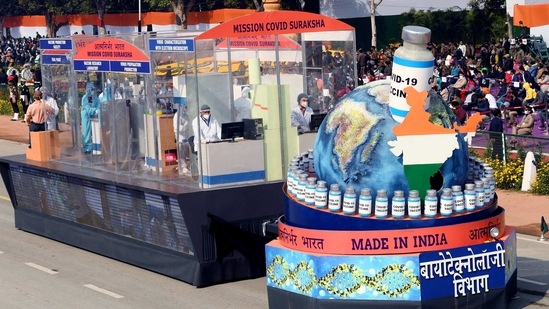
To do so, the government plans to focus on four areas – building human resource and infrastructure capacity, strengthening the research and innovation ecosystem and connecting it to start-ups, small scale and large scale industry even in the tier 2 and 3 cities. The government will also focus on translation of science to a product and commercialisation while enabling a balance between translation and basic science.
The draft also suggest creating an ‘Ease of doing science’ index.
The draft suggests that over the next five years the sector should focus on tackling problems such as the climate crisis – such as controlling methane emission, microplastics, and restoration of wetlands and lands – developing climate resilient crops, addressing food security, creating thermo stable vaccines, and creating a national phytochemical repository to set national standards for Indian and Ayurvedic pharmacopeia.
The draft also suggests that the basic research be ready for the challenges of the future such as precision medicine, gene editing, epigenetics, artificial intelligence and machine learning. The draft also proposes research priorities such as monoclonal antibodies for snake bites, stem cell technology, and nanotechnology for regenerative medicine.
{{/usCountry}}The draft also suggests that the basic research be ready for the challenges of the future such as precision medicine, gene editing, epigenetics, artificial intelligence and machine learning. The draft also proposes research priorities such as monoclonal antibodies for snake bites, stem cell technology, and nanotechnology for regenerative medicine.
{{/usCountry}}