E-Paper



Decade after scam, Odisha imposes penalty of ₹2056 cr for illegal mining
This is the biggest ever penalty on any mining company after the mining scam broke out a decade ago.

 Prefer HTon Google


A decade after the mining scam rocked Odisha leading to tightening of rules governing raising and transportation of minerals, the state mining department for the first time detected a major illegality, imposing penalty of ₹2,056 crore on Sarda Mines, a merchant miner for excess mining.
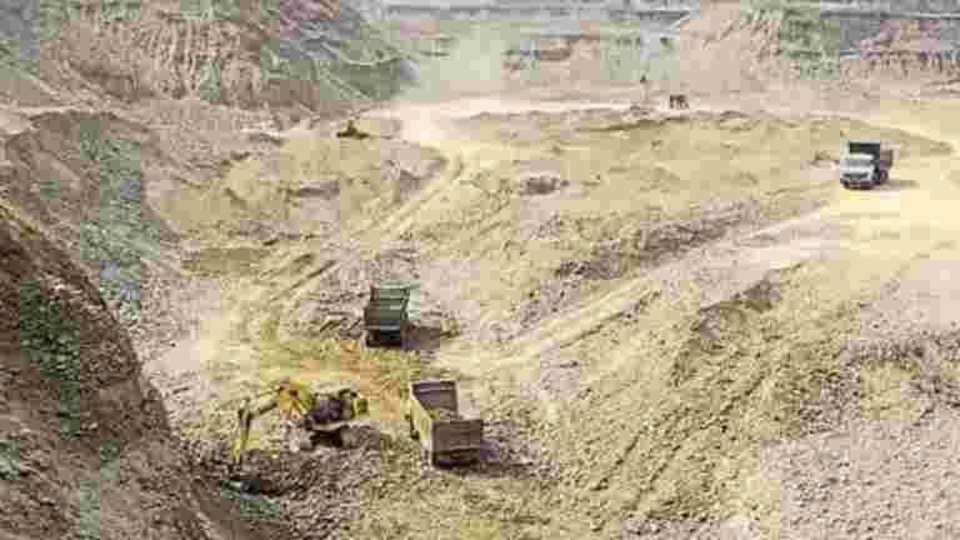
The joint director of mines in Joda of mines-rich Keonjhar district last week sent the notice to Sarda Mines under Section 21 (5) of The Mines and Minerals (Development and Regulation) (MMDR) Act, 1957, for raising 4.2 million tonnes of iron ore in excess of the limits stipulated under environmental clearance, mining plan as well as the limit set by State Pollution Control Board.
The mines department in its penalty demand said the Thakurani Block-B iron mines held by Sarda Mines in Keonjhar district over an area of 947.046 hectare produced at least 7 times of the limit set up by different government agencies such as Indian Bureau of Mines, the OPCB as well as the Ministry of Environment and Forests, Climate Change for the financial year 2019-20
The demand note from the joint director of mines said the excess mining happened in the month of February and March 2020. The mines department calculated the penalty taking into account the price of lump ore decided by the Indian Bureau of Mines. In February 2020, the highest price of lump ore was ₹4,691 per tonne while in March it was ₹4,835 per tonne.
Also read: Twitter restores 250 accounts blocked in India for a controversial hashtag
"This is the biggest ever penalty on any mining company after the mining scam broke out a decade ago," confirmed joint director of mines, Salil Behera. He, however, could not clarify how the company raised so much ore in excess of the limits set by various authorities even after many regulations were brought in after the mining scam. In 2010, the state mining department had started Integrated Mines and Minerals Management System (i3MS), a comprehensive information technology-based e-Governance initiative that provided an end-to-end tracking of minerals produced, despatched and consumed in all the 14 mining circles.
Other senior mining officials did not comment on the penalty imposed. HN Singh, vice-president of Sarda Mines, said his company would challenge the order in High Court. "We don't agree with the penalty demand. There are several flaws in it," he said.
After the mining scam was unearthed in Odisha in 2009, Justice MB Shah Commission of Enquiry had found that around ₹60,000 crore worth of ore was mined illegally from Keonjhar and Sundargarh between 2000 and 2010. However, in 2017, central empowered committee, that was appointed by Supreme Court to probe into illegal mining in Odisha, put the amount at ₹17,576.17 crore following which the apex court ruled that the errant companies have to pay the amount. The CEC calculated the figure for illegal extraction of 215.5 million tonnes of iron and manganese ore between 2000-01 and 2010-11.
The Thakurani B iron ore mines in Joda area leased to Sarda Mines in August 1991 was a supplier of high-quality ore to the Naveen Jindal-led Jindal Steel and Power Limited plant before it was closed on March 31, 2014, due to lack of environment clearances. In January last year, the Supreme Court had allowed it to resume mining operations after directing to pay around ₹933 crore towards environmental compensation to the state government.
However, in September last year, the Ministry of Environment and Forest and Climate Change asked Sarda Mines to stop operation immediately noting that its environment clearance was invalid. Sarda Mines, however, got a stay against the order from Delhi High Court and resumed its operation. Its lease over the Thakurani B mines is scheduled to end in August this year.