The Supreme Court’s Monday verdict on whether or not the central government’s prior approval is needed before investigating top bureaucrats has brought to centre stage a consistent practice by successive governments since 1969 to put in place a safety net for their bureaucrats — and also of the top court’s unwavering scrutiny of the way this has been done repeatedly.
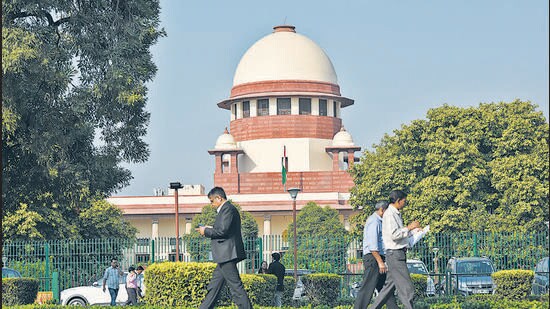
On Monday, a Constitution bench led by justice Sanjay Kishan Kaul ruled that the court’s 2014 ruling that revoked the immunity to senior officers booked by the Central Bureau of Investigation (CBI) in corruption cases between September 2003 and May 2014 “will have retrospective operation”, effectively meaning that such public servants can be prosecuted without government approval.
The ruling by the bench, which also comprised justices Sanjiv Khanna, AS Oka, Vikram Nath and JK Maheshwari, clarified a 2014 judgment by another five-judge bench that scrapped Section 6A of the Delhi Special Police Establishment (DSPE) Act, inserted in September 2003 to mandate prior sanction of the government before initiating prosecutions.
Notably, after the 2014 judgment, the Centre revived the immunity shield of public servants by making an amendment to the Prevention of Corruption (PC) Act in July 2018. This amendment is presently under challenge before the top court.
The history of the government’s endeavours to shield officers from the threat and ignominy of investigations, malicious or otherwise, and the apex court’s scrutiny of these moves throws up a curious tale of pulls back and forth in the last five decades.
{{/usCountry}}The history of the government’s endeavours to shield officers from the threat and ignominy of investigations, malicious or otherwise, and the apex court’s scrutiny of these moves throws up a curious tale of pulls back and forth in the last five decades.
{{/usCountry}}Single Directive of 1969Before insertion of Section 6A in the DSPE Act, the requirement to obtain prior approval of the central government was contained in a directive known as “Single Directive” issued by the government. In 1969, the Centre issued the Single Directive, which was a consolidated set of instructions issued to CBI by various ministries and departments regarding modalities of initiating an inquiry or registering a case against certain categories of civil servants.
Directive No.4.7(3) provided for a prior sanction of the designated authority to initiate investigation against officers of the government and public sector undertakings and nationalized banks above a certain level.
According to the government, the said directive was issued to protect senior officers from the perils of vexatious inquiries and investigations and to ensure they were not victimised for taking honest decisions. It was said that absence of such protection could adversely affect the efficiency and efficacy of the government institutions because of the tendency of such officers to avoid taking any decisions which could later lead to their harassment by way of frivolous probes.
The Single Directive was quashed by the Supreme Court by a judgment in Vineet Narain & Ors Vs Union of India, delivered on December 18, 1997. Narain, a journalist and a social activist, approached the court in 1993, complaining about inertia by CBI in matters where high dignitaries were accused of wrongdoings. He assailed the constitutional validity of the Single Directive No. 4.7(3).
Quashing the Single Directive, a three-judge bench ruled that every person accused of committing the same offence is to be dealt with in the same manner in accordance with law, which is equal in its application to everyone.
“If the conduct amounts to an offence, it must be promptly investigated and the offender against whom a prima facie case is made out should be prosecuted expeditiously so that the majesty of law is upheld, and the rule of law vindicated,” held the court, shooting down the Centre’s argument that the Single Directive is applicable only to certain class of officers who are decision makers.
The top court also held the Single Directive to be invalid on the ground of legislative competence, noting that the powers of CBI conferred under DSPE Act were interfered with by way of an administrative instruction issued by the government.
Section 6A of the DSPE ActUnwilling to let go of the immunity provision, soon after the judgment in the Vineet Narain case, the Centre brought back a similar provision in place through an ordinance in the CVC Act with effect from August 25, 1998. The ordinance was in force till October 27, 1998, when it lapsed.
Soon, the government introduced the CVC Bill in December 1998, which was initially referred to a parliamentary panel for making recommendations. While the Lok Sabha passed the CVC Bill in March 1999 , it (the bill) awaited a nod of the Rajya Sabha. But the Lok Sabha dissolved in April 1999, rendering the bill nugatory. The CVC Bill was reintroduced in 2003 and it received the assent of the President on September 11, 2003, after its passage by both the Houses of Parliament.
Section 6A laid down that CBI shall not conduct any probe into an alleged offence under the PC Act except with the previous approval of the central government where such allegation relates to an officer of the level of joint secretary and above and where such officers are appointed by the central government in corporations established by or under any central law, government companies, societies and local authorities owned or controlled by the government.
Section 6A remained on the statute book for a period of more than 10 years till the Supreme Court quashed it in the case of Subramanian Swamy Vs Union of India on May 6, 2014. A five-judge bench held the impugned provision to be unconstitutional as being violative of Article 14 (equality) of the Constitution.
“Status or position” cannot shield an officer of the level of joint secretary and above from unconstrained probe by CBI in cases of corruption, the court ruled in 2014, quashing the law that required the agency to go to the government to seek approval for the investigation. Terming Section 6A a provision that is “discriminatory”, and “impedes tracking down the corrupt senior bureaucrats”, the judgment said that “the protection in Section 6A has propensity of shielding the corrupt”.
The provision “suffers from the vice of classifying offenders differently for treatment thereunder for inquiry and investigation of offences, according to their status in life”, it said. “Every person accused of committing the same offence is to be dealt with in the same manner in accordance with law. The status or position of public servant does not qualify such public servant from exemption from equal treatment. The decision-making power does not segregate corrupt officers into two classes as they are common crime doers and have to be tracked down by the same process of inquiry and investigation,” the Constitution bench ruled in the 2014 judgment.
The result of section 6A, it added, is that the very group of persons, namely, high ranking bureaucrats whose misdeeds and illegalities may have to be inquired into, would decide whether CBI should even start an inquiry or investigation against them or not.
The 2014 verdict, however, did not specifically mention whether the protection of prior sanction would be removed from the date of the judgment in May 2014 or had effect from when Section 6A was inserted in 2003, inviting the clarificatory judgment on Monday. The five-judge bench declared that the ruling will also apply to public servants booked by CBI between September 2003 and May 2014, and they can be prosecuted without government approval.
Section 17A of the PC ActKeeping with the trend of the court quashing a provision on immunity to public servants and the government bringing it back in a different form, in July 2018, the Centre revived protection for government servants yet again by bringing an amendment to PC Act.
Section 17A was added to PC Act with effect from July 26 that year to extend the immunity from prosecution without prior sanction to not only all serving government officers but also those who have retired, provided the alleged act of criminality relates to discharge of official duties. The new law provided for sanction before prosecution but without any classification of government servants. All government servants, irrespective of category, class, or level, are provided protection under Section 17A of PC Act, doing away with the distinction that Section 6A had between top bureaucrats and junior officers that eventually became the prime ground for the annulment of the section.
The section provides that no police officer shall conduct any enquiry or inquiry or investigation into any offence alleged to have been committed by a public servant under PC Act, where the alleged offence is relatable to any recommendation made or decision taken by such public servant in discharge of his official functions or duties, without the previous approval.
While a period of four months has been given for under Section 17A for a competent authority to convey its decision on granting sanction, the provision clarifies that no such approval shall be necessary for cases involving arrest of a person on the spot on the charge of accepting or attempting to accept any undue advantage for himself or for any other person – borrowed from Section 6A of the DSPE Act.
In November 2018, the top court agreed to examine the validity of Section 17A after civil society organisation, Centre for Public Interest Litigation, approached the court, complaining that the amendment seeks to gut the very heart of the anti-graft law. While the government seeks to counter the grounds of discrimination between public servants based on their ranks, the petition stated, the fundamental concern of the previous Supreme Court judgments on stalling an investigation at the very threshold for want of sanction has not been heeded to. Subsequently, some more petitions were filed challenging Section 17A.
The adjudication on the new provision has remained pending in the top court since February 15, 2019, when the Union government was given four days to file its response in the matter. Meanwhile, the top court judgments in 2019 and 2021 clarified that Section 17A does not have a retrospective operation and the protection is available only since the new law came into force on July 26,2018.
Successive governments at the Centre have defended immunity provisions for the public servants arguing that the safety mechanism in the form of sanction was aimed at protecting bona fide actions in governmental functioning. The Supreme Court, however, has junked two such attempts in the past not only on the grounds of legality but also underscoring the criticality of an untrammelled probe involving high functionaries. Though the third round of adjudication is yet to commence, it is certain that the government will have a lot of explaining to do in defending Section 17A in the light of the Supreme Court’s 2014 judgment (and Monday’s clarification), holding that the aim and object of investigation is ultimately to search for truth and any law that impedes that object may not stand the test of constitutionality.