E-Paper



‘New Delhi Frontier AI’ pact pushes inclusive global artificial intelligence: Minister Ashwini Vaishnaw
The ‘New Delhi Frontier AI Impact Commitments’ focuses on AI governance, promoting multilingual evaluations and collaboration for inclusive development in AI.

 Prefer HTon Google


Global technology giants and Indian innovators on Thursday signed the ‘New Delhi Frontier AI Impact Commitments’, a dual-pledge framework designed to track artificial intelligence adoption and enhance its performance across diverse linguistic and cultural contexts.
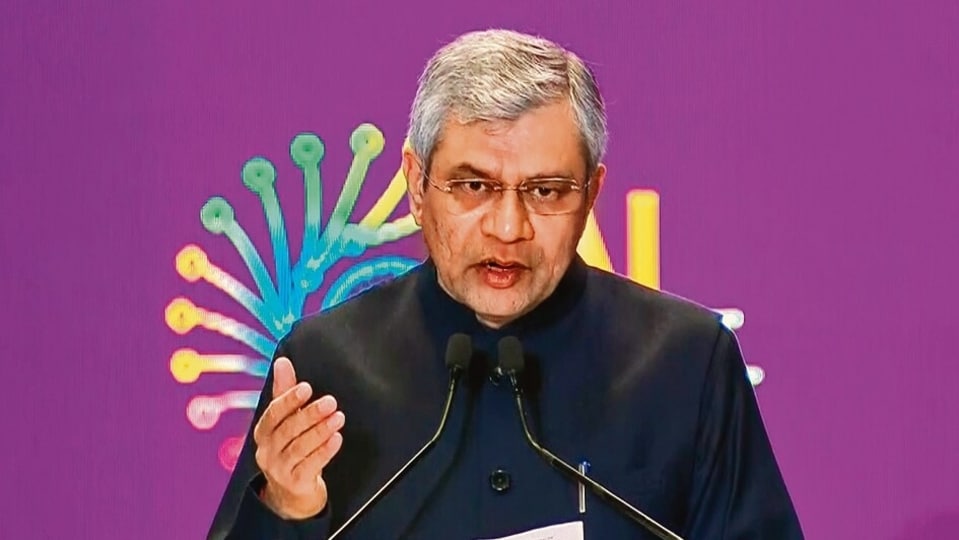
The pact, announced by IT minister Ashwini Vaishnaw at the AI Impact Summit in the capital, includes Google, OpenAI, Anthropic, Microsoft and Meta, alongside Indian firms Sarvam, BharatGen, Gnani and Soket AI.
“Today, leading AI frontier companies, along with India’s own innovators such as Sarvam, BharatGen, Gnani and Socket have come together to make a set of voluntary commitments that reflect a shared vision for inclusive and responsible AI,” Vaishnaw said. He stated that the initiative positions India at the forefront of building a “Global South-led perspective on AI governance, one that balances innovation with equity and real-world impact”.
Following the announcement, the minister called on Prime Minister Narendra Modi to join the heads of the participating technology firms for a commemorative photograph.
The framework consists of two primary pillars. The first, ‘Advance Analysis on real-world AI usage’, aims to improve how AI adoption is tracked across the global economy to support evidence-based policy making on jobs, skills and education.
“First is advancing understanding of real-world AI usage through anonymised and aggregated insights to support evidence-based policy making on jobs, skills and economic transformation,” Vaishnaw said. Signatories pledged to publish statistical insights derived from this data by the next AI Summit in Switzerland.
The second pillar focuses on strengthening multilingual and use-case evaluations. “The second is strengthening multilingual and contextual evaluations of AI systems to ensure that AI works effectively across languages, cultures and real-world use cases, especially in the Global South,” Vaishnaw stated.
The participating companies committed to evaluating AI capabilities across a subset of under-represented languages while collaborating with local ecosystems and governments to develop new evaluation methods. Vaishnaw added that these efforts mark an important step toward shaping AI that is “not only powerful but also inclusive, development-oriented and globally relevant”.