
 E-Paper



Delhi set to celebrate a green cracker Diwali amid ‘severe’ AQI warning
The Supreme Court has permitted the sale and bursting of CSIR-NEERI-certified green crackers in the Delhi-NCR area from October 18 to 20 during two time slots.

 Prefer HTon Google


Delhi is set to light up the skies with green crackers this Diwali this year, a move aimed at celebrating the festival while keeping pollution in check.
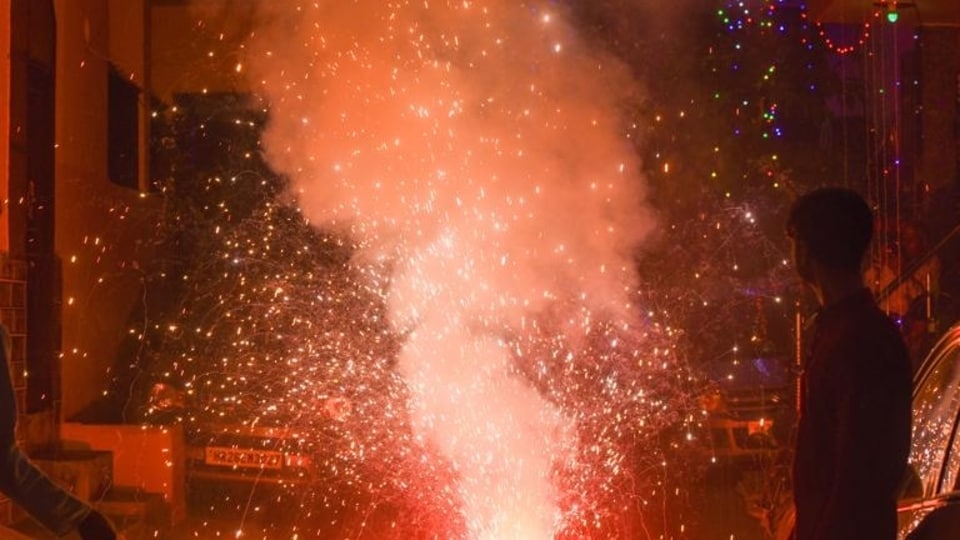
The Supreme Court has permitted the sale and bursting of CSIR-NEERI-certified green crackers in the Delhi-NCR region from October 18 to 20, allowing them only during two time slots, from 6 am to 7 am and 8 pm to 10 pm.
Delhi, which witnessed a 'poor' Air Quality Index (AQI) for sixth consecutive day on Sunday, is likely to see 'severe' pollution levels amid deteriorating meteorological factors, coupled with bursting of firecrackers.
How bad is Delhi’s air quality right now?
This move comes amid a severe dip in air quality, with the latest Central Pollution Control Board data showing the capital's AQI at 296, which is close to ‘very poor’ category.
The AQI in the national capital was 268 on Saturday, it was recorded on 254 and 245 on the two previous days.
Are other NCR cities facing similar pollution issues?
Other cities in the National Capital Region (NCR) fared worse, with Ghaziabad in Uttar Pradesh recording “very poor” air for the third consecutive day.
Meanwhile, the pollution levels in Noida and Ghaziabad was recorded in the 'very poor' category, while that of Faridabad was at 'moderate' levels. The 24-hour average AQI in Ghaziabad was 324 (“very poor”) on Saturday, 306 on Friday and 307 on Thursday.
Meanwhile, Gurugram and Greater Noida recorded AQIs of 258 (poor) and 248 (poor), respectively, while Faridabad’s AQI stayed in the “moderate” category.
Also Read | ‘Severe’ air warning for Delhi, as quality dip continues
40% more cracker use: Study on Delhi-NCR
The Supreme Court order may increase the number of families bursting firecrackers by 40 per cent compared to last year, raising fears that 'regular fireworks' could also make a comeback, a LocalCircles study said.
The survey of over 38,000 residents across Delhi, Gurugram, Noida, Faridabad, and Ghaziabad found that 34 per cent of families are likely to burn crackers this Diwali; half of them may also burn regular crackers in addition to green ones.
Will green crackers alone reduce pollution?
Dr S Chatterjee, Senior Consultant in Internal Medicine at Apollo Hospital, points out that green crackers produce 30% less pollution than traditional crackers.
However, with pollution levels rising, even green crackers can pose health hazards, especially for patients with respiratory issues.
“It is highly advisable that we avoid using crackers, even the green ones, as the general public may suffer more after Diwali,” he said.
Also Read | Supreme Court declares cracker of a Diwali in Delhi-NCR
How will authorities enforce green cracker regulations?
Patrolling teams from multiple agencies, including Delhi Police, will ensure that only NEERI and PESO-approved green firecrackers with QR codes are lit during the specified days and times.
All police stations have been instructed to remain vigilant, particularly in areas with a history of violations.
Strict action will be taken against anyone found violating these regulations, and additional beat staff and enforcement teams will be deployed in residential and market areas to monitor activities and take immediate action if needed.


