Receiving a notice during Delhi’s Special Intensive Revision (SIR) of electoral rolls does not mean that a voter’s name will automatically be deleted. The Delhi chief electoral officer’s office has said the notices are part of a verification process to address discrepancies in voter records, and voters have an opportunity to respond and submit supporting documents.
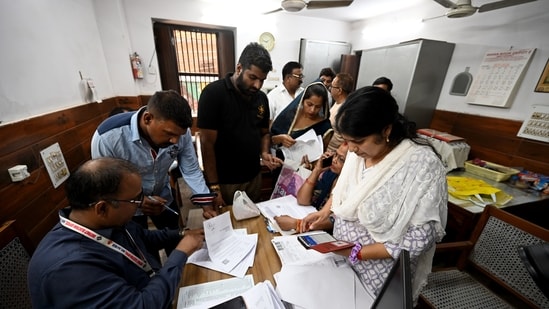
More than 33 lakh electors have been flagged under two categories: “no mapping”, where an elector could not be linked with the previous SIR roll, and “logical discrepancies”, where inconsistencies were found in voter details.
So, what should you do if you receive an SIR notice?
Read the notice carefully
Deep Dive
What should I do if I receive a notice during the Special Intensive Revision of electoral rolls in Delhi?
Why are many voters receiving notices for discrepancies in the electoral rolls?
What documents can I submit to address discrepancies flagged in my voter notice?
The first step is to read the notice carefully and understand the discrepancy that has been flagged. It could relate to details submitted in the enumeration form, a mismatch in the elector’s own name or a parent’s name, an age-related discrepancy, or the inability to establish a link with the previous SIR electoral roll.
“The notices are in English. BLOs have been provided Hindi text also for the notices. In case someone does not understand the language of the notice, the BLOs will explain to them in Hindi on what are the discrepancies and the process to be followed,” an official said.
The voter can then submit a reply along with supporting documents to the Electoral Registration Officer (ERO) during the hearing process. The ERO will examine the documents submitted by the voter along with the verification report prepared by the Booth Level Officer (BLO).
Submit your reply and supporting documents
{{/usCountry}}The voter can then submit a reply along with supporting documents to the Electoral Registration Officer (ERO) during the hearing process. The ERO will examine the documents submitted by the voter along with the verification report prepared by the Booth Level Officer (BLO).
Submit your reply and supporting documents
{{/usCountry}}The voter can submit a reply along with supporting documents to the Electoral Registration Officer (ERO) on the date of the hearing.
The ERO will examine the documents submitted by the voter as well as the verification report prepared by the Booth Level Officer (BLO) before taking a decision.
The Election Commission of India has clarified that the prescribed list of documents is indicative and not exhaustive. This means voters can submit other relevant documents that help establish their eligibility or address the discrepancy flagged in the notice.
What documents can you submit?
The Election Commission has suggested a list of supporting documents that voters can submit, depending on the discrepancy and their circumstances. These include identity cards issued to government or PSU employees or pensioners; documents issued by government authorities, banks, post offices, LIC and PSUs before July 1, 1987; birth certificates; passports; matriculation or other educational certificates; permanent residence certificates; forest rights certificates; caste certificates; NRC records, wherever applicable; family registers; and government-issued land or house allotment certificates.
The documentary requirements also vary depending on the elector’s date of birth. Those born before July 1, 1987, will need proof of their date and/or place of birth. Those born between July 1, 1987 and December 2, 2004, will need documents establishing their own date/place of birth as well as that of one parent. Those born after December 2, 2004, will need documents for themselves and both parents.
The prescribed list of documents is indicative and not exhaustive. The ERO can consider other relevant material on a case-by-case basis while deciding whether the discrepancy has been satisfactorily addressed.
Does an SIR notice mean your name will be deleted?
No. The Delhi CEO’s office has made it clear that receiving a notice is part of the verification process and does not amount to a deletion order.
No elector’s name can be deleted without giving the person an opportunity to be heard and passing a proper, speaking and appealable order.
This means voters who receive notices have an opportunity to explain the discrepancy and submit documents before any decision is taken on their electoral record.
Why are so many voters receiving notices?
The Delhi SIR exercise has flagged voters under two broad categories: “no mapping” and “logical discrepancies”.
According to election authorities, 13,79,785 electors could not be mapped with the previous SIR roll, while 19,33,134 were flagged for logical discrepancies. Together, the two categories account for 33,12,919 electors.
The list has also included several prominent names, including external affairs minister S Jaishankar, Delhi chief minister Rekha Gupta, former chief minister Arvind Kejriwal and BJP veteran LK Advani.
The notices have drawn attention to the process, with the Supreme Court scheduled to hear a petition seeking disclosure of the criteria, algorithmic parameters and operational guidelines used to classify voters under the “logical discrepancy” category.
When is the deadline?
For Delhi’s ongoing SIR, the notice-disposal process is scheduled to be completed by October 29.
The final electoral roll is scheduled to be published on November 4.
Voters who receive notices should therefore respond within the prescribed period and submit the relevant documents to the ERO or BLO handling their case.