
 E-Paper



Delhi rain triggers traffic snarls; IMD issues ‘Orange’ alert
Delhi weather update: Visuals from the Burari area of the city show that heavy water logging has caused traffic congestion.

 Prefer HTon Google


Delhi on Friday witnessed widespread rainfall overnight, leading to massive traffic snarls across several areas of the national capital and its adjoining regions.
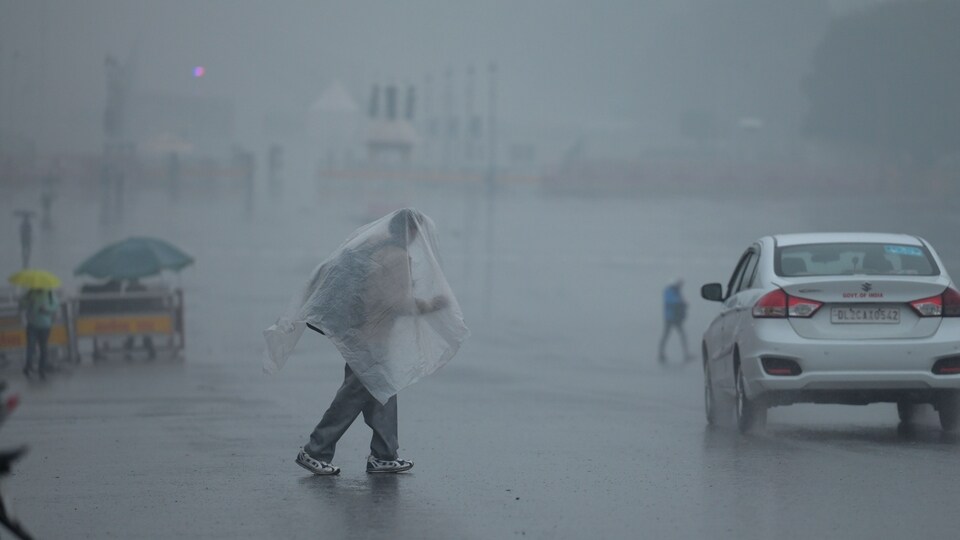
Given heavy downpours, the India Meteorological Department (IMD) issued an ‘orange’ warning, advising residents to be prepared as rain continues to lash the city.
The weather office said the rain started in Delhi-NCR around 2:30 am.
READ | Delhi: IMD predicts rain this weekend, colder days
According to Indian Meteorological Department (IMD) data till 11:30 am, the observatory at Safdarjung -- the national capital's primary weather station -- recorded 9.1 mm rainfall.
The observatory at Palam recorded 8.4 mm of rainfall, Lodhi Road (10.8 mm), Ridge (9 mm), Delhi University (11 mm), and Pusa (9.5 mm).
Delhi rain causes traffic disruptions
Visuals from the Burari area of the city show that heavy water logging has caused traffic congestion in the area as the rain continues to lash parts of Delhi, PTI reported.
As per the IMD, the weather was being influenced by an active western disturbance interacting with easterly winds, causing light to moderate rainfall and thunderstorms over northwest and central India, including Delhi-NCR.
READ | Delhi dense fog: Airport issues advisory, 18 trains delayed amid cold wav
The minimum temperature in the city was recorded at 11°C, which is 2.8°C above normal for this time of year. Air quality, meanwhile, remains a concern, with the air quality index recorded at 372, falling into the 'very poor' category according to the Central Pollution Control Board (CPCB) data at 9 am.
AQI in Delhi today
The air quality at 9 am was recorded in the 'very poor' category, with a reading of 372, according to Central Pollution Control Board data.
The 24-hour Air Quality Index (AQI) was recorded at 345 at 4 pm on Thursday.
The Central government's air quality monitoring panel on Tuesday revoked Stage IV ('Severe ') measures under the Graded Response Action Plan (GRAP) in Delhi and the National Capital Region (NCR) following an improvement in air quality.
However, actions under Stages I, II, and III will remain in force to prevent any further deterioration of air quality, the Commission for Air Quality Management (CAQM) announced on December 24.


