E-Paper



Develop closer contact with Indian diaspora, create authentic database: MEA told
The parliamentary committee on external affairs said Indian embassies and posts abroad “should play a more pro-active role, maintain greater outreach and develop closer contact with the diaspora community”

 Prefer HTon Google


NEW DELHI: The parliamentary panel on external affairs on Wednesday asked the external affairs ministry (MEA) to make “concerted efforts” to create an authentic database of the Indian diaspora and use it to prepare welfare schemes for overseas Indians.
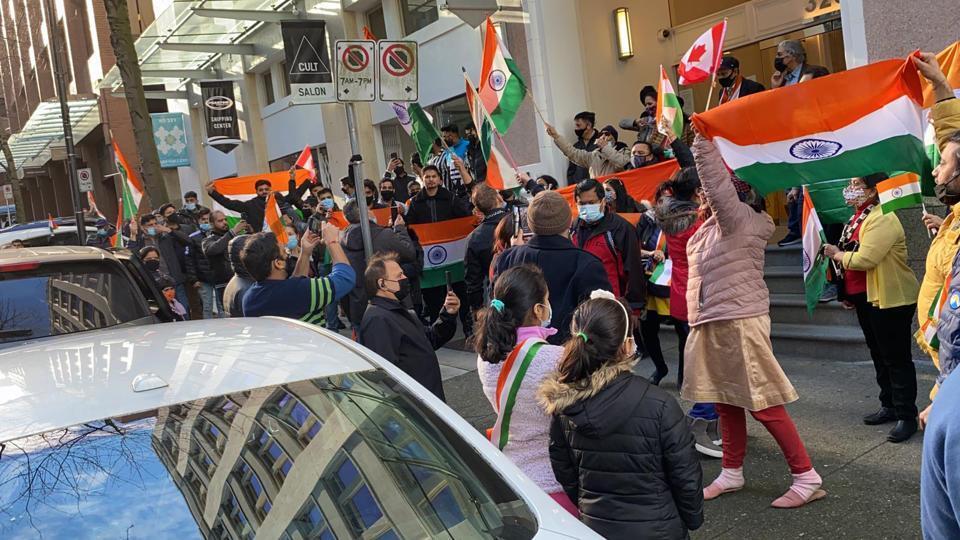
In a report titled “Welfare of Indian Diaspora: Policies/Schemes” submitted to Lok Sabha, the committee on external affairs headed by PP Chaudhary expressed surprise that “authentic data of the Indian diaspora is not available” with the ministry.
The Indian diaspora comprises 13 million non-resident Indians (NRIs) spread across the globe and more than 18 million people of Indian origin (PIOs). The committee said it “strongly felt that the ministry may not be able to implement welfare schemes for the said community as well as address the challenges being faced by them effectively in the absence of a comprehensive and up-to-date database”.
The committee said Indian embassies and posts abroad “should play a more pro-active role, maintain greater outreach and develop closer contact with the diaspora community and encourage them to register themselves” with missions so that an authentic database is maintained. This can be used as the basis for preparing and implementing welfare schemes for the diaspora.
The committee noted that the external affairs ministry launched a project to study data management in other countries to develop a module for migrant workers and students studying overseas. “In [the] committee’s view, an authentic database of migrant workers and overseas students is long overdue as they constitute the most vulnerable section of the Indian diaspora,” the report said, adding that this module should be developed within a specified timeframe.
The parliamentary panel also expressed surprise over the lack of a “clear-cut policy” on the Indian diaspora, despite the community “playing a very important role in the socio-economic development of their home country”.
It recommended that the external affairs ministry should issue a policy document on the diaspora to serve as a guide for “deeper and wider engagement” with the community with the objective that “all involved in the process of diaspora affairs may work in tandem to achieve the objectives set in this regard”.
While expressing concern at the plight of thousands of Indian students who were pursuing medical and other courses in Ukraine and China and could not return to these countries due to the closure of universities, the committee said the students had “been left in a quandary”.
“The committee have been informed that MEA had recommended to the ministry of health and family welfare to consider allowing Indian private medical institutions to enrol returnee students from Ukraine in their institutions on a one-time exemption basis,” the panel said. It urged the external affairs ministry to pursue the matter with the health ministry to solve the crisis faced by students enrolled in Ukrainian universities.
In the case of Indian students enrolled in Chinese universities, the external affairs ministry said the Indian embassy in Beijing is preparing a list to be shared with the Chinese side for consideration for the return of students to China “on a need-assessed basis”. The panel said the ministry should finalise the list of students “at the earliest and make all-out efforts to ensure their smooth return through continuous interaction with the Chinese authorities at the highest level, especially as Covid-19-related health protocols are in place and vaccination has also been widely done”.