Coming after pressure from the Cockroach Janta Party's massive protest and the Congress-led Opposition's sustained stance, Union education minister Dharmendra Pradhan's resignation on Saturday marked a major departure from Prime Minister Narendra Modi's long-held approach of standing by ministers facing political pressure.
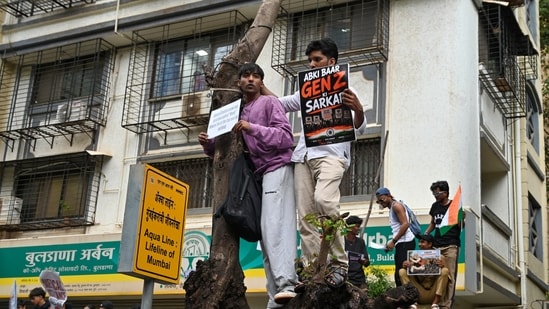
The resignation, once formally accepted, would become the first instance of a Union Cabinet-rank minister stepping down while explicitly taking responsibility for a major governance controversy during Modi's tenure of 12 years as PM so far.
In his public letter announcing his decision on Saturday, Pradhan, a senior BJP leader who's held ministerial posts since 2014, said he resigned to ensure that the controversy over the medical entrance examination did not derail students' futures or allow “anti-national forces” to exploit the situation.
How 'won't resign' was a policy of Modi regime
The resignation is unusual because the Modi government has, over the past 12 years, consistently resisted Opposition's and others' demands for ministers to quit over controversies, arguing that resignations should not become a political instrument.
That position was articulated in Parliament as early as 2015 during the controversy surrounding the then external affairs minister Sushma Swaraj over the Lalit Modi-IPL episode. Rejecting the Opposition's demand for her resignation, the then home minister Rajnath Singh said: “Yeh UPA ki sarkar nahin hai. Yeh NDA ki sarkar hai. Hum bali ki rajneeti mein vishwas nahin karte.” (“This is not a government of the Congress-led UPA. This is NDA government. We do not believe in the politics of making scapegoats.”)
{{/usCountry}}That position was articulated in Parliament as early as 2015 during the controversy surrounding the then external affairs minister Sushma Swaraj over the Lalit Modi-IPL episode. Rejecting the Opposition's demand for her resignation, the then home minister Rajnath Singh said: “Yeh UPA ki sarkar nahin hai. Yeh NDA ki sarkar hai. Hum bali ki rajneeti mein vishwas nahin karte.” (“This is not a government of the Congress-led UPA. This is NDA government. We do not believe in the politics of making scapegoats.”)
{{/usCountry}}That approach — of differing from the Congress-led UPA era on resignations — has largely held through Modi's three terms in office.
One of the near-breaks came in 2017 when then railway minister Suresh Prabhu offered to resign after a series of accidents, saying he accepted moral responsibility. Modi did not immediately accept his offer, and Prabhu continued until the subsequent cabinet reshuffle, when he was shifted to another ministry.
A resignation did come in 2018, of a Minister of State, when MJ Akbar quit amidst the MeToo movement after facing accusations of sexual harassment during his time as a newspaper editor.
In 2020, Harsimrat Kaur Badal resigned from the Union cabinet over the farm laws. However, she represented the Shiromani Akali Dal, then an NDA ally, and her resignation stemmed from a policy disagreement with the government rather than acceptance of responsibility for a crisis. Several other ministers, including former education minister Ramesh Pokhriyal Nishank, have left the Cabinet owing to reshuffles or health reasons.
After Pradhan's resignation, Congress president Mallikarjun Kharge said, among other things: “This is the victory of truth and the defeat of PM Modi's arrogance.”
Precedents in UPA era, beyond
Though not always followed by street protests, “moral responsibility” resignations have come after disasters or scandals in the past too. Ashwani Kumar quit as law minister under the UPA in 2013 after the Supreme Court criticised the government's handling of the coalmine-allotment probe, and Shivraj Patil resigned as home minister also under Manmohan Singh's UPA government in 2008 after the Mumbai terror attacks.
Under the Atal Bihari Vajpayee-led NDA, Nitish Kumar resigned in 1999 as railway minister after a train collision killed nearly 300 people.
Many decades ago, VK Krishna Menon resigned as defence minister during Jawaharlal Nehru's Congress rule in 1962 as a fallout from the India-China war, and Lal Bahadur Shastri, also under Nehru, established a benchmark in 1956 by resigning as railway minister after an accident that killed 144 people.
What Pradhan said
In his resignation letter on Saturday, Dharmendra Pradhan defended the government's handling of the NEET crisis, saying irregularities in the May 3 examination were promptly addressed by cancelling the test, handing the investigation to the Central Bureau of Investigation (CBI), ordering a re-examination and deciding to shift the exam to the computer-based mode from next year.
“From the very first day, I took responsibility and never turned away from this situation,” he wrote. "My resolve was that we would not allow the prospects of any meritorious student to be ruined because of the examination mafia, nor would we allow injustice to be done to any student."
He also alleged that "individuals occupying responsible positions" had attempted to mislead students during the controversy, though he did not identify anyone. He has attacked Leader of Opposition Rahul Gandhi on this issue earlier.
Calling India's youth the country's greatest strength, Pradhan said the developments of the past 10 days had saddened him but stressed that the issue was “not a matter of personal prestige”.
“Considering the situation that has arisen at Jantar Mantar and across the country, this situation should not be exploited by anti-national forces, the unity of the country should remain intact, not a single student's future should get entangled in legal complications, and our children should focus on their studies and careers. Keeping these considerations in mind, I have submitted my resignation to the Hon'ble Prime Minister,” he wrote, in Hindi.