The West Asia conflict must be resolved through dialogue and diplomacy, and not on the battlefield, Prime Minister Narendra Modi said on Tuesday, even as he urged Shanghai Cooperation Organisation (SCO) states to shun “double standards” while unitedly countering the challenge of terrorism.
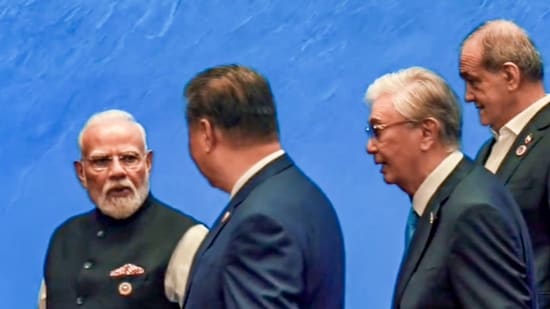
Modi made the remarks while addressing the 26th SCO Summit in the Kyrgyz capital of Bishkek. The comments were made before a gathering that included Pakistan Prime Minister Shehbaz Sharif and President Xi Jinping of China, which has often stymied India’s efforts to sanction Pakistani terrorists at bodies such as the UN Security Council.
Also Read: Making the SCO work for India | HT Editorial
Deep Dive
What did Prime Minister Modi emphasize about resolving conflicts in West Asia at the SCO summit?
Why is Modi urging the Shanghai Cooperation Organisation (SCO) to address terrorism?
How does Modi propose SCO member states should combat terrorism together?
He also spoke of India’s vision for the SCO based on security, connectivity and opportunity and said the grouping, which has completed 25 years, should now focus on translating cooperation into tangible outcomes that benefit the people of the grouping’s 10 member countries.
“The crisis in West Asia has demonstrated that a conflict in one region does not remain confined to that region. Its impact is felt across the world, affecting energy security, maritime trade, and supply chains,” Modi said, speaking in Hindi.
{{/usCountry}}“The crisis in West Asia has demonstrated that a conflict in one region does not remain confined to that region. Its impact is felt across the world, affecting energy security, maritime trade, and supply chains,” Modi said, speaking in Hindi.
{{/usCountry}}“The countries of the Global South bear the greatest brunt of such disruptions. Therefore, India has consistently called for all tensions and conflicts to be resolved not on the battlefield, but through dialogue and diplomacy.”
READ ALSO | 'Don't buy gold, don't marry abroad': PM Modi revives swadeshi pitch amid India's GDP growth
While speaking on the issue of security, Modi said terrorism remains a serious challenge to humanity. “In the fight against terrorism, we cannot remain confined to an action-reaction approach,” he said.
“We must dismantle the entire ecosystem of terrorist financing, recruitment, radicalisation and safe havens. We must speak with one voice and make it clear that there can be no place for double standards on this serious issue,” Modi said.
Though Modi didn’t name any countries, his remarks on terrorism appeared to be directed against Pakistan. “We must send a strong message to countries that use terrorism as an instrument of policy and provide safe haven and support to terrorists that terrorism can never be a strategic asset for anyone,” he said.
The SCO’s shared aspiration for a secure Eurasia is closely linked to peace and stability in Afghanistan, Modi pointed out. “India has been contributing to the development and provision of humanitarian assistance to the people of Afghanistan and will continue to do so,” he said.
ALSO READ | 'Countries that use terror...': Modi's message to SCO members, Pakistan among them
Bishkek declaration
The Bishkek Declaration adopted at the close of the summit expressed deep concern at developments in the Middle East and reiterated the SCO’s condemnation of military strikes on Iran, which resulted in numerous civilian casualties and significant damage to the economy. SCO member states also expressed their condolences to Iran on the death of Supreme Leader Seyyed Ali Khamenei.
The declaration, while supporting the sovereignty and territorial integrity of Iran, backed the resolution to the conflict “solely through political and diplomatic means” and welcomed all efforts aimed at de-escalation. “Member States note that the only possible way to ensure peace and stability in the Middle East is a comprehensive and just settlement of the Palestinian question,” the declaration said.
ALSO READ | Why PM Modi is again asking Indians not to buy gold, travel or 'marry' abroad
The declaration emphasised the “inadmissibility of attempts to exploit terrorist, separatist and extremist groups for selfish purposes” and strongly condemned all forms of terrorism. It further emphasised that “double standards” in the fight against terrorism are unacceptable, and urged the world community to “combat terrorism, including the cross-border movement of terrorists”.
The SCO Summit took stock of progress on the 25th anniversary of the grouping and discussed ways to further its role for peace, security, stability and prosperity in the region. Modi said the anniversary is an opportune time to lay the roadmap for the next 25 years.
Strong and trusted connectivity initiatives are important for SCO’s shared progress and prosperity, and India supports connectivity efforts that link markets, enhance trade and open new opportunities for development, Modi said. However, he reiterated that such efforts should respect the sovereignty and territorial integrity of nations.
Besides the Bishkek Declaration, four memorandums of understanding and more than 20 decisions and statements were adopted at the summit in fields ranging from climate, nuclear safety and energy conservation to combating drug addiction.
The leaders signed and adopted decisions of the SCO Heads of State Council on joint initiatives on combating drug addiction and countering the spread of synthetic drugs and their precursors for the period until 2030, initiatives for conservation and sustainable management of biodiversity, and scientific cooperation programmes for 2026-2030 for creating the SCO Green Technology Corridor.
The leaders also adopted regulations on the SCO Universal Centre for Countering Security Challenges and Threats and the Executive Committee of the SCO Anti-Drug Centre, as well as an action plan for developing ports and logistics centres of SCO states for 2026-2030, and a concept for establishing regional data centres and computing capacities and developing the artificial intelligence industry.