
 E-Paper



India hosts SCO Young Authors’ Conference on cultural bonds in digital age
The 2nd Biennial SCO Young Authors’ Conference took place in New Delhi, focusing on the theme of creativity in the digital age.

 Prefer HTon Google


The education ministry, in association with the ministry of external affairs, successfully concluded the 2nd Biennial SCO Young Authors’ Conference on September 25–26 in New Delhi. Organised by the National Book Trust, India, the two-day event brought together young voices from across the SCO region to deliberate on the theme “Dynamics of Creative Spaces in the Digital Age".
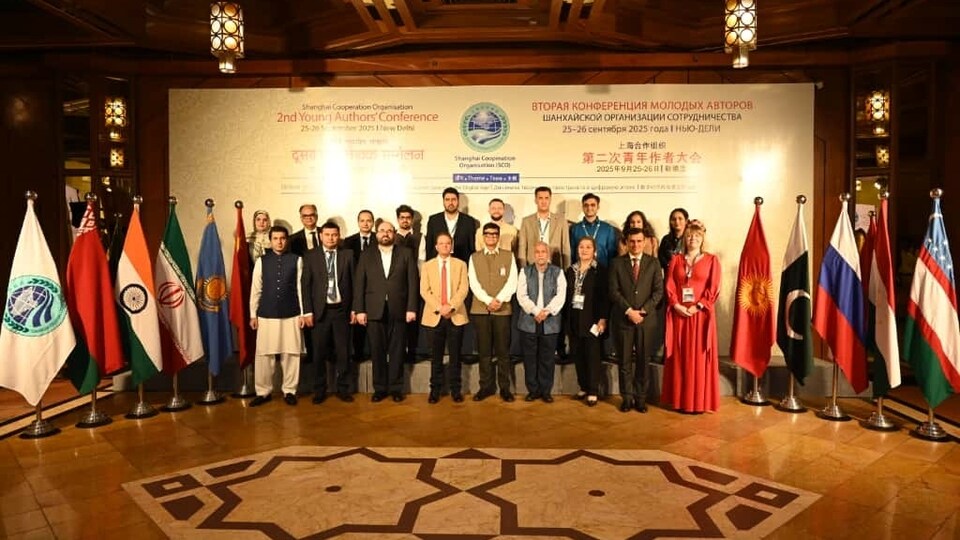
At the valedictory session, chief guest Sanjay Kumar, secretary of the department of school education & literacy, ministry of education, underlined the civilisational connection among SCO nations through shared literature and culture. “Books remain a tool of learning even as we adapt to technological change,” he said, urging youth to balance tradition and innovation.
Alok A Dimri, India’s SCO national coordinator and additional secretary (SCO), MEA, praised the “spirit of collaboration among youth,” while Minara Rakhanova, advisor, SCO secretariat, lauded India’s efforts in nurturing creative talent and promoting cultural exchange.
Milind Sudhakar Marathe, chairman of the NBT, welcomed participants and congratulated them for sharing diverse perspectives, while Yuvraj Malik, director of the NBT-India, delivered the vote of thanks. The session was moderated by Kumar Vikram, chief editor and joint director, NBT.
The conference was inaugurated on September 25 by minister of state for external affairs Kirti Vardhan Singh, who emphasised that “SCO is not only a political and economic grouping, but also a very dynamic platform for cultural engagement.”
Across six sessions, speakers and discussants examined the impact of digitalisation on literature, cinema, music, art, culture, radio, and television. From exploring the reconfiguration of authorship in publishing to tracing Indian cinema’s journey from silent films to streaming, the sessions addressed how technology is reshaping creative practices. Highlights included discussions on AI’s role in music and cinema, India’s digitisation of over 44 lakh manuscripts under NEP 2020 and the Gyan Bharat Mission, the resurgence of podcasts as oral cultures, and the convergence of television with digital broadcasting.
The deliberations underscored a dual responsibility for young creators: embracing digital tools to expand creative possibilities while safeguarding cultural heritage. Participants also called for bridging the digital divide, protecting intellectual property, and fostering SCO-wide collaborations.
The ministry of education reaffirmed India’s commitment to supporting young talent, strengthening cultural diplomacy, and building inclusive digital knowledge societies across the SCO region.


