
 E-Paper



Divorce should not require proving the fault of one of the spouses: Top court
The law commission made recommendations in 1978, and again in 2010 to add irretrievable breakdown of marriage as a new ground for divorce in both the Hindu Marriage Act and the Special Marriage Act.

 Prefer HTon Google


Ending a marriage should not require proving the fault of one of the spouses, the Supreme Court observed on Wednesday, adding there are situations when a marriage may not work because of irreconcilable differences.
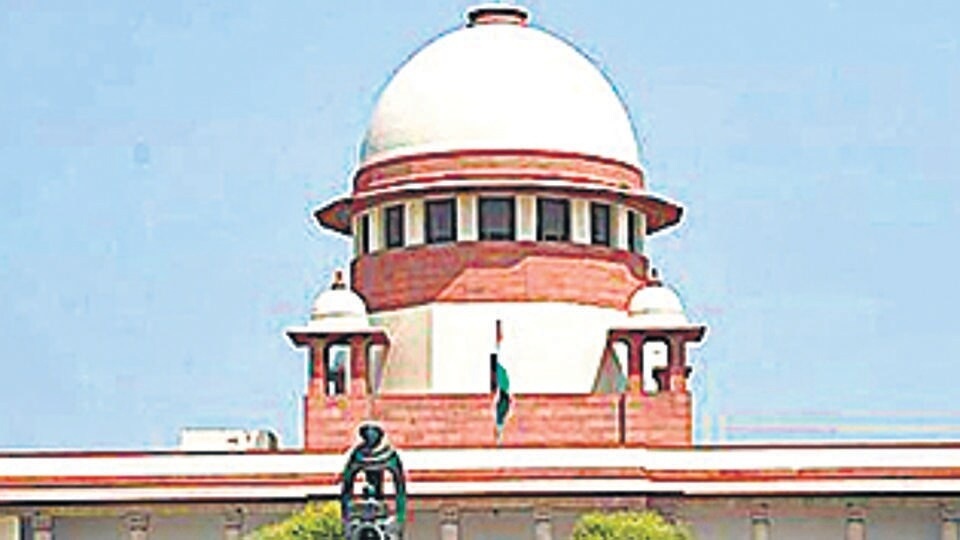
According to a Constitution bench headed by justice Sanjay Kishan Kaul, the law on divorce in India is based on the “fault theory” while the reality could be that “two very good persons cannot always be good partners”.
“The question is, in the divorce, must one person be attributed at fault?” asked the bench, which also included justices Sanjiv Khanna, AS Oka, Vikram Nath and JK Maheshwari, as it heard a bunch of petitions pertaining to the Supreme Court’s power to grant divorce on the ground of irretrievable breakdown of relationships.
The bench remarked that most of the faults that parties allege while seeking divorce arise out of societal norms and expectations. “What is fault [in such cases]? Somebody will say that she does not wake up in the morning and give my parents tea.. is it a fault theory? Lots of them arise from social norms... From there we attribute faults,” lamented the court.
Irretrievable breakdown of marriage is not a ground available under the law for couples seeking separation but the Supreme Court, through a raft of orders, has been granting decrees of divorce exercising its unique jurisdiction, under Article 142 of the Constitution of India, to do complete justice between the parties.
In 2016, a smaller bench called upon the Constitution bench to examine whether the Supreme Court should exercise its powers under Article 142 to grant divorce without sending the parties to a family court where they must wait for a period between 6 to 18 months to obtain divorce by mutual consent. It had at that time appointed senior advocates Indira Jaising, V Giri, Dushyant Dave and Meenakshi Arora as amicus curiae to assist the bench.
On Wednesday, senior advocate Jaising argued in favour of the top court granting divorce on the ground of irretrievable breakdown of marriage, contending when all the essential features of a marital tie have disappeared, the only issue should be the mechanism to separate.
She added: “I am in strong disagreement with judgments which indicate that marriage is a sacrament and it’s the public policy of India that we don’t break marriages.”
To this, the bench replied: “These are two different things...sacramental is how a marriage is made. Whether marriage can break or not is not in doubt. The issue is, under Hindu Marriage Act, divorce is based on the fault theory but irretrievable breakdown is a ground reality.”
Jaising, on her part, argued that social norms also change with times. “Therefore, arguments such as marriage is a sacrament and thus, we must not agree to the theory of irretrievable breakdown does not make any sense,” she said.
The court will continue hearing the arguments on Thursday.
The law commission made recommendations in 1978, and again in 2010 to add irretrievable breakdown of marriage as a new ground for divorce in both the Hindu Marriage Act and the Special Marriage Act. The recommendation culminated in the Marriage Laws (Amendment) Bill of 2013 that incorporated divorce on ground of irretrievable breakdown of marriage. However, the bill was never passed.



