
 E-Paper



Don’t make responses to Taiwan basis of judging ties: Hawaii Congressman Ed Case
In the run-up to Prime Minister Narendra Modi’s state visit to the US, Case welcomed India’s enhanced engagement with Pacific Islands

 Prefer HTon Google


A senior United States (US) Congressman from Hawaii—the headquarters of the Indo-Pacific command (Indopacom), neighbour to Pacific Island countries, and the US island that gives Washington a stronger base as a Pacific power—has said that responses to a possible crisis over the Taiwan straits must not be made the yardstick to judge allies and partners and this would be a “waste of time”.
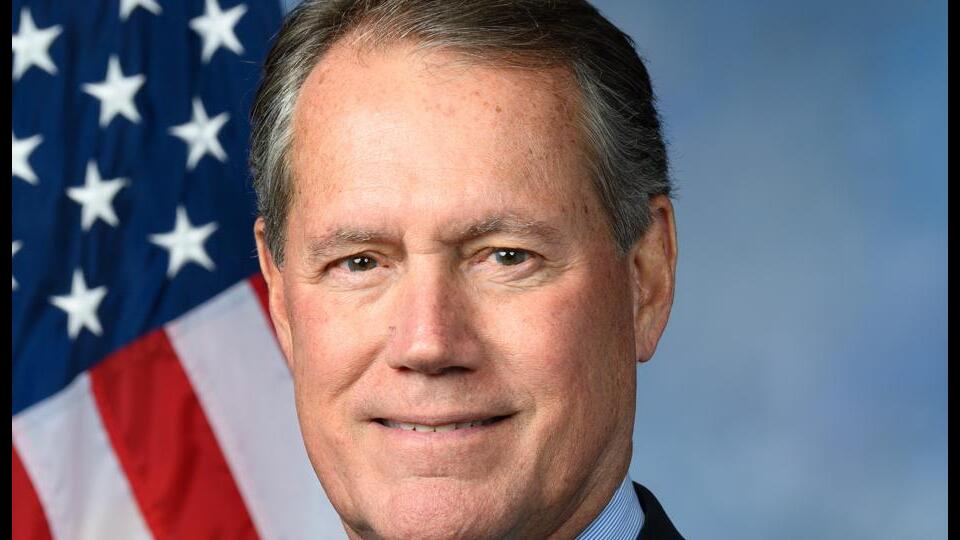
Ed Case, a member of the House appropriations committee and its subcommittee on defence, however, told HT at his office in Rayburn Building on Capitol Hill that all countries, including India, needed to care about the threat posed by Beijing to the “rules-based international order” across the entire Indo-Pacific and prepare accordingly.
In the run-up to Prime Minister Narendra Modi’s state visit to the US, Case welcomed India’s enhanced engagement with Pacific Islands and added there was a natural synergy between India and Hawaii. He said it was India’s destiny to lead. Case invited Modi to visit his home state, and suggested that India and the US needed to depend on each other more to reduce the risk on China.
With questions being raised about what India may or may not do during a crisis in East Asia between the US and China, Case said, “If we are going to judge every move by any country — ally, partner, potential partner or ally, today’s adversary that may be tomorrow’s ally or partner — by what they say they would or won’t do if China tried to invade Taiwan, then we are going to spin our wheels a lot about that.”
This was not a bridge, he said, that countries needed to cross. What was needed was to make the prospect of invading Taiwan an “unacceptable risk for China economically, militarily, socially and structurally” and this could happen through partnerships.
“Rather than sit here and waste a lot of time worrying about the answer to that question, which very few countries are going to answer straight-up, nor should they answer straight-up, we should all just be prepared so that in that eventuality, we have a full range of options.”
Unique perspective
Case suggested that Hawaii brought a unique perspective on the Indo-Pacific today, which is far “more complicated than it was just five years ago”.
“Hawaii is a Pacific island which was a Pacific country before it became a part of the US. Culturally, Hawaii is an Asian-Pacific state, meaning that somewhere in the range of 75% plus of my constituents have their national origins in the Indo-Pacific. We are a central part of our country’s role in the Indo-Pacific. We have IndoPacom, which has jurisdiction from the west coast of California all the way to the west coast of India, and for all practical purposes, the Indian Ocean.”
He said this was in addition to economic, cultural, and educational linkages, with many Indians studying in Hawaii, and the state being home to the East West Centre, an institute that has five alumni organisations in India.
Case, who is also a founding member of the Pacific Island caucus in the House, added that there were about 25 different jurisdictions in the Pacific Islands— many of them independent countries, some aligned with other countries, some territories aligned with other countries, including Hawaii. “If you add their exclusive economic zones, they, in total area, are larger than China and Russia’s land area put together.”
The China challenge
The Congressman said that the economic sustainability and climate-related needs of the Pacific islands led to enhanced American engagement in the past five years. “But clearly, China’s rise and projection of national intent throughout the world and into the Indo-Pacific has been a major driver. Let’s be clear about it. I don’t think there is any reason for us not to state the obvious,” Case said soon after Secretary of State Antony J Blinken visited Pacific Islands, filling in for President Joe Biden last month.
Case said Beijing was first trying to “fundamentally destroy” the rules-based international order which China wished to use when it was consistent with Beijing’s goals, and saw as a hindrance when it was not. “My top example of this is always going to be the South China Sea where clearly China acted in violation of international law, international tribunals, and international norms and is still acting. The international rules-based order which has maintained relative peace in the world for three generations is not something China wants to support.”
The corollary of this, Case said, was the threat to the idea of a free and open Indo-Pacific — which included the concept of democracy and a maritime space that all nations are free to use within accepted rules. “China is intent on undercutting two of the major pillars that have held the world together for three generations. That is playing out in the wider Indo-Pacific, in India, in the Indian Ocean, in the western Pacific, central Pacific, Pacific islands.”
Acknowledging that the US needed to invest more financial resources in the region, Case said Washington had re-engaged on the defence front through mutual exercises and training, economic and humanitarian assistance, the revival of Peace Corps, “quasi soft power”, maritime domain awareness, and security. “We have ramped it up and strengthened alliances and partnerships, including [with] India.”
While referring to the specific Pacific Island strategies by other countries in the region, Case said India really stepped up in the area, including during Modi’s recent visit to Papua New Guinea. “I welcome it. It will take all of us to re-engage to preserve the rules-based order.”
India’s destiny to lead
Case said India was on its own journey, in terms of its “incredible rise and importance in the broader world”. “Most populous nation, economy growing, stepping out of the chapters of relative disengagement and non-alignment. Not that India wants to align with either side. It does have continuing relationships with Russia and China in various areas. India needs to chart that course. But the trajectory of where India is going in so many areas is it is stepping forward to lead — and Indo-Pacific is just one example.”
Case said that it was India’s destiny to lead. “For me that’s great. It ain’t going to be that we agree on something every day. Overall you see the strengthening ties, not just bilaterally and multilaterally. Quad was a tremendous advance, and so was the economic engagement of India and the 14 countries of the Pacific Islands. It’s all on the right track. Our challenge is to make sure that like with any other country with which we have shared leadership, interest, values, things continue on multiple tracks.”
He spoke of IndoPacom, headquartered in his district, stepping up its cooperation with Indian services including in maritime awareness in the Indian Ocean. “Probably China will try to have the same kind of influence there that it seeks in the South China Sea.” Case added that on the economic front, one of the ways for both India and the US to de-risk from China was to “rely on each other more” so that Beijing did not possess “dangerous leverage”.
Asked whether a strategic division of labour with India focusing largely on the Indian Ocean with US and its other treaty allies focusing on the Pacific was logical, Case said India had the “capability and interest” to do both. “I don’t think India should be put to some choice as to whether its responsibility is the Indian Ocean, which of course it is, it is Indian, India’s proximate ocean. But the entire world needs to care about the broader Indo-Pacific because that is where the future of the world will be decided, whether you like or not.”
He said all countries needed to worry about the entire space, just as the US was worried about the Indian Ocean “even if it was on the other side of the world”. Case then warned against making responses to Taiwan the basis of ties.
Defence cooperation
On the prospect of India-US defence cooperation, Case said one of India’s weaknesses was its reliance on Russia. “I understand the historical reasons for that and I understand the practicalities of not being able to end that reliance in a day. But India should move in that direction for India because I don’t think that’s where India’s future lies.”
This, he emphasised, was India’s decision to make but if India so decided, he would support any effort to “to assist India to have better options in terms of national defence”. With the executive branch moving forward with easing export controls for key systems, any change in law and process will eventually need Congressional approval.
Inviting Modi to visit Hawaii, Case said people from India made a powerful impact on Hawaii. “From the East West Centre, which is the premium institution in the Pacific for exchange between East and West, or Asia Pacific Centre, which focuses on training military and law enforcement and beyond, including generations from India, and through Indo-Pacom, we can strengthen ties”. He said that India should look at Hawaii as the US but as aligned towards the West. “We are from and of the Indo-Pacific and there is a natural synergy there that doesn’t exist with most of the rest of the US.”


