
 E-Paper



Double whammy of pandemic, climate disasters likely this year
There is a 74.67% chance of 2020 being the warmest year ever and a 99.94% chance that it will among the top five warmest years, the American National Oceanic and Atmospheric Administration said in March.


Climate disasters this year, including Cyclone Amphan expected to hit India’s eastern coast on Wednesday, are likely to compound the problems related to the ongoing Covid-19 pandemic since 2020 is also likely to be the warmest on record, a paper published on May 15 in British Nature journal has warned.
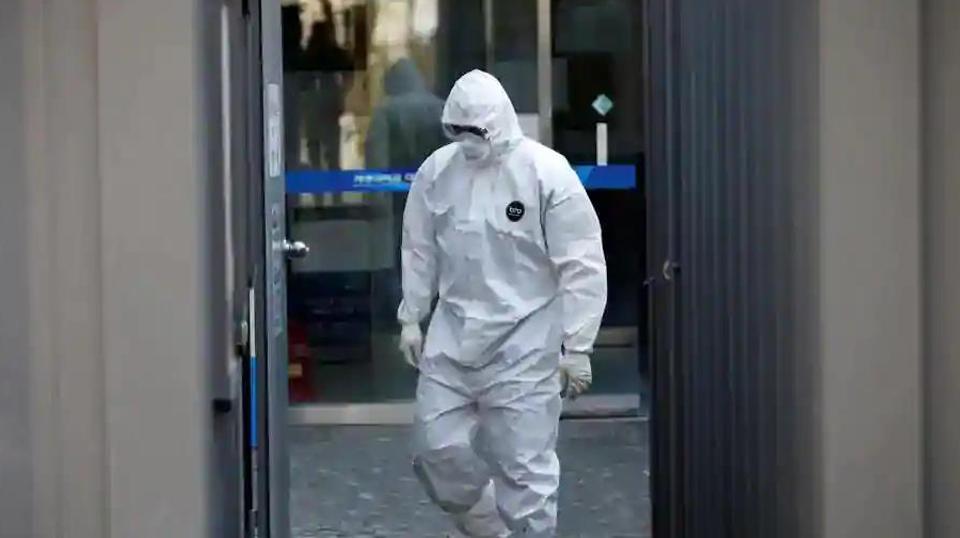
There is a 74.67% chance of 2020 being the warmest year ever and a 99.94% chance that it will among the top five warmest years, the American National Oceanic and Atmospheric Administration said in March.
The paper by Massachusetts Institute of Technology scientists and students has listed heat waves in north India, floods in the delta regions of West Bengal and Bangladesh, wildfires in Siberia, bushfires in Australia, locust crises, drought, water scarcity and floods in Africa, a hurricane in the US among others as climate-attributable risks. The risks are likely to intersect with the Covid-19 crisis over the next 12 to 18 months.
“A concerning body of evidence already indicates that climate hazards, which are increasing in frequency and intensity under climate change, are likely to intersect with the Covid-19 outbreak and public health response. These compound risks will exacerbate and be exacerbated by the unfolding economic crisis and long-standing socioeconomic and racial disparities, both within countries and across regions,” said the paper.
Fiji was hit by a category 5 tropical cyclone Harold in April. The Gulf Coast of the US is bracing for hurricane season while Louisiana has become the Covid-19 mortality hotspot. In South Africa, authorities are struggling to maintain social distancing during flooding in informal settlements. Drought in Zimbabwe has left millions without access to clean water, the paper said.
The paper warned extreme heat events in the US and outside are likely to lead to excess mortality and morbidity, disrupt power supplies, hospitals and emergency services, especially in cities.
Emergency response agencies and first responders will have to be deployed across multiple crises at the same time. For example, American Federal Emergency Management Agency is coordinating Covid-19 as well as ongoing extreme weather responses.
India’s National Disaster Response Force (NDRF) is faced with similar dual responsibilities including rescue and evacuation efforts related to Amphan. “Cyclone Amphan is very intense and has the potential to do large-scale damage. It is a big challenge as the cyclone is striking during the outbreak of Covid-19. We [NDRF] are facing two disasters. It a cyclone in the time of Covid-19,” NDRF chief SN Pradhan said.
The paper has recommended coordination at every level of government to prevent potential conflicts of strategy across agencies as difficult policy decisions may lie ahead, including whether hospitals, especially intensive care units, can be evacuated safely. It has also recommended policies on managing health risks during large scale evacuation or sheltering. Detailed plans need to be drafted for compound risk preparedness and governments need to ensure continuous electricity and water supply to avoid an increase in transmission of Covid 19, it said.
The paper said overall a long-term strategy for pandemic preparedness is also needed. “...Covid-19 is neither the first nor only time that our globalized society will face these types of compound risks; for example, Puerto Rico was forced to stop Zika surveillance and response in the aftermath of Hurricane Maria [2017].”
Roxy Mathew Koll, a climate scientist at the Indian Institute of Tropical Meteorology, said while they were preparing the recent Intergovernmental Panel on Climate Change reports, they realised that the worst-case scenarios are the compound climate events, where multiple extreme events overlap.
“For example, floods due to extreme rains and the high tide coming together when the sea level is also high. Or where the warming in the tropical oceans are making it much more fertile in terms of cyclonic activities and intense storm surges [cyclone Amphan is the best example],” said Koll. Koll added even developed nations are not well equipped to mitigate such kind of compound events.
“Most of the low-to-middle income nations in the tropics do not have early warning systems in place or long-term policies to adapt and mitigate climate change. Now, on top of that, the Covid-19 pandemic is presenting new hurdles.” Koll said the paper points out that the growing threats of climate crisis cannot be disregarded. “We need a framework to address both the disasters hand-in-hand.”


