External affairs minister S Jaishankar on Friday spoke on India's ties with China which have been strained since the 2020 Galwan clashes, stating that it takes two hands to clap and Beijing must also have that belief in a workable relationship.
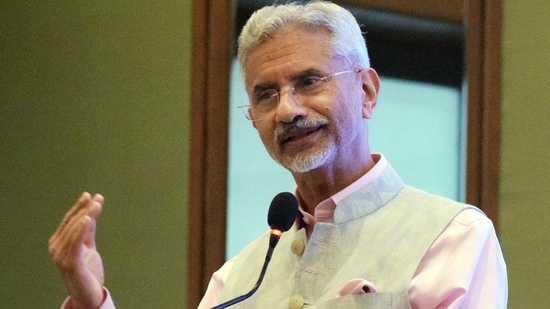
While delivering the Syama Prasad Lecture: New India and the World in Kolkata, the minister said that the present downturn between the two countries is ‘not India’s creation'.
Jaishankar said that the downturn in bilateral ties was due to China's violation of agreements from 1993 and 1996 which includes moving forces to the Line of Actual Control (LAC).
READ | ‘Not a zero-sum game’: Jaishankar on India's ties with Russia, United States
While stressing the need for mutual efforts from both sides in order to sustain a diplomatic relationship, the minister said China needs to stop trying to unilaterally change the status quo.
"Now, if we are to have a decent relationship, I think...they need to observe those agreements, they need to stop trying to unilaterally change the status quo. They need to come to the understanding that relationships between major countries work only when they are based on mutual interest, mutual sensitivity, and mutual respect. They need to understand this. And my endeavour is to make them understand this," Jaishankar was quoted by ANI as saying.
{{/usCountry}}"Now, if we are to have a decent relationship, I think...they need to observe those agreements, they need to stop trying to unilaterally change the status quo. They need to come to the understanding that relationships between major countries work only when they are based on mutual interest, mutual sensitivity, and mutual respect. They need to understand this. And my endeavour is to make them understand this," Jaishankar was quoted by ANI as saying.
{{/usCountry}}READ | No normalisation of ties without peace on LAC: EAM Jaishankar tells China
He also pointed out that the most damaging actions were the violations of India's sovereignty and territorial integrity, committed by China. “What has hurt our interest more is the actual violation of our sovereignty and territorial integrity... and that violation was by China. As I noted, this began in 1963 and kept increasing thereafter through connectivity initiatives.”
“We later saw that developed into the so-called China-Pakistan Economic Corridor (CPEC)”, Jaishankar added.
India has also deployed an almost equal number of troops along the Eastern Ladakh sector to counter any possible misadventure by the Chinese in the future.