
 E-Paper



‘Have to get used to the virus, expect flights to start soon’: Hardeep Puri
An operation of this magnitude, 1,90,000 might be the largest and the most comprehensive programme ever attempted and in a difficult operating time when you are dealing with an invisible enemy. In the coming days, the programme for the coming weeks will be more refined, the Civil Aviation Minister said.


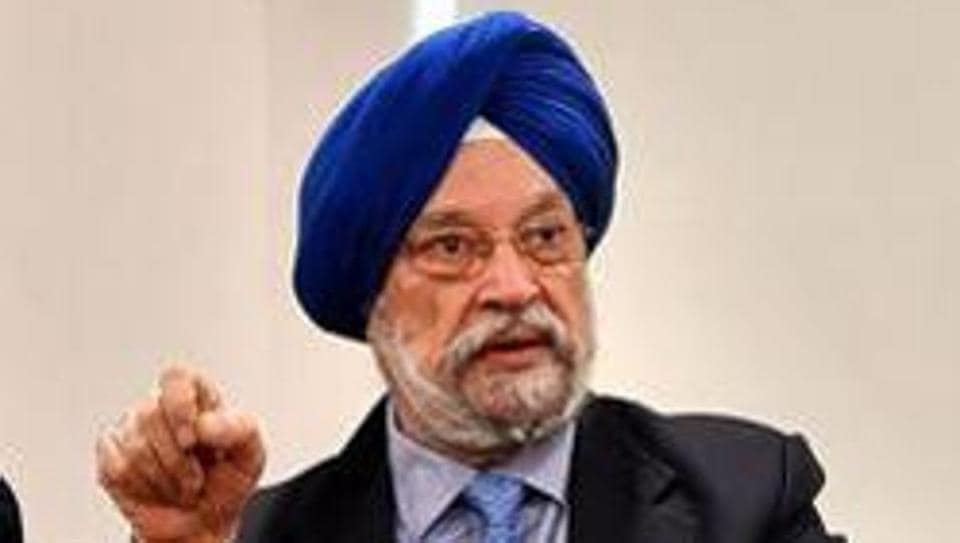
Union civil aviation minister Hardeep Puri talks about the government’s mammoth plan to evacuate stranded Indians, coordinating with the states to ensure their quarantine, the resumption of domestic flights and public transport in an interview to Anisha Dutta.
Edited excerpts:
Q: What is the scale of this massive rescue plan that the Indian government is going to begin from tomorrow? You have given an estimate of about 1,90,000 people but there is no clarity on how many stranded Indians we are expecting.
The figure of 1,90,000 was a figure which was a working hypothesis for MEA initially. Our missions are in touch with people who have expressed a desire to come back then the missions do an outreach through associations of different Indians and groupings. When we started looking at the mechanics and modalities for the evacuation flights and we started getting into greater detail the first impression that we got was that the overall figure of 1,90,000 would actually be conservative and the figure would end up many times higher than this.
The total number of Indian nationals in the Gulf alone goes into several million. Some of them need to come back because they are in distress, some of them have had their Visas expired, some of them are facing deportation and others are in an emergency situation. If you put these together the figure is going to be well beyond 190,000 to 200,000. If it were a normal situation through normal civil aviation operations, you could carry these people back but the fact of the matter is domestic civil aviation and international flights have been under lockdown since March 23, therefore our ability to bring these people back is directly dependent on the arrangements that the state governments can make to receive these people. It is absolutely imperative that all those coming from abroad will have to be subjected to mandatory 14 days quarantine.
Also Watch | New Covid-19 test, invented in India, may be deployed within a month
Tomorrow three flights are planned one to Singapore and two to Abu Dhabi. We will see how this process proceeds. How much satisfaction in terms of risk minimization we get. An operation of this magnitude, 190,000 might be the largest and the most comprehensive programme ever attempted and in a difficult operating time when you are dealing with an invisible enemy. In the coming days we will refine the programme for the coming weeks—we will add more countries and add more flights.
Q: How long will this take?
I am not committing myself to the total number to be evacuated, within how much period of time we do this in will depend on the manner in which we are able to execute this in consultation with the state governments. As far as the civil aviation component is concerned we can ramp that up. We have 650 aircraft at our disposal; some of them are long haul. It depends on the behaviour of the virus and the situation in the states which are receiving these people. We have a plan of the first week to ferry 14,800 people in 64 flights, in the next week we will look at an increase in numbers depending on our experience during this first week.
Q: Is there a plan to help NRI’s stuck in India? How does the government plan to ferry them back?
All Indian citizens who are ordinarily NRI’s, those who are on long-term work Visas, those who are green card holders etc, yes we would be happy to open the booking for them. But you have to factor in another issue which is that many countries are not receiving or not willing to receive people who are not their nationals. For instance, I thought people from Dubai who are stranded here could be sent back but they are not allowing any foreign nationals to come back even those with long term working Visas. Hence unless these restrictions are lifted by the receiving country the airlines cannot do anything about it. In the United States and United Kingdom there is no difficulty, we are booking people on the outgoing flights.
Q: You used the word ‘evacuation’ and you talk about it as a commercial operation as well. What do we call it?
Where does it say that the term evacuation means it has to be gratis? Nowhere. Let’s look at this realistically, these are people who went abroad to earn their livelihood, some are in difficult situations because they don’t have jobs anymore but at the same time the state is providing a service through a civil aviation company. That company (Air India) is also being barely kept afloat, it requires an infusion of Rs 500 crore to 600 crore every month to keep up. We are providing a service so we have to levy a charge. There are irresponsible members of opposition parties saying it should be free and well that’s one sure way of running the economy to the ground. It cannot be done free because there’s a cost to it and the charge which has been levied like Rs 12,000 from the Gulf, Rs 50,000 from UK…it is reasonable considering that the flight will have to go reasonably empty one way and it may not be 100% full on the way back.
A plan has been devised that they go from the port of embarkation to a pre- designated port of disembarkation and the passengers are taken into government mandated paid quarantine facilities arranged by the state government.
Q: Is there a plan now after this to begin rescue flight operations domestically as well as for those stranded in different states?
When you have a country like India which has the world’s third largest civil aviation domestic market…pre-Covid-19 we were dealing with 435 million passengers. Obviously, people are stranded, I have been getting requests from people asking when they will resume because they have to meet their family or some other urgency but all these decisions will have to be taken after we factor in the behaviour of the virus. In the process of easing mobility you don’t want exponential growth in the infections. Since the Prime Minister took decisions very early in the day, those were bold and very timely decisions, we were able to control the spread.
Today, our overall number is less than 50,000 with a doubling rate of 12-13 days and total fatality is about 1600. Compared to global figures these numbers are more under control and hence we can draw some satisfaction. But in the process of opening mobility there is always a risk whether you are opening mobility through surface transport of different kinds or ship or planes. Hence you have to simultaneously do two things; put in place safeguards and precautionary measures and Standard Operating Procedures and on the other hand you ease mobility. I think we have reached a stage where we will just start getting used to the idea that the virus is going to be around for a while but we will not allow it to completely circumscribe or curtail our normal economic activity which is vital to keep the country going.
Q: One sense from the government is that there will be a gradual resumption of services? How will it be done when and if the government decides to allow?
The civil aviation resumption of domestic traffic cannot be taken in isolation. When you open up domestic flights you will also have to open up traffic in railways, and other modes of surface transport. Even the Delhi Metro has a ridership of 6.5 million a day and will have to be opened accordingly. It will all be part of a package. My expectation is that we will do it in a slow and calibrated manner. I want to reiterate that the decisions remain to be taken. When they are taken, I expect that we will do it in a gradual manner—first 25% operations then gradually increase. On when will it happen? I am hoping sooner than later but again it is dependent on economic activity. In the last few days a range of economic activities have opened up substantially. In the coming weeks I expect it to be eased and a calibrated opening taking place including domestic aviation and finally civil aviation overall.
Q: When can we expect an economic stimulus for the civil aviation sector?
I am not in the habit of anticipating what my senior colleague the finance minister is going to say. My ministry and all the senior officials have personally been in touch with all the airlines. We know exactly where they are seeking relief and have brainstormed with them and passed on some of their suggestions to the finance ministry. But the size of the package, stimulus etc is not for me to comment. We have to create an ecosystem so that when the crisis is over we emerge from it stronger. It would mean the amount of damage for the stakeholders in the sector is minimised. The stakeholders are the airlines themselves, the airport operators, the tourism industry etc, who are all at a severe disadvantage right now. But the eternal optimist that I am, I am hoping that we will navigate our way out of this.
Some airlines were taking advance bookings and you issued a clear directive to stop and also to reimburse bookings made during the lockdown. Some airlines have opened advance bookings again, how will you control that?
It is a very complicated situation, the airline ticketing structure is very complicated where you have passenger as a user, the travel agents and then you have the airline. In the normal system that we follow, which is a deregulated system, the airline is supposed to put on its website its lower fare and the highest fare and then they can charge according to the market mechanism. I realised what was happening pretty early, a lot of people who were in distress because they had booked a flight and it got cancelled due to the lockdown so I issued an advisory saying that people should be reimbursed.
When I found that some airlines were not following that, I was compelled to issue a directive. Meanwhile, there are other tickets which people had booked before the lockdown, now there is a demand that they reimburse those also and the matter is before the Supreme Court because someone had filed a PIL. I can’t comment on it because my ministry will have to take a position there. We will have to look at the interest of the passengers primarily but also look at the situation of the airlines. But clearly if a passenger booked a ticket and got affected by the lockdown it should be reimbursed but if he booked in advance; it’s a global practice. Some governments like the European Union and the US have told their regulator to allow refunds. I am sympathetic towards the situation of the airlines but equally conscious about the poor customer.


