
 E-Paper



EC cannot have ‘untrammelled’ power to conduct SIR, says Supreme Court
No power is unregulated, the bench added by saying, “While your power may not be diluted, at the same time, it cannot be left to be an unruly horse

 Prefer HTon Google


The Election Commission of India (ECI) cannot have an “untrammelled” power to conduct special intensive revision (SIR) of electoral rolls as the same must be subject to guidelines and procedures including transparency and principles of natural justice, the Supreme Court observed on Wednesday.
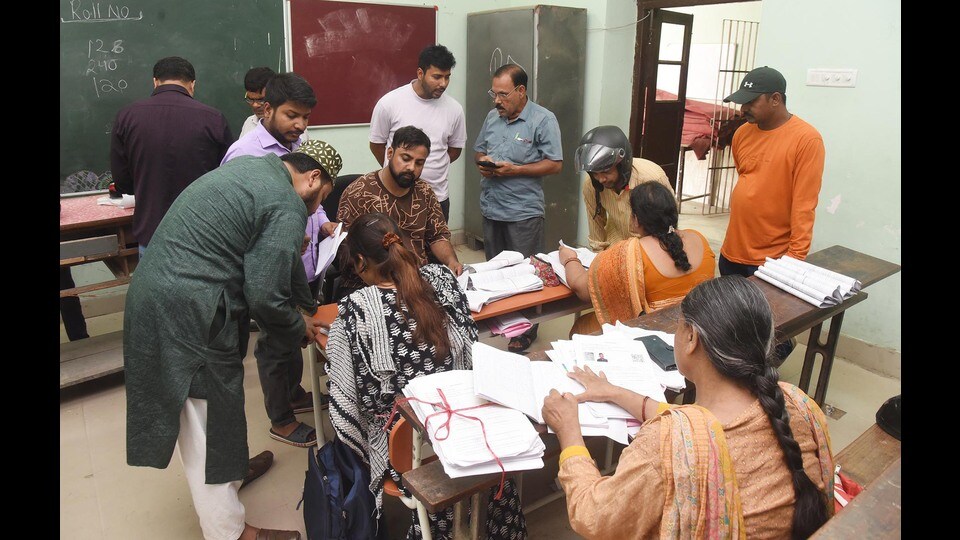
A bench of Chief Justice of India (CJI) Surya Kant and justice Joymalya Bagchi said, “If we hold that the ECI has jurisdiction to conduct SIR, can we say it will be untrammelled,” as it heard submissions by the poll panel that Section 21(3) of the Representation of the People Act, 1950 (RPA), which provides for SIR, gives it “widest” discretion about the manner and extent of conducting an intensive revision of electoral rolls.
Responding to ECI’s arguments advanced by senior advocates Rakesh Dwivedi and Maninder Singh, the bench said, “No doubt ECI has widest discretion under Section 21(3). But when you exercise that power, there has to be a procedure. Intensive revision has to have guidelines, and that should be in conformity with principles of natural justice and transparency.”
The court pointed out that this is a crucial question to be examined in a batch of petitions challenging the SIR where the entire procedure followed by ECI is in question. The bench said, “Why this question is essential is that when you say Registration of Electors Rules, 1960 will not apply to this exercise, we must note that Rule 13 of these Rules allows presentation of six documents. Your SIR order provides 11 documents. Can you increase or eliminate documents? Can you say we will not look into these 6 documents?”
The observations came at a time when the ECI is presenting arguments to dispel the picture presented by petitioners in claiming that the 11 documents insisted by them failed to include Aadhaar Card or Voter I-card, which was deliberately done to exclude voters. It was on the court’s nudge that ECI later agreed to accept new voter registration forms based on Aadhaar as an identity document.
Dwivedi explained that Section 21 has two parts. One part deals with ECI’s power to conduct regular revision of rolls before every election or “any time” of the year contained in section 21(2). The language of this provision provides that such a revision must be done in a “prescribed” manner. However, this word “prescribed” is missing in 21(3). “Parliament speaking through Section 21(3) empowers ECI to deviate from the rules. Of course, we have to be fair, just, reasonable and transparent,” Dwivedi said. Assisting him, Singh pointed out that the rules to be followed are in relation to section 21(2) and it has no relation with 21(3).
“The Parliament speaking through Section 21(3) empowers ECI to deviate from the rules. Of course, we have to be fair, just, reasonable and transparent,” Dwivedi said. Assisting him, Singh pointed out that the rules to be followed are in relation to section 21(2) and it has no relation with 21(3).
To buttress this point, Singh said that 21(3) begins with “Notwithstanding anything contained in section 21(2)” which is followed by the words, “the Election Commission may at any time, for reasons to be recorded, direct a special revision of the electoral roll for any constituency or part of a constituency in such manner as it may think fit.”
The bench felt that such an argument has to be tested as revision of rolls can lead to civil consequences for persons being deprived of voting. “Assuming we accept your argument that the revision of rolls under 21(3) will be in the manner as you deem appropriate, when your action is likely to impact the civil rights of people, should we not expect from you that the procedure should not be any less transparent than in 21(2),” the bench remarked.
No power is unregulated, the bench added by saying, “While your power may not be diluted, at the same time, it cannot be left to be an unruly horse….The deviation from prescribed rules is more eloquent in 21(3). Your argument is attractive as it is safer for you to reposit power in 21(3) as it gives your client more elbow space, but it cannot be unregulated.”
Dwivedi said that ultimately the ECI has to show to what extent it can “deviate” from Rules, while emphasising, “The SIR is valid under Article 324 of the Constitution read with section 21(3). The authority to deviate is much wider under 21(3) than 21(2), but we cannot escape constitutionality.”
As the arguments of the ECI remained inconclusive, the court permitted Dwivedi to continue his submissions on Thursday.
The court is considering petitions filed by political parties, members of Parliament, social activists and NGOs challenging the October 2025 notification of ECI to conduct SIR in phases with the exercise already over in Bihar and the same ongoing in several states and union territories including poll-bound states of Kerala, Tamil Nadu and West Bengal.


