
Sign in

Ecostani: Indian apple growers brace for impact of trade agreements

Commerce minister Piyush Goyal has said India has provided a quota-based import duty of 25% to protect domestic apple growers

Updated on: Feb 9, 2026, 17:05:23 IST
Share
Share via
  • facebook
  • twitter
  • linkedin
  • whatsapp
Copy link
  • copy link

In the first week of February, an apple grower from Himachal Pradesh, Rati Ram Chauhan, was trying to sell his produce, kept in cold storage since October 2025, at the fruit wholesale market of Chandigarh. Despite negotiating for four days, he failed to find any buyer willing to offer a reasonable price for his apples.
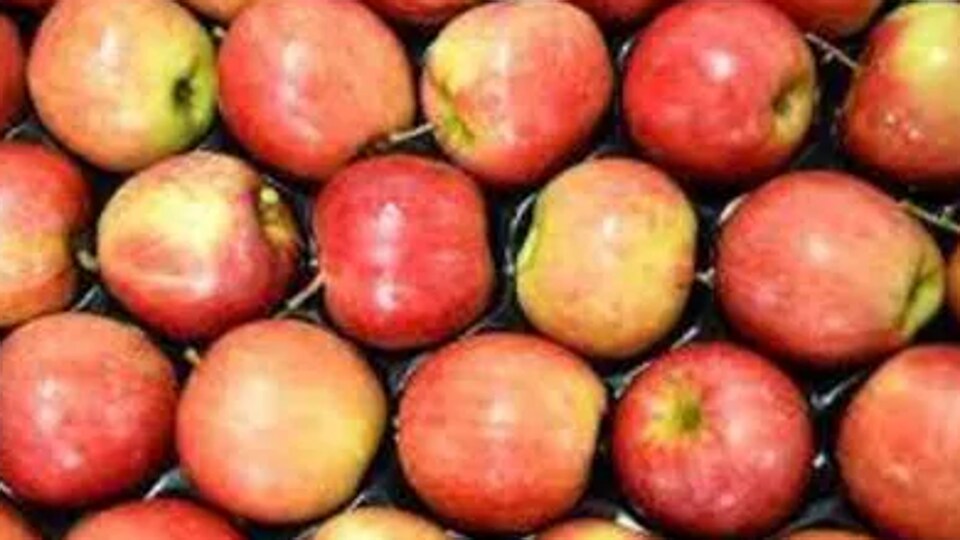
New Zealand will provide an “action plan” for apple growers.

Chauhan, and other growers like him, say the news of impending free trade agreements with New Zealand and the United States has queered the pitch -- buyers were not willing to pay even the price he was getting for his produce in October.

“I had no option but to get the product repackaged and transport it to Bihar. I don’t know if I will recover the cost of cold storage, repacking, and transportation now. It is a huge loss,” he said.

To be sure, cheaper apples with lower customs duty from New Zealand and the US are yet to reach Indian markets.

As per the agreement with New Zealand announced on December 22, 2025, import duty of 25% will be levied on a quota of apples to be imported between April 1 and August 31, as against the prevalent rate of 50%.

New Zealand will also provide an “action plan” for apple growers and open the Centre of Excellence for improving plant qualities. The agreement will be implemented after ratification by New Zealand and notification of new customs duties by the Indian government.

New Delhi and Washington issued a joint statement on January 7, 2026, on the framework of the new trade deal, which provides for zero tariff on “animal feed, tree nuts, fresh and processed fruits, soybean oil, wine and spirits, among other products.”

Commerce Minister Piyush Goyal said India has provided a quota-based import duty of 25% to protect domestic apple growers at a minimum import price of 80 per kilogram. The earlier duty was 50% with a minimum import price of 50 per kilogram. There is no definite time frame as to when the deal will be implemented.

But the initial announcements of the trade deals came at a time when the apple growers from Himachal, Jammu and Kashmir, and Uttarakhand were beginning to sell their stored apple produce. Expectations of imported apples hitting the markets have already begun impacting prices.

Farmers claim that the price being offered is 30-40% less than the usual market rate for this time of the year.

The apple wholesale market works on several dynamics, such as the crop output in the apple-growing states of Himachal Pradesh, Jammu and Kashmir, and Uttarakhand, the demand for produce, and weather conditions during harvest season.

According to apple traders, the outlook for the 2026 apple season would depend on the estimated crop, fruit quality, and size, and whether more imported apples reach during the harvest season between August and November.

They added that market pricing will also depend on the concession import duty quota provided to America and New Zealand. India imports about six lakh tonnes of apples every year, and the traders say that if the imports increase, it would have a de-railing impact on the prices.

  • Chetan Chauhan
    ABOUT THE AUTHOR
    Chetan Chauhan

    Chetan Chauhan is the National Affairs Editor looking into all aspects of news and features from across India. A Chevening scholar with over three decades of experience in reporting and news management, Chetan has extensively covered all important aspects of the social sector, political economy, environment and climate change nationally and internationally. He did a journalism course at the Reuters Institute of Journalism in Oxford and Digital Media training at Nanyang Technological University in Singapore. He started as a reporter with The Statesman in 1996 and joined the Hindustan Times in 2000 in the metro bureau covering environment, crime and Delhi politics. He covered hot local news, from the Jessica Lal murder case to the rebellion of Delhi Congress MLAs against then Chief Minister Sheila Dikshit, to the replacement of toxic vehicle fuel with cleaner compressed natural gas (CNG) in the national capital. Some of his stories on air pollution became part of the Supreme Court’s landmark MC Mehta versus Government of India case in the National Capital Region (NCR), forcing the government to take corrective measures. As part of the national political bureau since 2004, he covered important central sectors such as environment, education, social justice, labour, rural development, water resources, renewable energy, agriculture, broadcasting and the Planning Commission for more than a decade producing several exclusive and investigative breaking stories. His specialisation is the environment, having covered at least a dozen United Nations global conferences on climate change, biodiversity and wildlife including climate summits in Paris, Copenhagen and Bali. He also covered India’s two five-year plans ---11th and 12th and reported on drafting and execution of right based laws such as Right to Education, Right to Information and rural job guarantee law, MG-NREGA, now being introduced in new format as VG-RAM-G Act. He has in-depth knowledge of social sector issues. He was one of the first to report on tigers vanishing from Sariska and Panna wildlife reserves in 2004 and 2008, respectively, leading to the setting up of the National Tiger Conservation Authority (NTCA) and the introduction of stringent penal provisions for poaching. He has written extensively on the rising human-animal conflict in India and the degradation of India’s biodiversity hotspots because of mining and other activities. Since 2004, Chetan has covered Parliament comprehensively and participated in training on the nuanced coverage of Parliament proceedings. He has travelled extensively across India to cover national and provincial elections since 1998, especially in the Hindi heartland states, considered India’s road to power. He writes a regular column for Hindustan Times, Ecostani, on important national politics, economy, Himalayan ecology and environmental issues. His other responsibilities include providing inputs for edits and edit page articles for the publication, apart from managing news flow from across India.Read More

Get the latest India News, breaking headlines and real-time updates from across the country. Stay informed about politics, government policies, crime, weather and major national developments.