
 E-Paper



Delhi CM Arvind Kejriwal summoned for fourth time by ED, asked to appear on January 18
In his response to the ED’s third summons, Arvind Kejriwal had said he was ready to cooperate but that the agency’s intention was to arrest him.

 Prefer HTon Google


New Delhi: The Enforcement Directorate (ED) has issued fresh summons to Delhi chief minister Arvind Kejriwal asking him to appear before it on January 18 for questioning in the money laundering probe related to irregularities in the Delhi excise policy 2021-22, people familiar with the development said on Saturday. Kejriwal had last week skipped ED’s third summons.
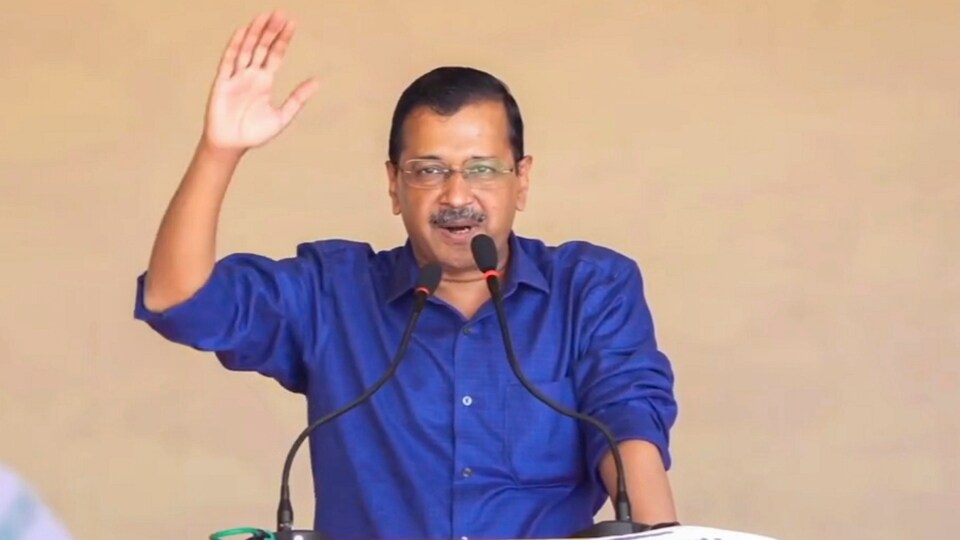
HT had reported on January 4 that the ED would reissue the summons to the chief minister but his repeated disregard of the summons was scuttling their probe into the case.
In his response to the ED’s third summons, which he termed as “illegal”, Kejriwal had said he was ready to cooperate but that the agency’s intention was to arrest him and stop him from election campaigning.
The agency has said it wants to question Kejriwal on the formulation of policy, meetings held before it was finalised, and allegations of bribery. Kejriwal had ignored two previous summons - on November 2 and on December 22 as well, calling them “illegal and politically motivated”.
What ED said in charge sheet
In its sixth charge sheet filed in the case on December 2, 2023, naming Aam Aadmi Party leader Sanjay Singh and his aide Sarvesh Mishra, the ED has claimed that the AAP used kickbacks worth ₹45 crore generated via the policy as part of its assembly elections campaign in Goa in 2022.
While ED has in the past alleged that bribes generated in the excise policy were used to fund the campaign for the Goa assembly elections, this is the first time that the agency has mentioned the amount of the purported kickbacks, and the first time that the AAP has been called a direct beneficiary.
The findings that the AAP benefited directly are expected to be used by the ED when it names the party in its next charge sheet.
the ED has claimed that total bribes worth ₹100 crore were paid to AAP leaders in connection with the excise policy.
The December 2 charge sheet also alleges that “some of the AAP leaders also personally benefited from the proceeds of crime”. It cites bribes linked to jailed AAP leader and former deputy chief minister Manish Sisodia worth ₹2.2 crore, along with ₹1.5 crore to former AAP communications in-charge Vijay Nair, and ₹2 crore cash to Singh — all allegedly paid by businessman Dinesh Arora.
“PMLA (Prevention of Money Laundering Act, 2002) investigation done so far has revealed that the Delhi excise policy 2021-22 was formulated as part of a conspiracy by the leaders of AAP, to continuously generate and channel illegal funds to themselves and the AAP,” the charge sheet states.
In one of its five charge sheets, ED claimed that the excise policy was Kejriwal’s “brainchild”. Kejriwal has also been mentioned in remand papers with references to alleged meetings, commissions for private players, and the entry of political players and businesspeople from the south into Delhi’s liquor business.
The financial crimes probe agency has so far filed six charge sheets in the excise policy probe against 31 individuals and entities, including former deputy chief minister Manish Sisodia and Aam Aadmi Party’s Rajya Sabha member of parliament Sanjay Singh. Both Sisodia and Singh are currently lodged in Tihar jail.
On Kejriwal’s role, one of the six charge sheets filed in January 2023 states that Kejriwal told businessman Sameer Mahendru that former AAP communications in-charge Vijay Nair “is his boy” and that he should trust him.
The agency cited the December 2022 statement of Sisodia’s then secretary C Arvind and claimed he was informed of the decision for a 12% profit margin for wholesale private entities at Kejriwal’s residence in March 2021.
C Arvind, according to the charge sheet, told ED that there were no discussions about handing the wholesale liquor business to private players in meetings of the group of ministers (GoM) which comprised Sisodia, Satyendar Jain, and Kailash Gahlot before mid-March 2021.
The excise policy was aimed to revitalise the city’s flagging liquor business and replace a sales-volume-based regime with a license fee for traders. It promised swankier stores and a better buying experience. The policy introduced discounts and offers on the purchase of liquor for the first time in Delhi.
Lieutenant governor Vinai Kumar Saxena’s move to order a probe into alleged irregularities in the regime prompted the scrapping of the policy. The AAP has accused Saxena’s predecessor, Anil Baijal, of sabotaging the move with a few last-minute changes that resulted in lower-than-expected revenues.
The ED has claimed that the AAP used a part of the ₹100-crore kickbacks generated by the Delhi excise policy during its campaigns for the 2022 Goa assembly elections. It has also pegged the loss in the excise policy irregularities at ₹2,873 crore.


