
 E-Paper



Crops under stress after driest August on record
A strengthening El Nino is causing drought in India, leading to a 35% decrease in rainfall in August and a 9% deficiency in the monsoon season. This could impact yields of important crops, such as soyabean, cotton, and pulses, which are produced in central Indian states. A sub-par monsoon could cut yields and push up food prices, which would have a negative impact on India's economy. The India Meteorological Department has forecasted a revival of the monsoon within a week, but private forecasters have said that the monsoon season this year is likely to be below normal.


New Delhi: A strengthening El Nino, which caused the driest (and hottest) August on record, has begun shriveling kharif or summer crops, with farm experts saying it is critical for the monsoon to revive within a week, which is likely according to the India Meteorological Department. Private forecasters have said that the June-September monsoon season this year is likely to be below normal and even IMD has indicated as much.
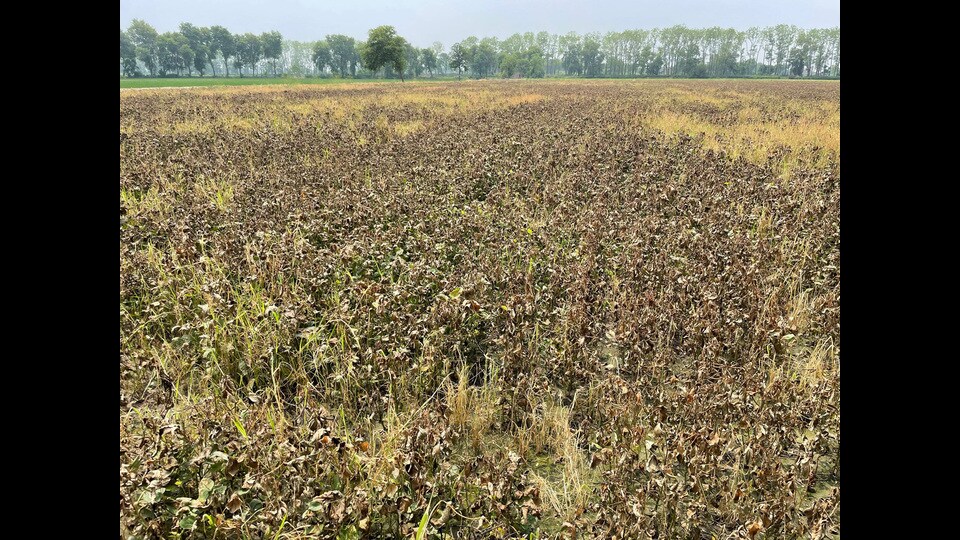
An El Nino is a weather pattern marked by warming Pacific Ocean temperatures and is known to weaken the monsoon and cause drought in India. Rainfall in August was 35% below normal. Countrywide, the monsoon has been 9% deficient since a delayed onset on June 8.
This could impact yields of important crops especially in central Indian states, such as Madhya Pradesh, Maharashtra, Gujarat and Karnataka, analysts said. These are producers of important food commodities and cash crops, such as soyabean, cotton and pulses.
The Soyabean Processors’ Association of India (SOPA), an industry body, has said that soy crops in Madhya Pradesh, Maharashtra and Rajasthan are under threat. “There has been unprecedented deficiency in rainfall in August and though the crops have held so far, rains are needed immediately,” said DN Pathak, executive director of the body.
Pulses are another family of crops that have come under stress in states without irrigation cover and their acreage has been lower than average, which could lead to a smaller crop.
Robust food supply is critical to put a lid on high inflation, which quickened to 7.44% in July, a 15-month high, led by food prices. The monsoon is vital to Asia’s third-largest economy because it waters nearly half of India’s net-sown area and replenishes over 100 nationally important reservoirs critical for drinking, irrigation and energy.
IMD, in a forecast on September 1 said it expected an increase in rainfall activity over east and east-central India from September 2, 2023. Owing to a cyclonic circulation over the Bay of Bengal, “southwest monsoon is likely to revive from 3rd September, 2023”, the weather bureau said.
Meteorologist Mahesh Palawat of Skymet Weather Services said the “impacts of El Nino are visible now” and there will be “no big recovery in the monsoon ” except in east India and eastern parts of central India. That leaves out vast stretches of farm belts in major rainfall-deficient states, north to south.
A sub-par monsoon could cut yields and push up food prices. For robust crops, the rains need to be both robust and evenly spread. Palawat said areas such as eastern UP, a major paddy grower, Rajasthan, India’s largest producer of spices, along with Bihar and West Bengal, the largest rice grower, are battling high rainfall deficiency.
Rainfall was subdued and deficient in June, then swung to surplus in July, followed by a parched August. A pickup in the rains in July helped to expand kharif or summer sowing of paddy, the main staple, to 39.8 million hectares as on September 1, up from 36.7 million hectares last year.
Pulses, mostly rain fed, continue to be a pressure point, with sowing trailing normal levels. Total pulses sown till September 1 stood at 11.9 million hectares, a fall of 9% over last year. Acreage of coarse cereals at 18.1 million hectares over last year’s 17.9 hectares. Total oilseeds have been sown in about 19 million hectares, the same as last year.
“These crops, especially in non-irrigated states, will need rainfall in September to prevent yield loss,” said Abhishek Agrawal of Comtrade.


