Erratic rainfall this summer, thought to be linked to climate change, upended sowing patterns in many states, keeping farmers on tenterhooks as rains tapered off around the end of June before reviving in late July, several cultivators have said.
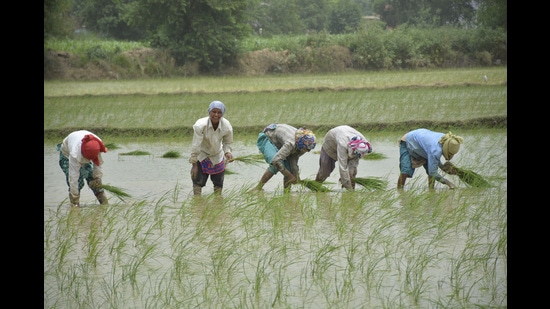
Even after accelerating towards mid-July, the monsoon rains were 7% deficient on August 13 for the season as a whole.
Some farmers, especially in Gujarat, said lack of rains for a considerable period meant growers were pushed into a guessing game on what to sow. Another in Haryana said he expected poorer yields from cotton. A third farmer in Madhya Pradesh said he had nearly given up on his soya crop until the rains revived.
The June-September monsoon, which waters nearly 60% of the country’s net-sown area, had stalled towards June-end and then dumped excess rainfall after reviving in mid-July in a pattern scientists say is consistent with a changing climate.
According to climatologists, longer dry spell and short spurts of heavy rainfall are tell-tale signs of a changing monsoon owing to the impacts of a warming planet. The India Meteorological Department has forecast a normal monsoon for 2021.
The monsoon has been quite uneven, data from the India Meteorological Department show. Gujarat, which accounts for 40% and 20% of groundnut and cotton acreage, has faced a cumulative rainfall deficit of 43%.
{{/usCountry}}The monsoon has been quite uneven, data from the India Meteorological Department show. Gujarat, which accounts for 40% and 20% of groundnut and cotton acreage, has faced a cumulative rainfall deficit of 43%.
{{/usCountry}}“With Indian agriculture largely rainfall-dependent, the now-on, now-off monsoon this year has shifted the sowing from much-expected oilseeds (groundnut and soybean) to maize and paddy for kharif,” said Hetal Gandhi, director of Crisil Research Ltd.
According to reports, the shortfall from June 1 to August 8 prompted Gujarat farmers to shift from groundnut and cotton to castor, a hardier crop that can withstand dry weather.
“We were guessing all the time. After sowing a crop and spending so much, you can’t invest again to replace it. So, ultimately many in our village decided to sow castor instead of groundnut,” Chabil Patel, a potato and groundnut farmer in Sabarkantha said over the phone.
To the east in Odisha, cumulative rainfall deficit has been around 8%. The state accounts for 8% of the country’s total paddy acreage
While north-eastern states, such as Assam faced drought in its paddy and tea growing belt, Telangana, Andhra Pradesh and Haryana received excessive rainfall. East Rajasthan and north Madhya Pradesh were deluged by a violent surge in the monsoon.
“I am not very confident of what my yields will be. There will be damage due to excess rains,” said soy grower Ravikant Moria, a farmer in Mandsaur, Maharashtra.
Madhya Pradesh faced a severe dry spell between mid-June to mid-July, shrinking soybean and urad acreage by 11% and 5% year-on-year until August 8.