The Election Commission (EC) plans to strengthen processes, including cleaning up of the electoral rolls and last mile transportation of Electronic Voting Machines (EVMs) ahead of the 2019 Lok Sabha and a clutch of assembly polls. Chief election commissioner (CEC) Sunil Arora spoke to Smriti Kak Ramachandran about the reforms that the poll panel is planning. Edited excerpts:
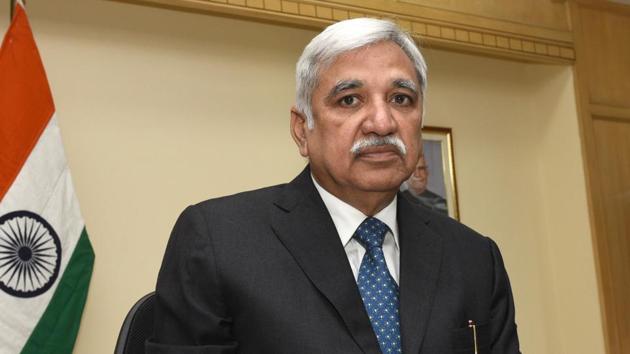
What are the reforms that you want to undertake as CEC?
The voter should be at the centre of all electoral strategy. The commission has been laying emphasis on the purity and accuracy of the electoral rolls, which form the basis of free and fair elections. We have been endeavouring to ensure that electoral rolls are free from errors; un-enrolled citizens are included, multiple entries are removed and there is an improvement in the quality of photographs of voters. Block level officials have been deployed for 100% door-to-door verification.
We will again approach the government to consider the earlier proposal of giving protection to the election commissioners on identical footing as available to the chief election commissioner.
We have already constituted a committee to suggest possible changes in the electoral laws. The proposed changes are being examined and they will be taken up with the government once finalised.
Political parties are important stakeholders in the electoral process. We will simplify the process of registration, making it easier for groups, which want to register. The [election] symbol allocation process is tedious. We will create a platform for online allocation of symbols.
{{/usCountry}}Political parties are important stakeholders in the electoral process. We will simplify the process of registration, making it easier for groups, which want to register. The [election] symbol allocation process is tedious. We will create a platform for online allocation of symbols.
{{/usCountry}}The EC introduced an app, C-vigil, to give citizens an opportunity to report violations, including bribery during elections. Has it proved effective?
The app empowers the common man, the voter. The new trial version was very successful in creating a fast-track complaint reception and redress system for model code of conduct and expenditure violations. The application was made live from the date of the notification for the polls in the five states [where elections were held in November and December] and 19,051 cases were filed of which 13,250 were found correct that is 70%.
The maximum cases were reported from Telangana, where, of the 8,712 cases reported, 6,106 were correct. In Chhattisgarh, it was 1,850 reported and 1,120 correct. Madhya Pradesh reported 3,986 cases of which 2,477 were correct. Mizoram had 66 cases of which 8 were correct and Rajasthan had 4,436 cases of which 3,541 were correct.
Using the feedback from these states, for the 2019 general elections, the gold version of C-Vigil will be made available.
There were a few incidents during the last round of elections where the training of the staff was questioned? Will there be a special focus on training of the staff to handle EVMs?
We are further strengthening the last mile transportation of EVMs. We have suggested tracking the vehicles with GPS. We want to make the system more foolproof.
Purification of electoral rolls will be carried out and there will be more rigorous training of the staff at all levels. Special control rooms will be set up, where there are dedicated control rooms. Their capacity will be augmented.
A committee was formed to suggest changes to Section 126 in the Representation of the People Act, 1951, that prohibits poll campaign in the last 48 hours leading to voting. What is the status of that?
The report is expected by the month [December] end. This committee was set up in January, in the wake of expansion and diversity of media platforms and to address the challenges in regulation ad control on the display of electoral matter during the period of last 48 hours. The issue of finding measures to tackle the menace of fake news on social media have also been referred to this committee. It has met with representatives of social media platforms.
The other area of concern is the issue of release of manifesto, [while elections are on elsewhere] and bringing social media under the ambit of the last 48 hours silent period.
What is the feedback from the Indian statistical institute on increasing the percentage of VVPAT-EVM verification tally?
We are expecting a report from them shortly. It will be shared with the stakeholders.