Retail inflation jumped to 7.44% from a year ago in July, a 15-month high, breaching the Reserve Bank of India’s (RBI) tolerable limit of 6% on the back of runaway grocery and food prices, latest official data show.
Sequentially, on a month-on-month basis, it rose three percentage points given that retail prices had risen 4.81% in June. That’s a big spike.
In its monetary policy meeting on August 10, RBI did not hike interest rates to hammer inflation further, even
Retail inflation jumped to 7.44% from a year ago in July, a 15-month high, breaching the Reserve Bank of India’s (RBI) tolerable limit of 6% on the back of runaway grocery and food prices, latest official data show.
Sequentially, on a month-on-month basis, it rose three percentage points given that retail prices had risen 4.81% in June. That’s a big spike.
In its monetary policy meeting on August 10, RBI did not hike interest rates to hammer inflation further, even though it had warned that a spike in vegetable prices would pose a large upside risk to consumer prices.
Why are food prices on fire?
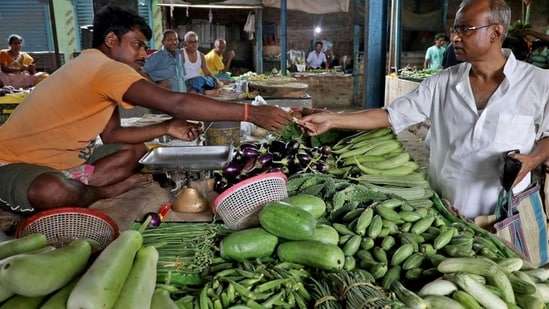
The July spike has been fuelled by food and vegetable prices. Adverse weather has been the main driver of inflation since April. A late onset of the monsoon had delayed the sowing of kharif or summer-sown crops and rainfall was deficit in June. In July, heavy rainfall led to widespread flooding and landslides in north-western food-bowl states. Two-thirds of India witnessed incessant rainfall throughout the month. This strained supplies, leading to higher vegetable prices.
Tomato prices have gone through the roof, hitting household budgets hard. The roots of the tomato crisis go back to last year’s extreme weather in states such as Maharashtra and Karnataka, followed by damage to crops this year too due to heavy rain.
Hailstorms in March, April and May destroyed large swathes of tomato crops in Maharashtra, a major supplier during the monsoon months, said Sunil Chavan, Maharashtra’s agriculture commissioner.
Inflation in cereals has been in double-digits for seven straight months (July included). Heavy rains tend to disrupt the movement of food, pressuring supplies of most commodities – from cauliflower to spinach. This pushes up prices.
What does the CPI food basket look like?
Nearly two-fifths of the Consumer Price Index (CPI), which is used to calculate price rises, is made up of food commodities. So, higher food prices disproportionally drive inflation up relative to other commodities. This is because, in India, an average household tends to spend significantly on food as a share of their overall monthly spending.
The combined food inflation index in July leapt 11.51%, led by a huge 37.34% increase in vegetable prices. Tomato prices saw a massive 201.54% spike; ginger prices shot up 177%; garlic rates soared by 70%, and green chillies increased by 50%. Common greens, such as brinjal, okra, beans, pumpkin and cauliflower were also on the boil. Onion prices rose by 11.7%. Only potato and cabbage prices fell by 13.3% and 9%, respectively.
Is climate change to blame?
Yes. Climate-change-induced extreme weather has contributed to the pressing shortage, experts have said. In 2022, abrupt rainfall followed by extreme heat led to an explosion in the numbers of plant viruses transmitted by aphids (plant sap-sucking insects) that feed on tomato plants in both Maharashtra and Karnataka, said M Krishna Reddy, a former scientist at the Indian Institute of Horticulture Research, Bangalore. Such swings in weather in India are characteristic of climate change, the Intergovernmental Panel on Climate Change has repeatedly warned.
What role does the monsoon play?
The June-September monsoon is the lifeblood of Asia’s third-largest economy. It is important because it replenishes over 100 nationally important reservoirs vital for drinking water, power generation and agriculture. Since nearly half of the country’s farmlands don’t have access to irrigation, they entirely depend on the rains. Robust farm output is critical for overall demand in the economy. If harvests are good, rural spending goes up. For instance, nearly half of all motorcycles are sold in rural areas, according to industry data. This year, the monsoon has been more volatile than the historical average, according to data from Crisil, a research and analysis company. The full impact of El Nino has yet to play out. These pose further risks to inflation.
How does it impact the economy?
Lower interest rates make for easy borrowing. Businesses typically borrow to invest in new economic activities, expanding economic growth. Yet, more cash supply increases inflation because more money chases fewer goods. Money supply can be increased overnight, but not purchasable goods, which need considerable time to produce.
On the other hand, at times of high inflation, central banks typically increase interest rates to shrink the money supply and cool inflation. That’s the playbook.
After raising interest rates by 250 basis points to 6.5% between May 2022 and February 2023, the RBI hit the pause button in April, when the six-member monetary policy committee (MPC) decided not to increase rates further. On August 10, the central bank again decided not to increase interest rates but warned of an inflation spike. The MPC thinks the current inflationary spell could be transient and may abate once the weather becomes more conducive.
However, inflation, as a phenomenon, takes a long time to dissipate once it enters the system. After tomatoes, markets have indicated that onion prices will spike next. Economists say there is a possibility that inflation is getting entrenched. This will lead to further rate hikes, which can slow down growth. “Sharp swings in vegetable prices have made it difficult to forecast quarterly inflation profiles,” Citigroup economist Samiran Chakraborty wrote in a research note after July inflation numbers were released.
One Subscription.
Get 360° coverage—from daily headlines
to 100 year archives.
Archives
HT App & Website