
 E-Paper



‘Fabricated’: Supreme Court acquits man accused of four murders 12 years ago
In the judgment passed on October 13 based on an appeal filed by the convict Ramanand, a resident of village Badriya in Uttar Pradesh’s Lakhimpur Kheri, the SC set aside concurrent verdicts pronounced by the district court and the Allahabad high court


Acquitting a man sentenced to death for killing his wife and four children over an alleged extramarital affair, the Supreme Court in a recent judgment blew the lid over the ‘shoddy probe’ by the Uttar Pradesh police and declared the evidence to be “fabricated” and “engineered”, paving way for the release of the accused more than 12 years since his arrest in January 2010.
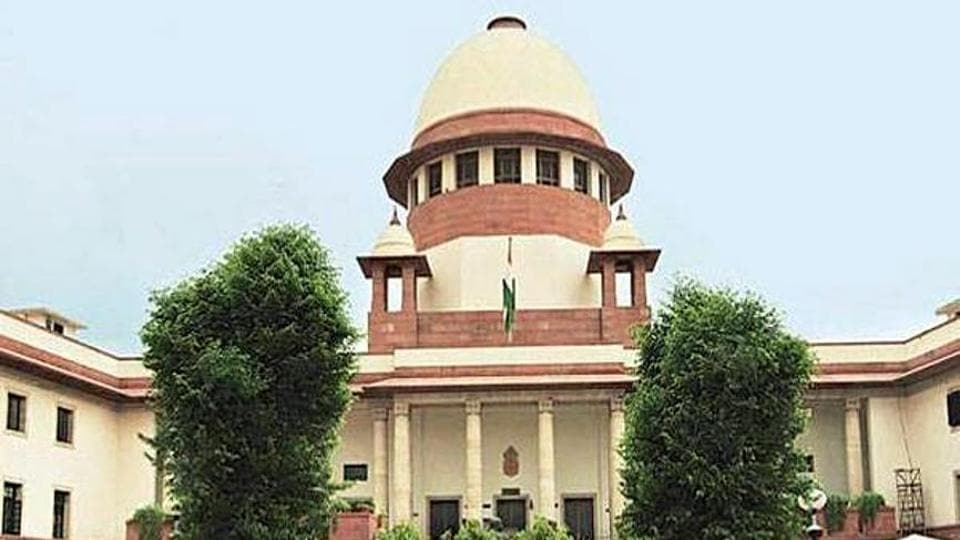
“Mark Twain once said – it is like this, take a word, split it up into letters; the letters may individually mean nothing but when they are combined, they will form a word pregnant with meaning. That is the way how you have to consider the circumstantial evidence. You have to take all the circumstances together and judge for yourself whether the prosecution has established their case,” a three-judge bench headed by Chief Justice of India (CJI) Uday Umesh Lalit, and justices S Ravindra Bhat and JB Pardiwala said.
In the judgment passed on October 13 based on an appeal filed by the convict Ramanand, a resident of village Badriya in Uttar Pradesh’s Lakhimpur Kheri, the SC set aside concurrent verdicts pronounced by the district court and the Allahabad high court.
The HC had on July 9, 2021 confirmed the death penalty based on an extra judicial confession made by the accused while in police custody, discovery of the weapon of offence and blood-stained clothes at his instance, a strong motive of his extramarital affair, and his unnatural conduct in creating a false explanation about the incident to prove his innocence.
Setting aside the HC order, Justice Pardiwala, writing the 93-page judgment for the bench said, “Though an offence is gruesome and revolts the human conscience, an accused can be convicted only on legal evidence and if only a chain of circumstantial evidence has been so forged so as to rule out the possibility of any other reasonable hypothesis excepting the guilt of the accused.”
The incident took place on the intervening night of January 21-22, 2010 when Ramanand was sleeping in his house with his wife Sangita and four minor daughters. His son was away at the time of incident. According to police story, the accused clobbered his wife and children with a sharp weapon. However, the accused claimed that four men belonging to the upper caste from the village came to his house that day, injured him severely, following which he fled, and they later killed his family members setting them on fire. He narrated this story to his brother-in-law who mentioned this fact in the complaint made to the police on the morning after the incident.
Upon analysing the evidence, the top court found several legal infirmities that were overlooked by the lower courts. The prosecution failed to explain the serious nature of injuries suffered by the accused. On the motive, the court discovered that the accused, while being married, got engaged with another woman, and nothing was brought on record to show that she made any hue and cry at that point.
The reliance of the lower courts on the extra judicial confession of the accused was ripped apart by the SC, which saw in it an alleged design by the police to create evidence. The SC doubted the police version that the accused, after committing the crime, went to a local politician a day after the incident to confess his crime and to a local panchayat member the next morning to claim that he was guilty of murdering his family.
“The entire case put up by the prosecution…appears to be fabricated and engineered only to bolster up the case of the prosecution. How does the prosecution expect us to believe that the accused appellant was present at three different places on or about the same time?” the top court observed.
The SC also noted that the time when the accused made his confession to one of the witnesses was the time when he was shown in the FIR to be present with his brother-in-law (complainant) at whose instance, the police registered the FIR. With regard to the confession made to the second witness, this was the time when the police took him for his medical examination.
The accused was shown to be arrested from a bus stand on January 24 when he was present throughout with the police on the two days after the incident. The Court found this story “unbelievable” and said, “Without any hesitation and with disappointment, we state that the case at hand is one of the most perfunctory investigations.”
The apex court also blamed the prosecution for not following the rulebook while collecting the weapon of offence and clothes at the instance of the accused. The police claimed that based on Ramanand’s statement, they took him and two witnesses to recover the weapon and clothes.
“We are of the view that the lower courts committed a serious error in relying upon this piece of evidence,” the top court ruled as it noticed that the police officer did not record the statement of accused at police station in presence of independent witnesses before proceeding for recovery.
Moreover, only one independent witness was examined during trial who failed to testify about the recovery of the incriminating evidence. Thus, the SC found that the evidence collected did not meet the standards of legally admissible evidence.
As a measure of caution for future, the Supreme Court advised all trial courts across India to ensure that accused who cannot afford a lawyer should be given “effective and meaningful” legal aid. This would require them to appoint experienced lawyers having competence to handle complex cases and if desirable, even senior advocates and not raw entrants to the bar.


