
Sign in

Five-judge Constitution bench to deliver verdict in Ayodhya case tomorrow

Chief Justice of India Ranjan Gogoi-led Constitution bench will deliver on Saturday the verdict on the Ram Janmabhoomi-Babri Masjid title dispute.

Updated on: Jul 19, 2020, 22:29:17 IST
Hindustan Times, New Delhi | By
Share
Share via
  • facebook
  • twitter
  • linkedin
Copy link
  • copy link

The Supreme Court’s Constitution Bench led by Chief Justice of India Ranjan Gogoi will deliver on Saturday the verdict on the Ram Janmabhoomi-Babri Masjid title dispute, one of India’s most sensitive and divisive religious and political issues. The decision to pronounce the ruling on Saturday comes hours after Chief Justice Gogoi met top Uttar Pradesh officials on the law and order preparations in the state.
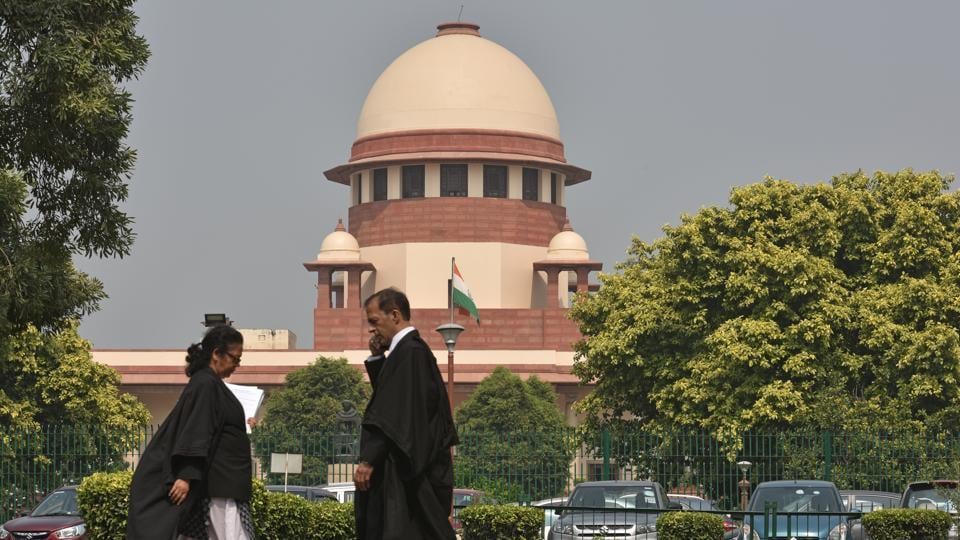
A view of the Supreme Court of India while a hearing on the Babri Majid – Ram Janmabhoomi case was underway in New Delhi in October this year. (Sanchit Khanna/HT PHOTO)

The five-judge bench was set up earlier this year to rule on a batch of appeals against a 2010 Allahabad high court judgement. The original verdict ordered the division of the disputed 2.77 acres of land in Ayodhya into three equal parts to be divided among the Sunni Waqf Board, the Nirmohi Akhara, a religious denomination; and the Ram Lalla Virajman, which represents the child deity Ram.

WATCH | Countdown to Ayodhya verdict: 7 preventive measures taken by government

The bench, also comprising justices SA Bobde, DY Chandrachud, Ashok Bhushan and SA Nazeer wrapped up a marathon, sometimes acrimonious 40-day hearing on the title suit on October 16, paving the way for a judicial settlement of the decades-old dispute.

A large section of Hindus believes that the disputed site marks the birthplace of the warrior-god Ram and that a temple that stood on the location was destroyed in the 16th century during the rule of Mughal emperor Babar and a mosque, the Babri Masjid, was constructed on its ruins. On December 6, 1992, Hindu activists campaigning for the construction of a Ram temple on the site demolished the mosque, triggering a cycle of violence and riots across the country.

  • HT News Desk
    ABOUT THE AUTHOR
    HT News Desk

    Follow the latest breaking news, major developments and agenda-setting stories from India and around the world with the newsdesk at Hindustan Times. Operating round the clock, the desk brings together experienced editors, reporters and correspondents to deliver fast, accurate and contextual reporting across subjects that influence public policy, governance, business, society and international affairs. The HT News Desk covers politics, elections, government policies, the economy, business and markets, science and technology, the environment, law and order, infrastructure, education, climate issues and geopolitics, while closely tracking developments across states, institutions and global capitals. The team also leads coverage of major breaking news events, policy announcements, court proceedings, natural disasters, public emergencies and significant international developments. Reports published by the newsdesk are based on information gathered from reporters on the ground, official statements, government agencies, court records, regulatory filings, recognised institutions and other authoritative sources. Stories undergo editorial scrutiny and verification processes to ensure accuracy, fairness and relevance, and are updated as events evolve and additional information becomes available. Whether covering a key political decision in New Delhi, an economic policy shift affecting millions, a landmark court ruling or a major global event, the HT News Desk aims to provide readers with reliable, fact-based journalism that delivers not only the latest developments but also the context and analysis needed to understand their wider implications.Read More