E-Paper



Foggy, polluted New Year’s Eve in store for Delhi: IMD as AQI jumps
The fog will likely thicken over the weekend and further in the run-up to 2026, the India Meteorological Department (IMD) predicted, issuing a yellow alert – the first in its three-tier system – and warning of dense cover on Saturday and Sunday morning.


Delhi’s pollution shot back into the “very poor” zone on Friday and a thin film of fog fell on the city, even as experts warned that the city’s weather would worsen ahead of New Year’s Eve.
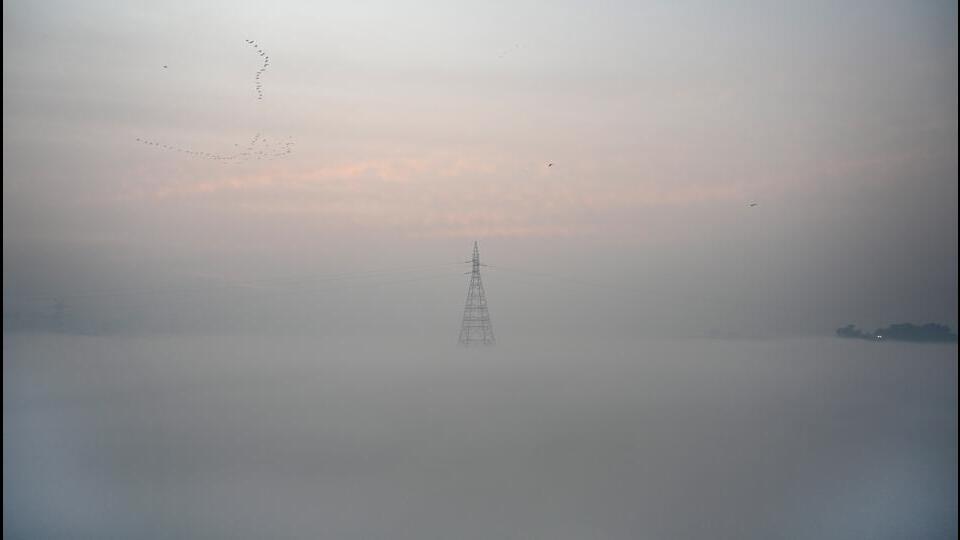
The fog will likely thicken over the weekend and further in the run-up to 2026, the India Meteorological Department (IMD) predicted, issuing a yellow alert – the first in its three-tier system – and warning of dense cover on Saturday and Sunday morning.
The state’s environment minister, Manjinder Singh Sirsa, also reiterated the weather agency’s warning and said a western disturbance could bring with it thick fog.
At the same time, the Centre’s Early Warning System (EWS) for Delhi’s pollution said the air quality index (AQI) is unlikely to tip back into the “severe” zone again this year. However, the prediction system has constantly been incorrect this winter. For instance, earlier this week, it was unable to forecast that the AQI would worsen to “severe”, which it did on Tuesday.
Western disturbances are weather systems that bring moist air from the Mediterranean Sea, across Iran, Afghanistan, and into the Indian subcontinent. When the moist air hits the Himalayas, it is forced upward, cools down, and releases precipitation – snow in the mountains and rain in the plains below – and fog.
Meanwhile, slow winds on Friday helped worsen Delhi’s air quality to “very poor” after a two-day spell in the relatively less toxic “poor” zone. The city recorded an AQI of 332 at 4pm on the Central Pollution Control Board’s (CPCB) official bulletin, far worse than 271 on Wednesday and 234 on Thursday.
By 10pm, the AQI read 349, with 10 of the city’s 40 pollution monitors in the “severe” category.
Winds are likely to get calmer still, and help fog build-up.
“Fog intensity may increase over the weekend as wind speeds dip marginally,” said RK Jenamani, senior scientist at IMD.
Mahesh Palawat, vice president at private weather forecaster Skymet said that as seen during the previous western disturbance, wind speeds tend to dip and the moisture levels increase – leading to widespread dense fog.
“Two consecutive western disturbances are now going to impact the region. While the impact of the first has already begun – leading to wind speeds dipping, the second is expected from December 30 till January 1. We may see dense to very dense fog returning across the Indo-Gangetic Plains,” he said.
Sirsa also warned of tricky weather conditions in the coming days. “According to the Meteorological Department, there is a high possibility of dense fog. Based on data from previous years, Delhi’s weather is likely to worsen,” Sirsa said.
The western disturbances are unlikely to lead to a sharp dip in minimum temperature. Delhi’s minimum was 7.7°C on Friday – which was around normal for this time of the year. This may hover between 5-7°C till Sunday, before rising marginally again and hovering between 7-9°C till New Year’s eve. The maximum on Friday stood at 22.3°C – two degrees above normal. It is expected to remain in this range till December 29, before rising marginally and hover between 23-25°C on New Year’s eve.