Seventy-year-old Dilip Basurai is not known by his name in this Maoist hotbed of Chhattisgarh.
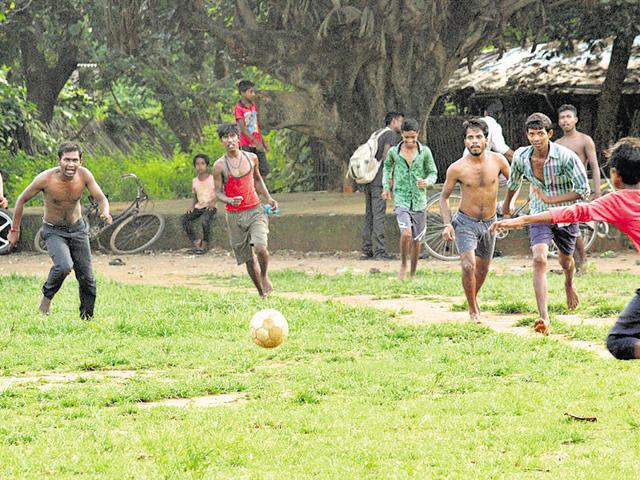
To most people in Pankhanjore, he is ‘Barda’ (big brother) and to school-age children of the 130 villages in the block, he is simply “football vale guruji”.
Dilip Basurai is a man who has spent his whole life teaching football to children more used to ducking a bullet than dribbling a ball.
The game is now a passion among the kids of this forest belt; it’s equally an escape from the rhythmic violence of attack and retaliation that marks life in a Maoist zone.
130km from the district headquarters in Kanker, Pankhanjore is one of the core pockets of Moist influence in the Bastar region, according to the police.
Basurai’s was one among the hundred war-displaced Bengali families from Bangladesh given shelter in these thinly populated villages in 1971 on the directions of the then Prime Minister Indira Gandhi.
The initiative was an extension of the Union government’s Dandakaranyana project from 1958 to rehabilitate Hindu refugees from former East Pakistan.
The Bengalis settled in these villages alongside Urao and Gond tribals, the original inhabitants of this region. They number nearly 10,000 at this point.
{{/usCountry}}The Bengalis settled in these villages alongside Urao and Gond tribals, the original inhabitants of this region. They number nearly 10,000 at this point.
{{/usCountry}}A fan of the legendary player of West Bengal’s football club Mohun Bagan, Chuni Goswami, Basurai says,“We started playing in early 1970s and then some tribal players joined us.” By the early 1980s, Basurai’s local football team included a dozen tribals.
“Maoism came in this region much later but I know many youth who were not influenced by Maoism because of football,” he adds.
Over the years, Basurai has often used his pension allowance to buy footballs for the tribal children.
He says, “Now there are a total of 96 school-level teams of which more than 40 are girls’ teams. What is shocking is that at the school level, girls are more interested in football and they play very well.”
The energy is particularly remarkable given the interruptions in daily life faced by the people of Pankhanjore.
The area has witnessed more than 200 encounters between Maoists and security forces over the past few years, according to assistant sub-inspector Omkar Banjare, posted at Bande police station for the last three years.
There’s little the adults can do but wish for a normal life. The children, however, now have the evening’s game to look forward to.
“We are in a fix between security forces and Maoists. We cannot speak against them or we will pay. Hence, football for the kids here is a kind of therapy to cope with the ongoing violence,” said a school teacher who did not wish to be named.
For the Chhattisgarh police, football is a new means of engagement with the public,
“We promote football in this area. Even the tribals love to play football here. This is a tool to devote their attention from Maoism to peace. I myself distribute footballs in these villages and organise tournaments every week in a village,” said Janak Sahu, the officer in charge of Chhote Bethiye police station.
“Football se baccho ke vichaar badalte hain (Football helps shape the mindset of these children),” says Omkar Banjare.
In 2015, the officer in charge of Bande’s police station was killed along with two others in a Maoist attack.
Football news is what people in Pankhanjore read first in the morning; the matches on television keep them awake through nights.
“Football is everything for us. Very rarely you will see youth playing cricket or any other game,” said Mridul Majumdar, a 13-year-old kid, as he dribbled a ball with two of his sister’s friends.
It’s not a devotion without its rewards. “The region has produced two state-level players — Kapil and Barun Sheel — along with one player who played nationals for Navodaya Vidyalaya — Sandeep Biswas. In the next few years, we hope the girls of this area will play in national tournaments in football,” said Rajesh Haldar, a local journalist working for a Hindi newspaper.
The place can give the nation great footballers, says Basurai. It’s time, he says, for the country to support the talent of these tribal children. “I urge the government to take steps to promote football in this area and funds should be sanctioed.”
Read | Bamboo schools boost education in Chhattisgarh’s Maoist hotbed Bastar