
 E-Paper



Former prime minister Dr Manmohan Singh admitted to AIIMS
Former prime minister Dr Manmohan Singh was on Thursday admitted to Delhi's All India Institute of Medical Sciences (AIIMS).

 Prefer HTon Google


Former prime minister Dr Manmohan Singh was on Thursday admitted to the emergency department of Delhi's All India Institute of Medical Sciences (AIIMS) at around 8 pm.
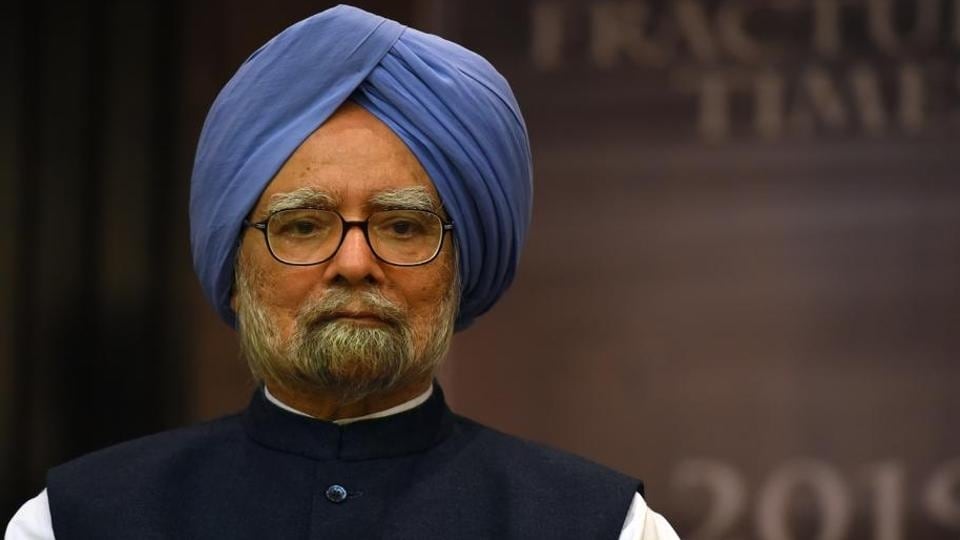
Sources told PTI that the 92-year-old veteran Congressman's health condition is critical.
Congress general secretary Priyanka Gandhi Vadra arrived at the premier institute to take stock of Singh's health condition.
Former Rajasthan chief minister and senior Congress leader Ashok Gehlot posted on X,"Deeply concerned about the health of Former Prime Minister Dr. Manmohan Singh ji. Wishing him a speedy recovery and good health."
Singh, who served as the prime minister from 2004 to 2014, retired from the Rajya Sabha earlier this year, ending his political innings in the Upper House after 33 years.
India's only Sikh prime minister entered the Rajya Sabha in 1991, four months after he was sworn in as the finance minister in June 1991 in the government headed by PV Narasimha Rao.
He represented Assam for five terms in the Upper House and shifted to Rajasthan in 2019.
His last intervention in Parliament was against demonetisation, describing it as an "organised loot and legalised plunder”.
"Unemployment is high and the informal sector is in shambles, a crisis precipitated by the ill considered demonetisation decision taken in 2016", he said at “Pratheeksha 2030,” PTI quoted Singh as saying at an event in 2021.
Born on September 26, 1932 in Punjab, Singyh received his received his Bachelor’s and Master’s in Economics from Panjab University in 1952 and 1954 respectively.
Dr. Manmohan Singh completed his Economic Tripos from Cambridge University in 1957. He followed this with a D.Phil in Economics from Oxford University in 1962.
After teaching stints at the Punjab University and the Delhi School of Economics, Singh joined the Government of India as Economic Advisor in the Commerce Ministry in 1971.
Dr Manmohan Singh was soon promoted to Chief Economic Advisor in the Finance Ministry in 1972.
After a short stint at the UNCTAD Secretariat, he was appointed Secretary General of the South Commission in Geneva from 1987-1990. Singh also held the positions of Secretary in the Finance Ministry, Deputy Chairman of the Planning Commission, Governor of the Reserve Bank of India, Advisor to the Prime Minister and Chairman of the University Grants Commission.


