
 E-Paper



From bureaucracy to politics: Tracing the journey of RCP Singh
RCP Singh’s name being dropped was perceived as an indication of strained ties between him and the party boss, Bihar chief minister Nitish Kumar.


The JDU’s decision to not nominate RCP Singh for the Rajya Sabha on Sunday raised the question whether he would remain a minister or would the party push for the inclusion of a new member in the Union council of ministers. Singh currently holds the portfolio of steel.
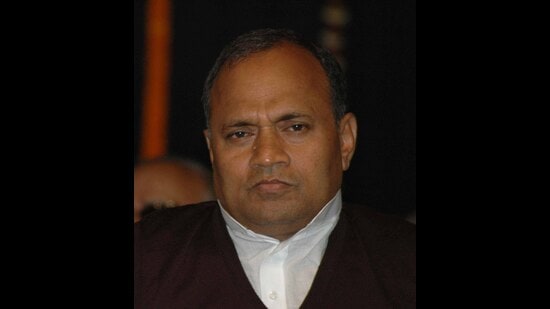
On Sunday, the JDU announced that its nominee for the Upper House will be Khiru Mahto, president of the party’s Jharkhand unit and a former legislator.
Singh is the only member from the JDU in the Union council of ministers. He was sworn in during the cabinet rejig in July 2021. The BJP and the JDU are allies and run a coalition government in Bihar.
According to the rules, a minister has to either be a member of Parliament or become a member of either House within six months from the date of taking oath. In Singh’s case, if he fails to get nominated to the Upper House within six months from the date of expiration of his term (July 7), he will have to resign.
Singh’s name being dropped was perceived as an indication of strained ties between him and the party boss, Bihar chief minister Nitish Kumar.
Though the BJP has in the past made room for Suresh Prabhu, who quit the Shiv Sena and joined the party before being inducted in the council of ministers, BJP insiders said the party is not inclined to upset the alliance partner. “The JDU is not the Shiv Sena,” said a BJP functionary.
Rise and fall in JDU
A bureaucrat who transitioned from administration to politics and eventually became a Union minister, RCP Singh’s rise in the power corridors is dubbed as meteoric by his party colleagues.
As the private secretary of Nitish Kumar who was then the Union railway minister, Singh is learnt to have forged close ties with the JDU chief that would see him switch sides from a top administrative position to the echelons of power.
“He was from the UP cadre, but because of his proximity to Kumar he was appointed as principal secretary to the chief minister. This led to heartburn among the bureaucracy in Bihar. Subsequently, when he was made party president, many in the political circles were surprised by his sudden rise in a party that Kumar runs like a tight ship,” said a senior JDU functionary.
A two-time member of the Rajya Sabha, Singh, a Kurmi, was first nominated to the Upper House in 2010 shortly after he resigned from the service.
In the years to follow, he was known as the man who had the party chief’s ear, was calling the shots to a large extent and had a crucial role to play in deciding tickets for elections.
“There was a time when he was literally running the party. He was appointed as the national general secretary and then the national president. Many assumed that he would be taking over the reins of the party and that by giving him decision-making positions, Nitish Kumar had nearly picked his successor,” said the functionary quoted above. Both Kumar and Singh are from the same caste, which was also the reason why the latter was perceived as the choice to run the party, which represents the OBCs in Bihar.
A strain between his political mentor and Singh began to emerge shortly after the 2020 assembly election. The JDU got fewer seats than the BJP and registered a dip in its vote share, and the strain was exacerbated as party colleagues felt he was failing to toe the party line.
“There was a perception that he was batting for the BJP and not the JDU. He tried to create a parallel power structure within the party; he was representing Nitish Kumar but ended up functioning independently. And finally, though he was asked to negotiate for more berths for the JDU in the Union council, he somehow became the only representative, all this added up…” said a second JDU functionary.
The brewing discontent peaked when Singh’s choice of candidates for the assembly election was questioned within the party. “Many in the party felt that he gave tickets to the wrong people. They felt for a person who did not have a political background and had difficulties adjusting to the party’s discipline, he was playing the de facto party boss,” the second functionary said.


