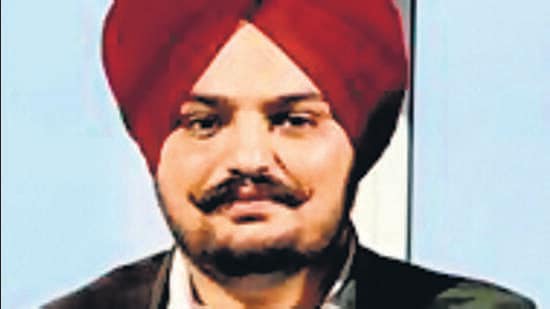
Drawing parallels between the murders of Punjabi singer Sidhu Moosewala nearly two months back and that of renowned music producer Gulshan Kumar 25 years ago, enforcement agencies said prima facie it appears Canada-based Punjabi gangsters are eyeing a complete control over the state’s music industry, similar to what Mumbai’s underworld did in 1980s till early 2000s.
Since most of the successful Punjabi singers have linkages with Canada – they either have permanent residency permits or citizenship of the North American country – they are at increased risk of being targeted by gangsters, said police officers familiar with the matter.
HGS Dhaliwal, the special commissioner of Delhi Police Special Cell, which is one of investigating agencies probing the Moosewala murder case, said the murder of Punjabi singer reminded the gruesome killing of Gulshan Kumar, the founder and owner of popular music label T-Series, on August 12, 1997.
“Both music stars were killed in a similar fashion. While Gulshan Kumar was shot dead by three assailants when he was coming out of a temple in Mumbai, Moosewala was gunned down by six gangsters on a highway,” the officer said, requesting anonymity. “Just as the Mumbai’s music industry came under the influence of gangsters associated with Dawood Ibrahim’s D-Company after Kumar’s murder, Punjab gangsters are trying to ensure their writ runs on Punjabi folk music after killing Moosewala.”
Moosewala was shot dead at Jawaharke village in Punjab’s Mansa district on May 29, when he was travelling in his personal vehicle with two of his associates.
{{/usCountry}}Moosewala was shot dead at Jawaharke village in Punjab’s Mansa district on May 29, when he was travelling in his personal vehicle with two of his associates.
{{/usCountry}}The current value of the Punjabi music industry is around ₹60,000 crore and has an average annual growth rate of 15%, said Pramod Kushwaha, New Delhi range deputy commissioner of police (Special Cell). “It is not far behind the current value of Bollywood music industry of around ₹1,00,000 crore, having an average growth of 10%. The music industry in Punjab has over 450 registered music labels that release around 20 to 25 songs every day. In 2021, the industry released over 5,000 music videos,” he said.
The music and film industry of Punjab is witnessing a pattern last seen in Bollywood years back, the officer said. “Extortion and protection money is now an accepted practice with the underworld gangs aiming to gain a share in it. The culture of violence has also become an integral part of Punjabi music with more and more young rappers often appear normalising violence through their genre of gangster rap,” Kushwaha added.
Echoing similar views, an officer of the Mumbai Police Crime Branch said the module used in Moosewala’s killing was much similar to that used in Gulshan Kumar’s murder by the underworld 25 years ago. “This module is known as ‘blindfold vertical capsule’, in which none of the verticals — killers, arms’ suppliers, financers and hideout facilitators — know each other. All these verticals have only one communication point —the person who is at the top of this capsule’s pyramid and gives directions from some foreign country,” the officer said, also declining to be named. “In Moosewala’s murder, while (jailed gangster) Lawrence Bishnoi was the main conspirator, Canada-based gangster Goldy Brar was the chief coordinator.”
All the verticals of this module change their locations frequently and interact with the chief coordinator only through the internet, the officer from the Mumbai Police said. “The Canada-based Punjabi gangsters have started hiring sharp-shooters from smaller places like the Mumbai’s underworld used to outsource Azamgarh boys,” he added, referring to the D-Company’s modus operandi of hiring boys with clean records from Uttar Pradesh’s Azamgarh district and assign them targets after bringing them to Mumbai.
Officials from the Punjab Police, however, said the violence and threats are mainly due to “proximity” between artists and gangsters. “While Punjabi music industry is the easiest way to make ‘white’ money for the gangsters, it is also the best way for artistes to avoid extortion and death threats,” said a senior Punjab Police officer, asking not to be named. “Gangsters often ask for the copyright of one or two songs from each Punjabi folk artist and they guarantee their safety in return. Most of these singers initially want patronage... But after a while, these bad elements morph into Frankenstein monsters for them.”
Most of these singers do not know how to distance themselves from the gangsters, the officer said. “Usually, these gangsters are common people studying in colleges and can easily come in contact with the singers. They often help the singers in getting their money from producers. At times, some of the gangsters also turn out to be fans of these singers, who glorify gun culture through their songs,” he said. “It is an accepted norm for the Punjabi music industry that when a singer is promoted by elements linked to a particular gang, that artist gets branded as an associate of that gang. There is no way out of this tag.”
An Intelligence Bureau (IB) officer working in Punjab said the possibility of involvement of black money in state’s music industry could not be ruled out. “The influx of black money makes it lucrative for gangsters to give extortion calls to artistes and producers. Several music companies, such as Thug Life and Gold Media (these two were unearthed during the crackdown by the Punjab Police), are being directly run by gangsters from abroad. The gangsters have been investing extortion money in these music companies,” the IB officer said.
Extortion calls or death threats, however, are not a new phenomenon in the Punjabi music industry.
In 2018, Punjabi singer Parmish Verma received bullet injuries in his thigh after unidentified persons shot at him in Mohali. Later, gangster Dilpreet Singh claimed responsibility for the shooting. In the same year, upcoming singer Navjot Singh was killed by unknown miscreants in Dera Bassi.
More recently, actor-cum-singer Gippy Grewal and Jalandhar-based Punjabi singer Rai Jujhar received extortion threats via video calls. Singer-politician Balkar Sidhu filed a police complaint alleging he received extortion calls. Singer Karan Aujla received death threats on social media and gunshots were fired at his friend’s house in Surrey, Canada.
Artistes have also expressed concerns over their safety following the broad daylight murder of Moosewala.
“Most people will never know the extent of what you have to deal with as a Punjabi artist behind the scenes on a daily basis,” Amritpal Singh Dhillon, an Indian-born Canadian singer and a close associate of Moosewala, wrote in a post on Instagram.
Singer Mika Singh, who is currently filming a reality show in Rajasthan, said: “Singers in Punjab often get such threats from gangsters. I am telling you from personal experiences… dealing with threats is very difficult.”
Singh’s security has recently been beefed up as a precaution following Moosewala’s murder. The Punjab Police have also increased security cover for singer Mankirt Aulakh, when he requested the police to step up security measures after allegedly receiving threats in April from the Davinder Bambiha gang.