...
...
Next Story

‘Getting difficult to supply items’: Jaish’s No. 2 tells terrorists in Kashmir

Jaish-e-Mohammed (JeM) operational commander Mufti Rauf Asghar’s message to terrorists in Kashmir was sent after the Nagrota encounter

Updated on: Nov 25, 2020, 15:12:56 IST
Hindustan Times, New Dellhi | By
Prefer HTon Google
Advertisement

Mufti Rauf Asghar, Jaish-e-Mohammed (JeM) operational commander, who had coordinated the infiltration of four heavily-armed operatives into India this month to wreak havoc, has told Jaish terrorists in Kashmir that it was becoming difficult to supply them the necessary “items”, a reference to explosives and weapons. Mufti Rauf Asghar sent the message to Jaish operatives in Kashmir soon after the gunbattle at Ban toll plaza in Jammu’s Nagrota that led to the elimination of four Pakistani terrorists within hours of crossing the border, people familiar with the matter said.
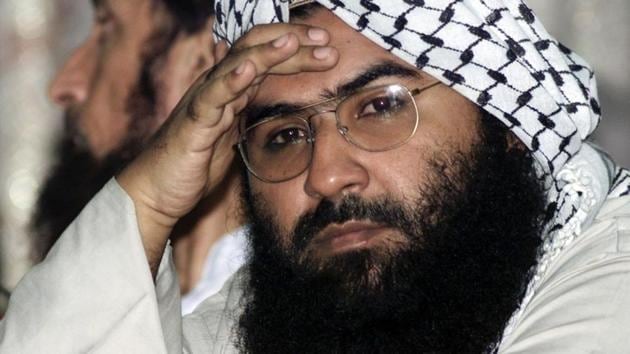
Mufti Asghar is the younger brother of JeM chief and UN designated global terrorist Masood Azhar (in photo) who is reported to  have been under treatment for a life-threatening spine aliment (Reuters/AP)
Mufti Asghar is the younger brother of JeM chief and UN designated global terrorist Masood Azhar (in photo) who is reported to have been under treatment for a life-threatening spine aliment (Reuters/AP)

Mufti Asghar is the younger brother of JeM chief and UN designated global terrorist Masood Azhar who is reported to have been under treatment for a life-threatening spine aliment. Asghar is considered the terror group’s de facto chief in his elder brother’s absence and had overseen the infiltration of the four terrorists from Bahawalpur in Pakistan’s Punjab province.

Also Read: Pak’s million mutinies, ghosts and Doval’s doctrine of ‘defensive offence’

The 19 November encounter was a huge setback for the terror group, given how heavily Asghar had invested in their training and infiltration. Border Security Force officials who have seen the 200-metre tunnel dug under the border fence said the engineering detail that had gone into digging the tunnel in Pakistan’s Shakargarh area was a surprise. They were well-armed too.11 AK-47 rifles, 3 pistols, 29 hand grenades and 6 grenades to be fired from an under barrel grenade launcher were seized.

According to intelligence reports, the infiltration of the four terrorists was part of an effort by Pakistan-based terrorist groups to prepare for a major drive in Jammu and Kashmir. They have become especially active after the US withdrawal from Afghanistan.

The reports said terrorist group Lashkar-e-Taiba (LeT) is also mobilising cadres from its Chelabandi camp in Muzaffarabad to fresh locations in Neelum Valley across the Line of Control (LoC) between India and Pakistan. And the Hizbul Mujahideen training nearly 400 cadres at a newly constructed facility in the forest area of Oghi in Khyber-Pakhtunkhwa (KPK).

The Jaish, intelligence reports indicate, is not the only one feeling the heat. According to one input, the Al Badr group is exploring ways to infiltrate into India from Bangladesh after security forces tightened the security grid across the LoC in Kashmir.

Indian intelligence officials suspect the attempt to carry out terror strikes at high-value targets could be a diversionary tactic by the Pakistani army and ISI chiefs, under pressure from Opposition parties in the country, to bring the focus back on Kashmir.

 
ABOUT THE AUTHOR
Shishir Gupta

Shishir Gupta is Executive Editor at Hindustan Times and one of India's top journalists covering national security, strategic affairs, foreign policy and geopolitics. Over the past three decades, he has extensively reported on India's military, diplomatic and security landscape, covering every major conflict and national security challenge, from the 1999 Kargil War and the 2020 East Ladakh standoff to Operation Sindoor in 2025. He has also covered major terror attacks, including the IC-814 hijacking, the 26/11 Mumbai attacks and the 2025 Pahalgam terror strike, along with numerous Pakistan-backed terrorist incidents in the Kashmir Valley and across India. He has reported on national and state elections for more than three decades. A recognised authority on strategic affairs, Gupta has covered India's nuclear programme since the Pokhran-II (Shakti series) tests in May 1998 and has written extensively on global nuclear issues, Indian diplomacy and the country's expanding global outreach. He has also reported widely on international conflicts and terrorism, with a special focus on the Indian subcontinent. Gupta has interviewed Prime Minister Narendra Modi more than four times, including Modi's first interview with the print media after becoming Prime Minister in May 2014. His other interviews include three with the Dalai Lama, as well as conversations with Benjamin Netanyahu, Amit Shah, Yogi Adityanath, S. Jaishankar, Nirmala Sitharaman and Piyush Goyal. He is the author of Indian Mujahideen: The Enemy Within (Hachette, 2011) and Himalayan Face-off: Chinese Assertion and Indian Riposte (Hachette, 2014). He was awarded the Chevening-Wolfson Joint Scholarship at Wolfson College, University of Cambridge, UK, in 1998 and participated in the International Visitor Leadership Program (IVLP) of the US State Department in 2006. He received the Ben Gurion Prize from Israel in 2011 and the K. Subrahmanyam Prize for Strategic Studies in 2015 from the Manohar Parrikar Institute for Defence Studies and Analyses (MP-IDSA). Since 2024, he has hosted Point Blank, Hindustan Times' weekly YouTube show on global geopolitics.

Get the latest India News, breaking headlines and real-time updates from across the country. Stay informed about politics, government policies, crime, weather and major national developments.
SHARE THIS ARTICLE ON
Hindustantimes wants to start sending you push notifications. Click allow to subscribe