
 E-Paper



Pak’s million mutinies, ghosts and Doval’s doctrine of ‘defensive offence’
Indian spooks have succeeded spectacularly in Pakistan by not only engineering the greatest intelligence coup of the century.

 Prefer HTon Google


For decades, India has been on the receiving end of Pakistan’s relentless export of terrorism, the commodity in which it has enjoyed both a comparative as well as a competitive advantage. Faced with Pakistan’s use of terrorism as an instrument of state policy, India struggled to devise an adequate response. After every big terror attack, there was a standard response in India: the government threatened to retaliate and talking heads on TV nudged government strategists to pay back Pakistan in the same coin. The standard response to this unsolicited advice was that India couldn’t stoop to Pakistan’s level. But many security experts have reasoned that the real reason was that India just never bothered to build the leverages, capacities and capabilities that would have allowed New Delhi to hit Pakistan where it hurt.
Since 2014, however, things started to change, or so we are being told by the Pakistanis.
For some time now, the Pakistanis have been trying to implicate India in problems that are really the result of blowback of their own flirtation with terrorism and using it as an instrument of the security and foreign policy of the state. There is, however, no solid evidence to back up Pakistan’s allegations against India, unless of course, someone is ready to subscribe to the pulp-fiction dossier, or if you will, shoddy ‘literature’, that Pakistan recently publicised with much fanfare.
If the Pakistani ‘dossier’ were to be taken at its face value, it would seem that India has more than paid back to Pakistan. That Indian spooks have succeeded spectacularly in Pakistan by not only engineering the greatest intelligence coup of the century – turning Pakistan’s strategic assets into its deadliest enemies – but also boxed in Pakistan so hard by exploiting its fault-lines that it now fears its very survival.
The accusations and ‘achievements’ being attributed to India, however, aren’t true.
Also Watch l How Pakistan is hoodwinking FATF and the world on terror funding
Because if these were, then Pakistan would certainly have a smoking gun that was more convincing than a ‘dummy dossier’ or a kidnapped former naval officer who has been presented as some kind of an Indian James Bond.
Even so, the fact that the Pakistanis are petrified of India doing to them what they have been doing for decades to India is something that at least gives India a major psychological advantage over her arch enemy. At one level, it puts the Pakistanis on the defensive; at another level, it makes them chase ghosts and prevents them or distracts them from fixing the things that are actually responsible for the ‘million mutinies’ erupting in several parts of the country or are on the verge of exploding in Pakistan. As is their wont, Pakistan always looks for exogenous actors and factors to explain their problems.
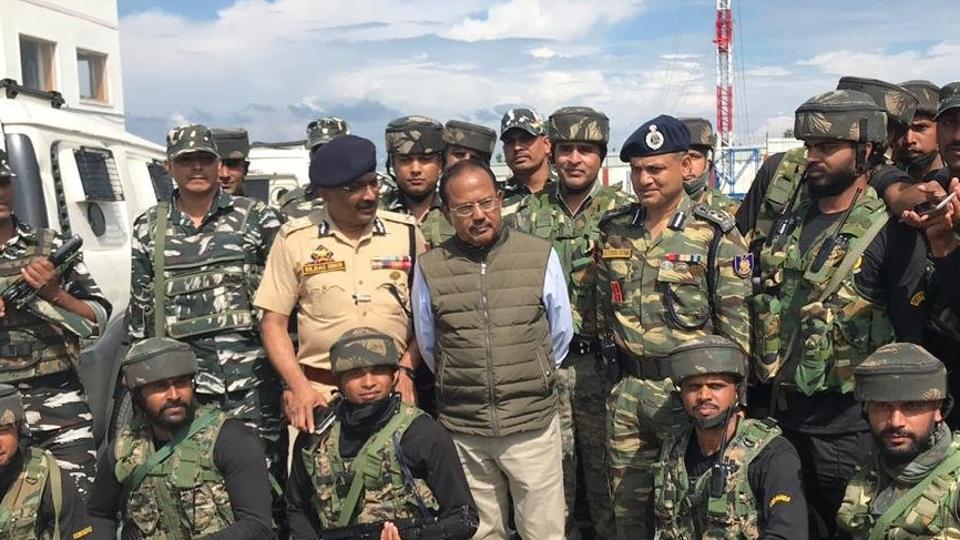
National Security Advisor Ajit Doval has been their favourite bugbear for some years.
Pakistanis have latched on to a speech Doval had given at a university long before he was appointed NSA. In that speech, he had spoken about the need for India to craft a strategic response to Pakistani export of terrorism. After he was appointed NSA by Prime Minister Narendra Modi in 2014, Pakistan’s strategists presumed that the Doval doctrine of ‘defensive offence’ – “go and attack the place from where an offence is coming from” – had been operationalised.
According to Pakistan, this doctrine is all about paying Pakistan back in the same coin. In other words, Pakistan’s security analysts believed that India would use terrorism to respond to Pakistan’s terrorism. In fact, Doval appears to have instilled such trepidation in the Pakistanis that from the moment he became NSA, some retired personnel of the Pakistani military cleared to appear on and write in Pakistani media have been trying to paint him as some kind of a one-man army who can disrupt, disorder and dismantle Pakistan.
The Doval doctrine soon became part of Pakistan’s strategic folklore.
By and by, the ‘doctrine’ has been elevated to the status of being an embodiment of the ‘5th generation’ war that every Pakistani military person loves to mouth incessantly that India is supposed to be waging on Pakistan.
The reality is, however, nowhere close to what the Pakistanis imagine it to be.
If at all there is a Doval doctrine, then it has manifested itself not in any covert action that Pakistan keeps accusing India of but in the overt action – the 2016 surgical strikes and 2019 Balakot airstrikes. While there is no denying that India’s posture and approach to tackling terrorism emanating from Pakistan has changed in style and substance since 2014, India continues to remain loath to using proxies or non-state actors against Pakistan.
In other words, India doesn’t still subscribe to using terrorism as an instrument of state policy; rather India is now using state power as a legitimate instrument for the protection of the state and furthering its objectives. The Balakot air strike in 2019 and the surgical strike in 2016 are prime examples.
This is very different from what Pakistan accuses India of.
Pakistan has often raised the issue of alleged Indian sponsored terrorism with its interlocutors from other countries, only to be rebuffed. On any number of occasions, Americans at the most senior levels of successive administrations have refuted Pakistan’s allegations against India. And yet Pakistan continues to peddle the same old version in the hope that one day, perhaps, someone will buy their story.
The fact, however, is that virtually every terror attack that Pakistan tries to place at India’s door has its roots and links inside Pakistan and is the result of the deep state’s affair with jihadism going horribly wrong. Other militant attacks – by Baloch or Sindhi freedom fighters, or even by disgruntled elements in Pakistan-occupied Gilgit Baltistan and the Pashtun areas in Pakistan – are also the outcome of the neo-colonial model followed by the Pakistan army against people who it calls its own.
Take for example the heavy-handed treatment meted out to the entirely peaceful Pashtun Tahafuz Movement (PTM) which is fighting for constitutionalism but is accused of being a catspaw of India. That the struggle for constitutionalism is seen as treason is something that can only happen in a Praetorian state like Pakistan. Ditto for the jailed civil rights activists in Gilgit Baltistan.
If peaceful, political and civil society movements are going to be crushed by the Pakistan military and the ‘deep state’, and the disaffected people pick up the gun, how is it India’s doing?
The sudden spate of accusations being hurled against India is essentially nothing more than the perpetrator playing the victim even as it ratchets up violence in Jammu and Kashmir.
On its part, Pakistan doesn’t even admit to the involvement of its terrorists and spy agency ISI to the 26/11 Mumbai terror attacks though security agencies worldwide concur on Pakistan’s role in the terror attacks. In the “most wanted” list released earlier this month, Pakistan was careful to skip the names of the mastermind and key conspirators of the Mumbai terror attacks. The Federal Investigation Agency did name 20-odd people accused of a role in the attacks but these were mostly members of the crew of two boats used by the attackers to travel to Mumbai and those who helped finance the attacks through money transfers.
But Pakistan’s denials don’t mean its hands are clean.
As far as India is concerned, the ‘D’ doctrine isn’t so much the Doval Doctrine as it is the Deterrence doctrine. But if the Pakistanis prefer to name it after the Indian NSA, there is no reason for India to deny them their dread of Doval. Quite to the contrary, India needs to press ahead filling Pakistan’s deep state with fear about India’s response and let Pakistan chase ghosts and shadows.


