A major overhaul of India’s onion procurement system slowed government purchases for weeks, officials familiar with the matter said, despite an early start to stock-building, forcing authorities to relax quality norms and repeatedly raise procurement prices to accelerate buying.
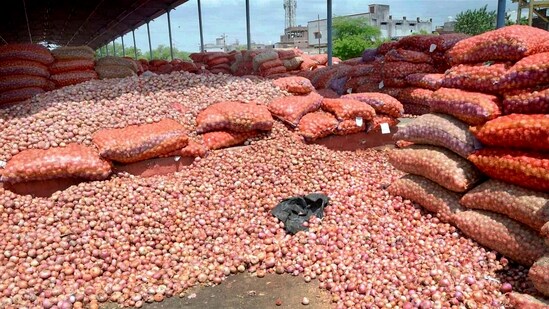
The consumer affairs ministry on Monday reviewed procurement progress with agencies and other stakeholders, just two days after raising the procurement price to ₹21.25 per kg, amid concerns that purchases for the government’s onion buffer remained far below target.
The government has procured only about 13,000 tonnes of onion as of July 7 against a target of 200,000 tonnes, though procurement began on May 15, a senior government official said on condition of anonymity.
Officials attributed the slow pace largely to changes introduced this year to curb irregularities. Until last year, procurement and storage were handled by Nafed and the National Cooperative Consumers’ Federation of India (NCCF) through local agencies. This year, however, storage was shifted to the Central Warehousing Corporation (CWC).
“CWC initially enforced quality norms very strictly and rejected a large quantity of onions offered at procurement centres. This affected procurement,” the official said.
{{/usCountry}}“CWC initially enforced quality norms very strictly and rejected a large quantity of onions offered at procurement centres. This affected procurement,” the official said.
{{/usCountry}}Consumer affairs secretary Nidhi Khare said the change was intended to eliminate an inherent conflict of interest.
“Till last year, both procurement and storage were handled by Nafed and NCCF through local agencies selected by them. This had an inherent problem of conflict of interest. CWC has been roped in to handle storage primarily to resolve this issue,” she said.
According to officials, the overhaul followed concerns over procurement irregularities, including middlemen inflating prices, paper transactions and genuine farmers being excluded.
The stricter scrutiny coincided with quality problems in this year’s crop. Unseasonal rain during harvesting in Maharashtra resulted in more onions with single skins, partial discolouration and sunburn damage, leading to higher rejection rates, Khare said.
Faced with poor procurement, the government relaxed its quality norms. Procurement was initially restricted to Grade A onions suitable for long-term storage but was later expanded to include Grade-URS (Under Relaxed Specification), which Khare described as superior to conventional Grade B onions.
The higher procurement price and relaxed specifications appear to have boosted buying. Procurement rose from about 5,000 tonnes on July 4 to 13,000 tonnes by July 7. Traders said procurement activity also pushed prices of lower-grade pickle onions up by ₹2-3 per kg to about ₹16 per kg.
Khare said procurement prices would continue to be revised in line with market conditions and expressed confidence that the government would achieve its target by July 30.
The government builds onion stocks during the peak arrival season to stabilise supplies and prices later in the year, when markets typically tighten between the rabi and kharif harvests.