The Union ministry of health and family welfare is considering faculty pooling among medical institutes and hiring retired teachers as visiting faculty to tackle the shortage of educators in medical colleges across the country, according to people familiar with the matter.
These measures emerged during a recent post-Budget webinar where experts brainstormed ways to optimise resources in medical colleges amidst the consistent increase in the number of medical seats.
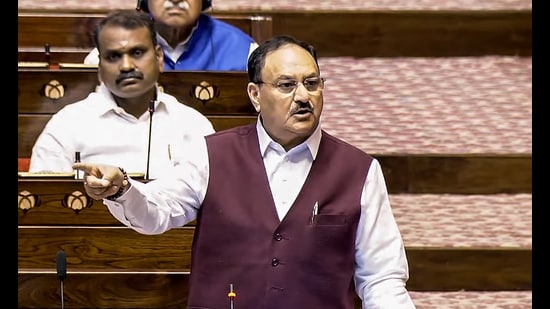
“I supported suggestions like faculty pooling among medical institutes that are in the vicinity and hiring retired teachers as visiting faculties to make unviable institutions viable,” said Union health minister JP Nadda following the expert consultation. “We’re also looking at incorporating competency-based medical education, early clinical exposure for students, and enhanced communication skills for both students and faculty.”
The health ministry will additionally focus on faculty development, periodic assessment of staffing gaps, and timely recruitment after assessment to avoid hindrances to education and ensure smooth functioning of medical colleges.
The ministry is also exploring integration of the latest technological developments including artificial intelligence, telemedicine, and digital healthcare solutions into the revised medical education curriculum.
“There’s a need for creating a curriculum that is more vibrant, meaningful and fit to current challenges,” Nadda said. “We must ensure optimum utilisation of existing infrastructure and medical faculty while adding soft skills to increase empathy, ethics, and communication skills of the medical students.”
{{/usCountry}}“There’s a need for creating a curriculum that is more vibrant, meaningful and fit to current challenges,” Nadda said. “We must ensure optimum utilisation of existing infrastructure and medical faculty while adding soft skills to increase empathy, ethics, and communication skills of the medical students.”
{{/usCountry}}Since 2014, the number of medical colleges has surged from 387 to 780 today, with an increase of 130% in undergraduate seats and 135% in post-graduate seats.
Union health secretary Punya Salila Srivastava addressed the faculty challenges, stating: “As far as faculty development and shortage is concerned, our experts said that we need to assess our faculty gap and assure that the recruitment that we do aligns with the increase in medical seats that we are planning.”
These efforts support Prime Minister Narendra Modi’s announcement last year to add 75,000 medical seats in the next five years to boost health infrastructure.
The government has implemented several measures to increase medical education capacity, including the centrally sponsored scheme (CSS) for establishing new medical colleges by upgrading district or referral hospitals. Under this initiative, 157 new medical colleges have been approved, with 109 already functional.
Additional measures include upgrading existing state and central government medical colleges to increase the number of undergraduate and postgraduate seats. The government has provided support for: Increasing 4,977 MBBS seats in 83 colleges (approved cost: ₹5,972.20 crore); adding 4,058 PG seats in phase-I across 72 colleges (approved cost: ₹1,498.43 crore); supporting 4,000 PG seats in phase-II in 65 colleges (approved cost: ₹4,478.25 crore)
Other initiatives include upgrading government medical colleges through construction of super specialty blocks under the Pradhan Mantri Swasthya Suraksha Yojana (PMSSY) and commencing undergraduate courses in 19 of the 22 All India Institutes of Medical Sciences (AIIMS).