E-Paper



Covid-19 outbreak: Govt sets up national vaccine task force
The main job of this task force will be to work as a bridge between academia, research institutions, and international collaborations in the field of drug testing and vaccine development.

 Prefer HTon Google


The central government on Sunday constituted another national task force on vaccine development and drug testing having representatives from the ministry of Ayush (Ayurveda, Yoga & Naturopathy, Unani, Siddha and Homoeopathy) among others as members.
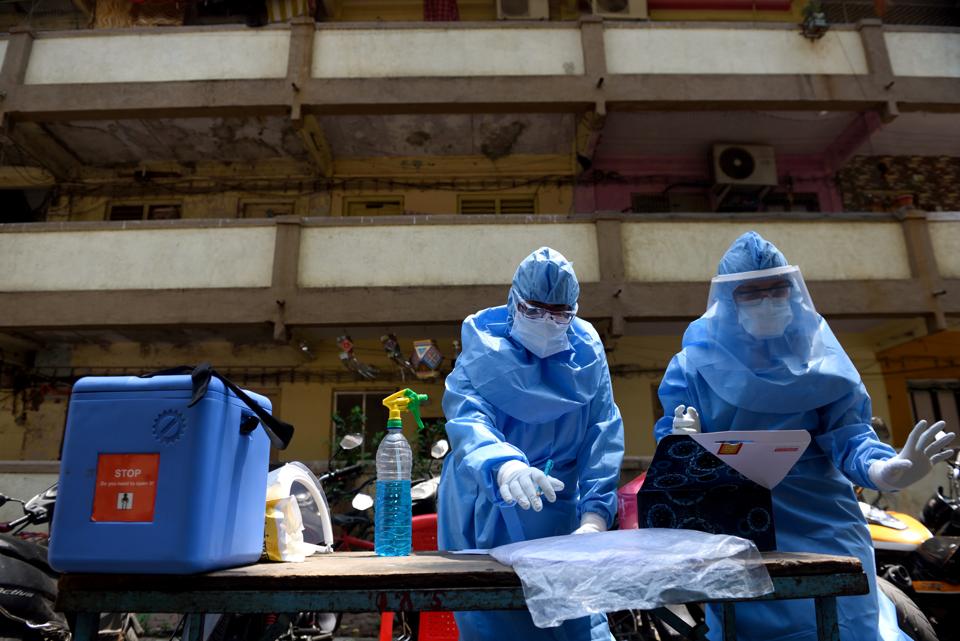
The main job of this task force will be to work as a bridge between academia, research institutions, and international collaborations in the field of drug testing and vaccine development.
“We are contributing towards drug research as there are many herbs known for their medicinal properties. It is a collaborative effort with CSIR, ICMR etc,” said Ayush secretary Rajesh Kotecha.
The other members will be from the Indian Council of Medical Research (ICMR), department of science and technology (DST), department of biotechnology (DBT), council of scientific and industrial research (CSIR), defence research and development organisation (DRDO), directorate general of health services (DGHS) and drug controller general of India (DCGI).
“This task force will monitor the progress, not just in India but globally, happening in the field of vaccine development and drug trials. They will create a clinical cohort for long-term follow-up of people for achieving a better understanding of disease management. Bio specimens will be collected as part of the exercise, which will be different from the usual sample collection, for further drug and vaccine trials,” said Lav Agarwal, joint secretary, health ministry.
The task force will be co-chaired by principal scientific advisory to the government of India, K Vijay Raghavan, and member (health) Niti Aayog, Dr Vinod Paul.
The DBT will be the central coordinating agency for vaccine development, and will focus on identifying different pathways in ensuring that work towards vaccine development is expedited.
The partial lockdown relaxation that will be given after April 20 will not be applicable to hot spot areas from where clusters or large outbreaks of coronavirus disease (Covid-19) have been reported.
“The states have been given a free hand to impose further additional measures according to local requirements as the local administration will be in a better position to take a call, depending on the conditions on the ground,” said Agarwal.
The state governments are also scaling up efforts to create more dedicated Covid-19 hospitals and health centres. As of now, there are a total of 2,144 hospitals and health centres meant only for Covid-19 patients, of which 755 are big hospitals and 1,389 are Covid health centres for mild or asymptomatic patients.
There are now 54 districts from 23 states and Union territories that have not reported fresh cases during the last 14 days. Apart from the previous list, 10 new districts have been added.
The districts newly added to the list are Gaya and Saran in Bihar; Bareilly in Uttar Pradesh; Fatehgarh Sahib and Rupnagar in Punjab; Bhiwani, Hisar, and Fatehabad in Haryana; and Cachar and Lakhimpur in Assam.