
 E-Paper



Green fencing can prevent lake encroachments: CM
“By the end of January, development and rejuvenation of 25 lakes with an expenditure of around ₹128 crore will be completed. When developing lakes, encroachments should be cleared and green fencing should be used,” the chief minister’s office (CMO) quoted Bommai as saying in a statement.

 Prefer HTon Google


Karnataka chief minister Basavaraj Bommai on Sunday said green fencing can be used around lakes in Bengaluru to avoid any encroachments on these water bodies.
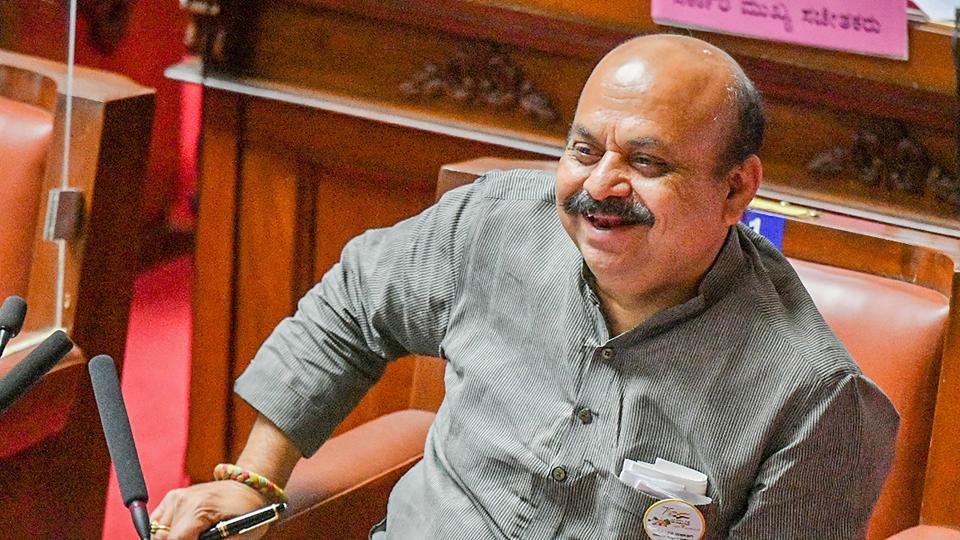
“By the end of January, development and rejuvenation of 25 lakes with an expenditure of around ₹128 crore will be completed. When developing lakes, encroachments should be cleared and green fencing should be used,” the chief minister’s office (CMO) quoted Bommai as saying in a statement.
The directions come at a time when several of Bengaluru’s water bodies are increasingly being encroached by land sharks, development projects and other reasons that have led to water logging during heavy rains.
Bommai held a meeting with senior officials with regards to Bengaluru Mission 2022, an initiative that aims to improve the crumbling infrastructure in a city known globally for its prowess in technology, startups, research and aerospace among other sectors.
Bengaluru, once known as the land of a thousand lakes, now has barely 200 of them which are in pitiable conditions.
Though the civic body and the state government earmark hundreds of crores towards rejuvenation of lakes each year, experts said this was mostly to beautify the surroundings of the lake than the ecology which is far more important than the aesthetics of such water bodies.
Even the Vrishabhavathi river, once a source of water for Bengaluru, has now become nothing more than a flowing drain with toxic water on account of unplanned civic infrastructure which allows sewage water directly into lakes and other water bodies, contaminating soil, underground water and impacting the overall quality of life in a city which is known world over for its prowess in information technology, startups and aerospace among other sectors.
At least 19 lakes out of the remaining 205 (out of earlier estimates of at least 250) under the Bengaluru civic body have been termed as disused lakes due to encroachments according to a February 2021 report by CSIR-National Environmental Engineering Research Institute (NEERI).
A report by CSIR-National Environmental Engineering Research Institute (NEERI) indicated that there are around 21 lakes out of the 205 existing on paper in which the water was fit for drinking.
This claim has been contested by environmentalists, scientists, citizens among others.
A report by the Karnataka State Pollution Control Board (KSPCB) in 2020 states that there is not even one lake which has water fit for drinking. Some of these encroachments are by big builders who then name these projects “lake view” to attract more interest from potential buyers, HT reported on March 21.
During the recent rains, several of Bengaluru’s residential localities had witnessed floods as drains and lakes were overflowing, inundating neighbourhoods and resulting in loss of property and livelihoods.
Lakes were a major source of irrigation and the city’s only source of water for centuries until authorities, over the last 20-30 years, have turned a blind eye on encroachments for building residential and commercial infrastructure to accommodate the city’s increasing population.
In the recent downpour, it was also seen that heavy rains resulted in water overflowing from drains as well as sewage water entering lakes, polluting the water bodies and its fragile ecosystems.
Estimates by the Indian Institute of Science states that Bengaluru receives around 700-850 mm of rains each year which is enough to accumulate around 16 thousand million cubic feet (tmc ft) of water which is almost 70% of its demand of around 19 tmc ft. But the lack of treatment plants and awareness has given rise to a situation where most of the water is let out into drains by most households except large apartment complexes where it is mandatory to have sewage treatment plants.
Bommai said he had instructed officials to ensure sewage water does not enter lakes.


