E-Paper



GST rate revision: Surplus may be used to pay states
The 56th GST Council will consider the Centre’s proposal to eliminate two out of four tax slabs (12% and 28%) and retain the 5% and 18% tax rates.

 Prefer HTon Google


The Goods and Services Tax (GST) Council may consider compensating states for their immediate revenue losses on account of a proposed GST rate rationalization -- tapping an estimated surplus of ₹40,500 crore in the compensation fund for this purpose, people familiar with the matter said.
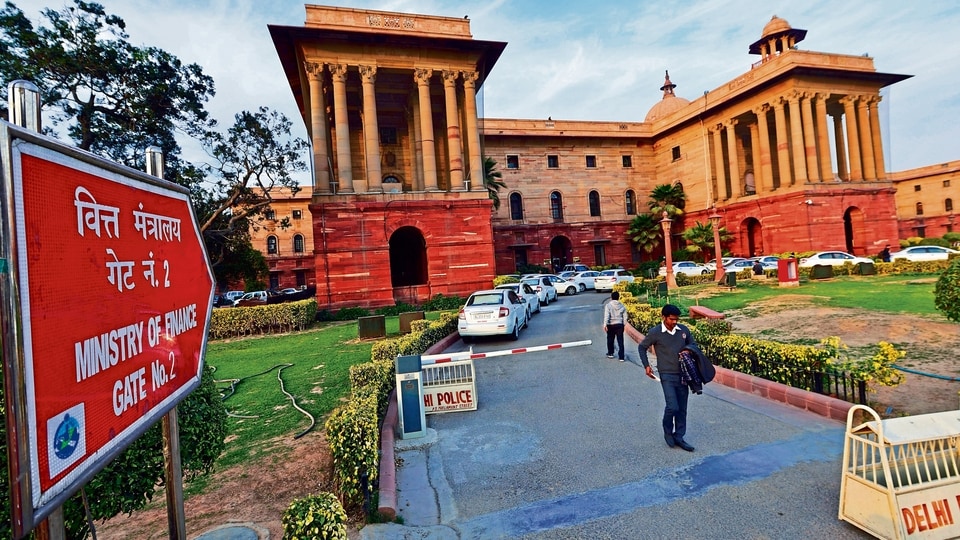
There is near unanimity among members of the council, the apex decision making authority on all matters related to GST, on pruning the GST slabs from four to two to reduce tax burden on the consumer, but some of them have demanded that the rate rationalization exercise must also protect their revenues, the people added on condition of anonymity. Ahead of the 56th GST Council’s meeting on September 3 and 4, an officer-level meeting was held on Tuesday to prepare the ground.
The two-day meeting of the 56th GST Council in New Delhi will consider the Centre’s proposal to eliminate two out of four tax slabs (12% and 28%) and retain the 5% and 18% tax rates with a special slab of 40% for so-called luxury and sin goods. On Independence Day, Prime Minister Narendra Modi proposed the next generation reforms in the indirect taxes (GST 2.0) regime with an emphasis on rate rationalization, structural reform and ease of living.
A group of ministers (GoM) on rate rationalization has accepted, in principle, the Centre’s proposal to move 99% products in the 12% slab (mostly food and consumer products) to the 5% slab, thereby reducing their rates significantly. Similarly, 90% items under the 28% tax bracket (cement and most aspirational goods) would be accommodated in the lower slab of 18%, the people said. A final decision on this matter will, however, rest on the GST Council, which is chaired by the Union finance minister . Bihar’s deputy chief minister Samrat Choudhary heads the GoM on rate rationalization.
“As the council’s decisions are conventionally unanimous, it will consider revenue concerns of some states and try to devise ways in which the states could be compensated. Utilisation of surplus in the compensation fund could be an option,” one of the people said.
The rate rationalization exercise could initially dent monthly collections , but revenues are expected to rise with the reduction in prices of goods and services boosting consumption , the people explained. According to a State Bank of India’s (SBI) research report, the rate rationalization exercise may see a monthly revenue loss of about ₹5,000 crore in the short-run.
“Evidence from earlier rounds of GST rate changes, such as those in July 2018 and October 2019, suggests that rationalization does not necessarily weaken revenue collections. Instead, the evidence points to a temporary adjustment phase followed by stronger inflows. While an immediate reduction in rates can cause a short-term dip of around 3-4% month-on-month (roughly ₹5,000 crore, or an annualized ₹60,000 crore), revenues typically rebound with sustained growth of 5-6% per Month,” the report released on Tuesday said.
The report also suggested using the surplus cess fund in facilitating GST rate rationalization. “With loans taken by the Centre to pay compensation cess to states getting recouped and fully repaid by November-December..., as per our estimate around ₹50,000 crore surplus will be in the compensation fund; we believe this amount could be used to compensate states for revenue loss due to rate rationalization,” the report said.
At the time of launching the GST regime, the law assured states a 14% increase in their annual revenue for five years of the transition period from July 1, 2017 up to June 30, 2022, and also guaranteed that their revenue shortfall, if any, would be made good through a compensation cess levied on luxury goods and sin products such as liquor, cigarettes, other tobacco products, aerated water, automobiles, and coal.
The GST compensation cess was, however, extended from June 30, 2022 till March 31, 2026, so as to retire debt taken on behalf of states to meet the revenue shortfall during the Covid pandemic. While states have no claims for compensation from July 1, 2022, the cess continues till March 31, 2026 to service the back-to-back loans released to states when compensation cess collection fell in 2020 and 2021 because of a slump in economic activity due to the pandemic.
The GST Council in its 54th meeting estimated that the entire liability related to compensation cess (along with retiring the back-to-back loans) would be met by December. As the cess would continue up to March 31, 2026, there could be a surplus of about ₹40,500 crore, the people mentioned above said. If the Council decides so, this surplus could be used for compensating states for their initial revenue losses because of the proposed GST rate rationalization, they added.