The ruling NDA government, economists and even the opposition is optimistic about the Goods and Services Tax. But Bharatiya Janata Party (BJP) leader Subramanian Swamy is not.
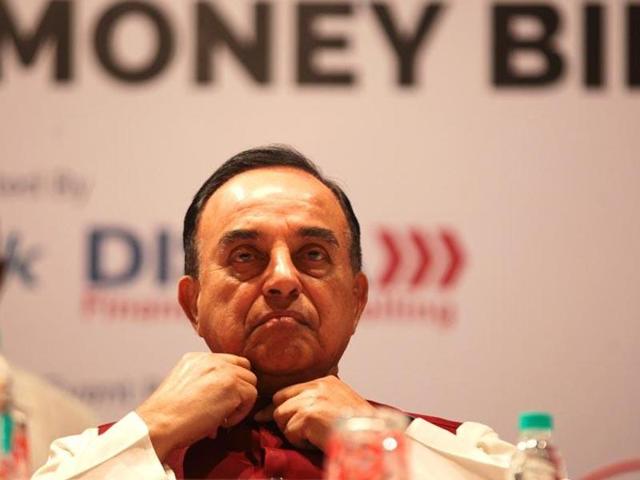
A day after the 122nd constitution amendment bill was cleared by Parliament, ending the legislation’s five year-long hibernation, Swamy raised questions if the future GST act can withstand legal scrutiny.
“I am confident Smart Cities will be a reality in 2018 but not sure if the future GST Act can survive in SC because of GSTN-- a PC time bomb,” Swamy tweeted on Tuesday morning.
By “PC era”, Swamy meant the duration when P Chidambaram was the finance minister of the previous UPA government.
{{/usCountry}}By “PC era”, Swamy meant the duration when P Chidambaram was the finance minister of the previous UPA government.
{{/usCountry}}Read | Parliament clears GST bill, Modi calls it a great step towards transformation
The Goods and Services Tax Network (GSTN) is the special purpose vehicle that was formed to create the information technology backbone to the roll-out of the new, nationwide tax that will replace myriad local levies.
In the GSTN, the government of India holds 24.5 % share. State governments, including NCT of Delhi and Puducherry, and the Empowered Committee of State Finance Ministers, together hold another 24.5%. Balance 51% equity is with non-government financial institutions.
Swamy, a Harvard-returned economist, has not been a vocal supporter for the GST. He is also known to have a bitter equation with Chidambaram who is now in the same Rajya Sabha, where Swamy is a member. During the seven-hour-long debate on the GST bill in the Upper House last week, the BJP did not allow Swamy to participate.
The BJP leader also re-tweeted an article that questioned why the tax collection management of GST has been given to an entity where private players have a majority stake.
On Monday, Prime Minister Narendra Modi said the GST bill will liberate people from “tax terrorism” as the Lok Sabha passed a Constitution amendment bill for GST.
Modi also said the consumer will be “king” in the new system and hailed the new tax regime as “pro-poor” and “pro-consumer”.