
 E-Paper



Gyanvapi mosque case: Waqf board challenges court’s survey decision
On April 8, Varanasi civil judge (senior division) Ashutosh Tiwari had ordered an archaeological survey of the Gyanvapi complex, saying the exercise was required to decide on pleas that allege the mosque was built by Mughal emperors after partially demolishing a Hindu shrine.


The Uttar Pradesh Sunni Central Waqf Board (UPSCWB) on Wednesday challenged a Varanasi court’s decision to conduct an archaeological survey of the centuries-old Gyanvapi Masjid abutting the famous Kashi Vishwanath temple.
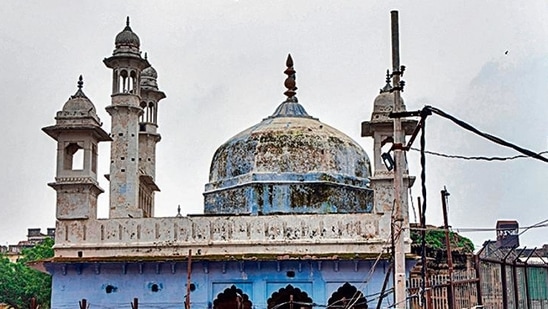
On April 8, Varanasi civil judge (senior division) Ashutosh Tiwari had ordered an archaeological survey of the Gyanvapi complex, saying the exercise was required to decide on pleas that allege the mosque was built by Mughal emperors after partially demolishing a Hindu shrine.
The decision had come on a clutch of petitions that claimed that Mughal emperor Aurangzeb demolished a portion of the Kashi Vishwanath temple to build the Gyanvapi Masjid in the 17th century, and demanded that the land on which the mosque stands be restored to Hindu parties
But on Wednesday, the UPSCWB filed a revision petition in the court of Varanasi district judge Omprakash Tripathi. The court fixed July 9 as the next date of hearing on the point of admission. “On July 9, we will argue and appeal to the court to admit the revision petition,” said Abhay Yadav, who represented the board.
The religious dispute – similar to the one in Ayodhya – is decades old and first reached the courts in 1991, when local Hindu priests sought permission to worship in the mosque area. The hearing was later suspended by the Allahabad high court.
But the case gained steam in December 2019 when Vijay Shankar Rastogi filed an application in the civil court as the next friend of the presiding deity of the temple, Swayambhu Jyotirling Bhagwan Vishweshwar. Rastogi demanded that the mosque area be surveyed to prove that the Muslims had occupied parts of the temple complex and built a mosque there.
On April 8, the civil court ordered the constitution of a five-member committee, comprising two Hindu and two Muslim members and an archaeological expert, to oversee the “comprehensive physical survey”. The Archaeological Survey of India (ASI) will conduct the exercise at its expense without any media briefings, the judge had ordered.
The Anjuman Intezamia Masjid Committee, which runs the Gyanvapi Masjid, opposed the decision.


